You don’t need to work out for a long time or spend a lot of time in the studio to build flexibility. A short, focused yoga flow can help you become more flexible and move more freely. This 10-minute yoga routine is good for people who are new to yoga and those who have been doing it for a while. It helps open up the body, improve posture, and ease stiffness that comes from sitting or standing for long periods of time. This quick flow will help you feel more open, relaxed, and refreshed, whether you don’t have much time or want to add some gentle movement to your morning or evening routine.
1. Cat-Cow Pose (Marjaryasana-Bitilasana): A gentle way to warm up your spine
Cat-Cow Pose is a smooth sequence that warms up the spine and gets it moving. Start your practice with this pose. This movement wakes up your body and gets you ready for deeper stretches.
How to do it:

Get into a tabletop position by putting your wrists under your shoulders and your knees under your hips.
Take a deep breath and let your belly drop while lifting your chest and tailbone.
As you breathe out, round your back, tuck your chin, and pull your navel in.
For one minute, keep moving between these movements, matching each one with your breath.
Benefits: This pose gently moves the spine and relaxes the neck, shoulders, and back, which helps the torso become more flexible overall.
2. Downward-Facing Dog (Adho Mukha Svanasana): Lengthens the whole body
To stretch the back of your body, including your legs and spine, go into Downward-Facing Dog. This basic pose is known for relieving tension and helping the body stay flexible.
How to do it:
Lift your hips up and back from the tabletop to make an upside-down V shape.
Put your palms firmly on the floor and spread your fingers out.
Use your legs and gently push your heels down toward the ground.
Let your head rest between your arms and take slow, deep breaths for one minute.
Benefits: This pose helps the hamstrings, calves, and spine stretch and lengthen, which makes the lower body more flexible.
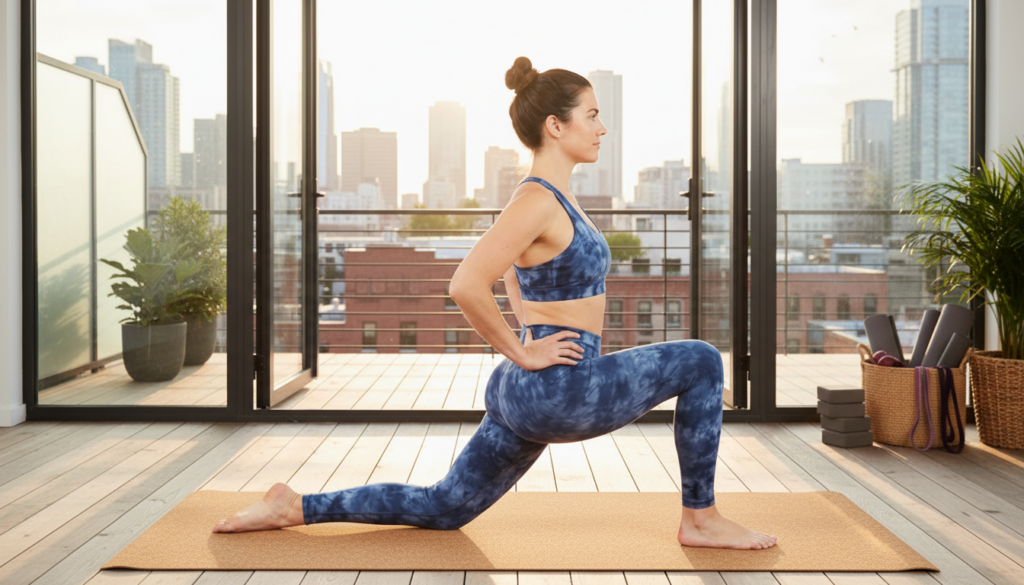
3. Low Lunge (Anjaneyasana): Opens the hips and thighs
Low Lunge works on the hip flexors and quadriceps, which can get tight when you sit or stand for a long time. It helps the hips and legs move better.
How to do it:
From Downward-Facing Dog, put your right foot between your hands and step forward.
Put your left knee on the floor and stretch your left leg back.
While keeping your core tight, lift your chest and reach your arms over your head.
For 30 seconds, hold it, and then do it again on the other side.
Benefits: This stretch eases tension in the quadriceps and hip flexors, which helps make the lower body more flexible.
4. Paschimottanasana, or seated forward fold, is a stretch for the hamstrings.
Seated Forward Fold is a good pose for making your hamstrings more flexible and gently stretching your spine.
How to do it:
Sit with your legs straight in front of you and your feet bent.
Breathe in to stretch your spine.
Exhale and bend forward at the hips, reaching for your feet or shins.
Keep your spine straight and hold for a minute while you breathe deeply.
Benefits: This pose helps the hamstrings become more flexible, the spine stretch, and the lower back relax.

5. Baddha Konasana, or Butterfly Pose, is a stretch for the inner thighs and hips.
Butterfly Pose is a great way to loosen up tightness in the lower body because it gently opens the hips and inner thighs.
How to do it:
Sit up straight and put the soles of your feet together.
Put your feet on the ground and let your knees relax.
You can lean forward a little to make the stretch deeper if you want to.
Breathe easily while holding for 30 seconds to a minute.
This pose is good for you because it makes your hips more flexible, your inner thighs more flexible, and it eases tension in your groin area.
6. Pigeon Pose (Eka Pada Rajakapotasana): A deep stretch for the hips
Pigeon Pose is a great way to stretch your hips and glutes, which is especially helpful for making your hips more flexible.
How to do it:
Begin in a tabletop position and move your right knee forward behind your right wrist.
Straighten your left leg back.
Bring your hips down toward the floor while keeping them square.
You can either stand up straight or bend forward and hold for one minute on each side.
Benefits: This pose stretches the hips, glutes, and lower back deeply, which helps release tension and make the hips more flexible.
7. Supine Spinal Twist (Supta Matsyendrasana): Relaxing the spine
At the end of your flow, do a gentle twist of your spine to let go of any remaining tension and help your spine stay flexible.
How to do it:
Put your knees on the floor and lie on your back.
Put your arms out to the sides with your palms facing down.
While keeping your shoulders down, drop both knees to the right.
Hold for 30 seconds, then switch sides.
Benefits: This twist makes your spine more flexible, stretches your lower back, and helps your torso move more freely overall.
In conclusion
This 10-minute yoga flow offers a simple and effective way to enhance flexibility at any experience level. Through gentle movements and mindful breathing, it helps release tension, stretch key muscle groups, and improve range of motion. Adding this routine to your daily schedule supports long-term flexibility and keeps your body mobile. Whether practiced in the morning or before sleep, these poses encourage easier movement and a more relaxed body throughout the day.