While you brush your teeth and look at the mirror, your eyes drop to the floor.
Those tiles you liked when you moved in? All of a sudden, they look tired. The grout lines are yellowing, uneven, and strangely dark in the corners. You grab your phone, type “how to whiten grout fast,” and fall into that familiar TikTok and Instagram rabbit hole of miracle hacks and videos that show how much better things look after they are done.
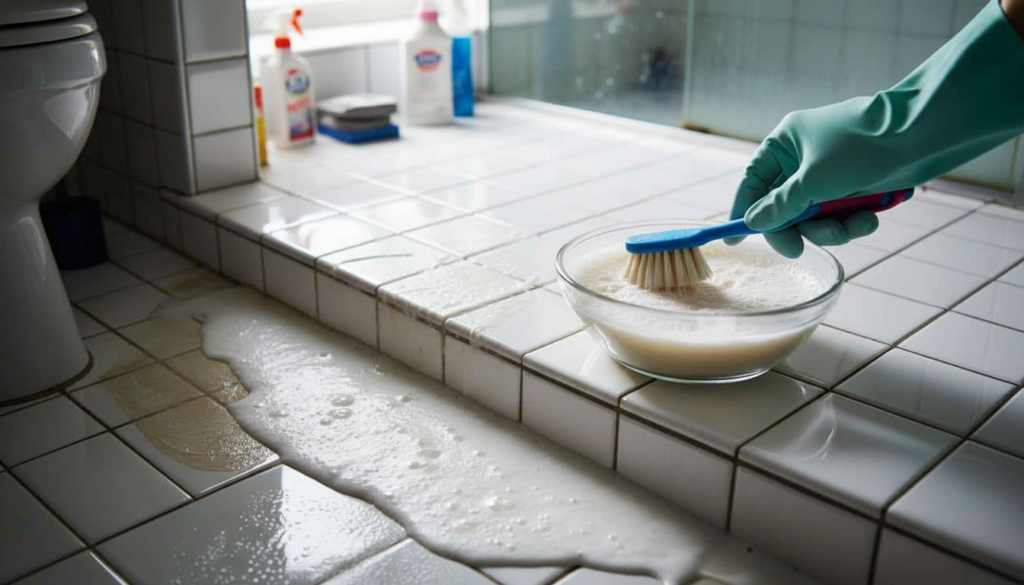
A “magic” three-ingredient mix that promises to clean hotel bathroom grout in 15 minutes keeps coming up. No scrubbing, no sweat, and shiny tiles with white joints.
You also read what professional cleaners have to say.
They say that same trick is slowly ruining your bathroom.
This three-ingredient grout trick that everyone is copying

The hack sounds too easy. A viral mix of baking soda, hydrogen peroxide, and a little dish soap that you put directly on dirty grout with a toothbrush or an old makeup brush. Fifteen minutes later, the influencer wipes it off with a smug swipe of a microfiber cloth and boom: grout lines that look freshly laid, tiles that suddenly pop like a real-estate listing.
No expensive product, no steamer, just three things you probably already have lying around.
It feels like winning the lottery at home.
One cleaner told me that a client’s bathroom “looked amazing for a week.” The woman had followed a step-by-step video that said to mix equal parts baking soda and hydrogen peroxide with a little dish soap “for slip” and spread it thick like icing along every grout line on the shower walls and floor.
She put her own “before” and “after” on Instagram. Friends said things like “Drop the recipe!” and “I’m saving this!”
Three weeks later, the miracle grout turned into a flaking mess after heavy shower use and hot steam. The surface was chalky, the edges of the joints started to crumble, and hairline cracks started to appear along the most exposed lines.
The reason seems almost unfair. Grout isn’t just dirty concrete; it’s a fragile mix of cement, sand, and sometimes polymers that doesn’t like being hit from all sides. Baking soda is rough, hydrogen peroxide is an oxidizer, and dish soap is a degreaser made for plates, not for porous mineral joints.
If you take them in small, controlled amounts, each one can be fine on its own. They can wear down the surface of the grout, open tiny pores, and let water and mold get deeper when they work together over and over.
That’s when your “15-minute trick” slowly turns into a regrouting job that costs 1,500 euros.
What cleaners really say is going on with your tiles
Most experts agree that the three-ingredient trick works at first. Sure it does. The peroxide lifts stains, the baking soda scrubs them away, and the dish soap helps spread the paste and cut through the soap scum on top. You rinse and wipe, and the grout looks like it’s been around for years.
The problem is what you can’t see yet. The top gritty layer of the grout starts to get thinner. The edges close to the tile get weaker. The next time someone drops a bottle of shampoo or drags a metal bin across the floor, tiny chips will show up.
The surface is cleaner, but it is also less safe.
Imagine a rental apartment where three different people have all tried that popular recipe, thinking they were being smart and saving money. The first tenant uses it once a month for the “Sunday reset.” The second tenant scrubs even harder to get the hotel look that is so white. The third person just wants to clean up ten years of stains before giving back the keys.
When a contractor comes in to give a quote for a new tenant, the grout isn’t just dirty. It’s weak, dull, and so full of holes that water has been getting into the subfloor. What looked like dirt on the surface was actually deep moisture moving through joints that had been scrubbed too hard.
That’s when things start to cost a lot.
The chemistry is simple and harsh. Hydrogen peroxide doesn’t just “whiten” stains; it also breaks down organic matter like mold and some sealants. When you rub baking soda on something over and over, it feels like very fine sandpaper. Dish soap changes the way water acts on the surface by lifting oils and helping liquid get into small cracks.
You might only have mild dullness on sealed or epoxy grout. That combination can speed up wear and tear a lot on older, sanded cement grout, especially when used with rough brushes and very hot water. *The hack is doing what it said it would do; it’s just costing you more in damage than time.
If you have to use it anyway, do it this way:
The truth is that a lot of people will still try the 3-ingredient mix, even if they are warned not to. So cleaners often change their minds from “never” to “use it like a scalpel, not a pressure washer.”

They say to mix the hydrogen peroxide with water so that it is more like a loose slurry than a thick paste. Only use it on the worst stains, not every grout line in the bathroom. Give it a few minutes, not a whole Netflix episode.
Then, using lukewarm water and a soft cloth instead of a stiff brush, rinse like your refund depends on it.
The second piece of advice is less exciting: do less, but do it more often. Cleaning with pH-neutral products on a regular basis, using a squeegee after hot showers, and drying off quickly with a towel in the areas where the most water splashes. Let’s be honest: no one really does this every day.
But that boring routine stops the deep staining that makes you want to use nuclear options later. When pros see people using metal brushes, green scouring pads, or undiluted peroxide on vertical grout, they also cringe. Those habits don’t just clean; they take away.
The grout remembers every little shortcut you take.
One experienced cleaner said to me, almost as if they were sorry:
“People think I’m against hacking, but I’m not.” I only see the damage that happens months after the video ends.
Before you mix anything stronger than mild cleaner, he suggests using a simple checklist:
Try it out on a hidden grout line behind a bin or under a mat.
Don’t use the stiffest brush; use the softest one that still works.
Don’t use strong mixes in whole rooms; only in high-traffic areas.
Rinse twice, then use an old towel to dry the area completely.
If you use your bathroom every day, seal the grout again once a year.
A 15-minute miracle is useless if it takes years off your bathroom.
There is a quieter way between “miracle” and maintenance.
Grout makes me feel strange. It’s not just about cleanliness; it’s also about the feeling that your home is getting out of control, line by grey line. We’ve all had that moment when the harsh morning light makes the tiles look old, and you want a fix that feels quick and certain.
But the pros keep giving the same calm advice: your bathroom doesn’t need drama; it needs rhythm. Gentle routines, small habits, and sometimes deeper cleans with products made for mineral surfaces. And yes, you should be careful with the viral stuff.
The 3-ingredient trick will keep going around because the photos are too good to pass up and the promise is too good to be true.
The real story is what you do with it. You can use it like a rare tool, only taking it out for that one stubborn line near the toilet, or you can blast your whole bathroom twice a month and hope the grout holds up. This weekend, the difference won’t be clear. You will see it in three winters when you find a crack in the shower base or smell something musty that you can’t quite place.
Some readers will decide to get rid of the hack completely, while others will just change it to make it more gentle and smart. Either way, the next time a perfect white grid shows up on your For You page, you might stop and think, “What did that grout really pay for this glow?”
Main pointDetailWhat the reader gets out of it
The 3-ingredient hack is hard on grout.Over time, a mix of baking soda, hydrogen peroxide, and dish soap breaks down the surface.Helps you decide between short-term sparkle and long-term damage.
Use targeted, diluted applicationsOnly treat the spots that are stained, cut down on contact time, and rinse well.Keeps risk low while still giving visible whitening when needed
Routine beats miraclesGrout stays in good shape with regular gentle cleaning, drying, and sealing.Keeps your bathroom in good shape for longer and saves you money on repairs or regrouting.
Questions and Answers:
Question 1: Is it true that the 3-ingredient grout trick works in 15 minutes?
Answer 1: Yes, it does often lighten stains and brighten grout quickly, especially on soap scum and mildew on the surface. However, the visible result doesn’t show how it can wear down over time with repeated use.
Question 2: If I still want to try this hack, what’s the safest way to do it?
Answer 2: Use a weaker mix with more water, only apply it to lines that are really dirty, let it sit for a few minutes, scrub gently with a soft brush, and then rinse and dry it well.
Question 3: Can this trick hurt my tiles as well as the grout?
Answer 3: Ceramic and porcelain tiles are usually more durable, but natural stone tiles like marble or travertine can get scratched or dull from being exposed to harsh mixes over and over again.
Question 4: What do professional cleaners use to clean grout on a regular basis?
Answer 4: They usually like pH-neutral bathroom cleaners, warm water, soft brushes, and steam for deeper cleans. They also like to seal the grout every so often in areas with a lot of moisture.
Question 5: How often should you reseal your grout to keep it safe?
Answer 5: For showers that are used every day, many experts say once a year is enough. For bathrooms or floors that are used less often, every 18 to 24 months is usually enough, depending on the product and how much wear it gets.