The woman in the salon chair really seemed hurt when the hairstylist said something that no one expects to hear: “You’re washing your hair wrong.”
She blinked, her hand frozen in the middle of scrolling on her phone, and a towel with foam around her shoulders. Her hair looked clean, shiny even. Wrong… how?
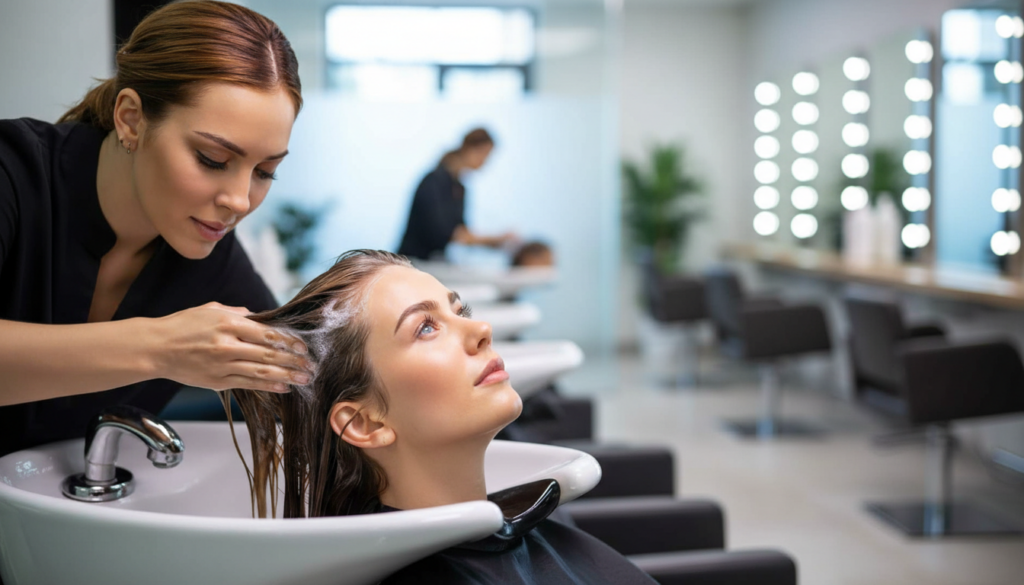
Around them, dryers hummed and someone laughed under a cloud of hairspray. The stylist – calm, a little amused – started explaining. The kind of explanation that suddenly makes you rethink every shower you’ve taken since childhood.
We all think we know how to wash our hair
The hairstylist, Camille, swears that almost 8 out of 10 clients step into her chair with the same problem: hair washed often, but washed badly.
Not dirty, not neglected. Just… treated in a way that keeps it from ever really looking like salon hair.

She says you can literally feel it under your fingers.
Roots that get greasy fast, lengths that feel tired, ends that puff or split too easily.
From the outside, it looks normal.
But to her trained hands, it’s like reading a story of rushed showers, wrong products, and way too much scrubbing in all the wrong places.
She remembers one client in particular: perfectly blow‑dried, glossy brunette, the kind of hair you’d double‑tap on Instagram.
Two days later, the woman came back, frustrated.
“My roots are a mess again, and my ends are like straw,” she complained, twisting a strand.
Camille asked her to describe her shower routine, step by step.
The client proudly listed everything: two big handfuls of shampoo, aggressive scalp scrubbing “to really clean”, piling all the hair on top of her head, then a quick slap of conditioner on the ends.
“That,” Camille smiled gently, “is exactly how to tire your hair out while never truly cleansing your scalp.”
The logic seems simple: dirty hair, more shampoo, more scrubbing.
Except our scalp is skin, with its own balance, its own needs.
If the scalp feels attacked, it produces more sebum to defend itself.
That’s how you land in the vicious cycle: the more you scrub and strip, the faster it gets oily, and the drier your lengths feel.
*Shampoo is meant for the scalp, not for punishing your entire head of hair.*
Camille says this is the mental switch that changes everything.
Once you see shampoo as skincare for your scalp, your whole routine shifts.
The right way, according to the stylist who watches thousands of heads
Camille’s “good wash” starts before the water even hits your head.
She always tells clients: brush first, shower second.
Detangling dry hair reduces breakage when it’s wet and fragile.
Then comes the temperature: warm, not hot. Hot water feels nice, but it swells the cuticle and irritates the scalp.
When the hair is fully soaked, she uses a small coin‑sized amount of shampoo, not a giant blob.
She emulsifies it between her hands until it foams lightly, then applies only at the roots, section by section, like a gentle scalp massage, not a chaotic scrub.
Here’s where most people go wrong: they focus on the hair lengths, rubbing them like laundry.
Camille insists the foam that runs down when you rinse is more than enough to clean mid‑lengths and ends.
She works with the fingertips, never the nails, moving in small circles, especially at the crown and nape where sebum builds up.
Two minutes of patient massage instead of 20 seconds of frantic scratching.

Then comes the part we tend to rush: rinsing.
She asks clients to rinse longer than they think they need, until the hair feels almost “squeaky clean” at the roots, but never stripped.
Let’s be honest: nobody really does this every single day.
For her, the second shampoo is not a marketing trick.
The first wash lifts dirt, pollution, product buildup.
The second one actually treats the scalp and does what the formula promises.
“People tell me, ‘My shampoo doesn’t work,’” Camille explains, laughing softly.
“Often, it’s not the shampoo. It’s the way you’re using it. Your scalp never gets a chance to benefit, because you rush, overload product, and attack the wrong areas.”
Then comes what she calls her “non‑negotiables” for a home wash that truly mimics a salon one:
Apply conditioner only on mid‑lengths and ends, never directly on the roots
Squeeze excess water before conditioner so it can actually penetrate
Comb the conditioner through with a wide‑tooth comb, then let it sit 3–5 minutes
Finish with a short cool rinse on the lengths to help smooth the cuticle
Pat hair gently in the towel, do not twist it like a turban and strangle the strands
A small ritual that quietly changes how you feel in your own skin
Once you’ve been told you’re washing your hair wrong, it’s strangely hard to go back to autopilot.
You hear the stylist’s voice in your head when you grab that giant blob of shampoo or attack your scalp with your nails.
Over time, the changes Camille describes sound almost too simple: slightly cooler water, slower movements, less product, more intention.
Yet that’s often what separates “good enough” hair from hair that behaves, shines, and lasts an extra day before looking greasy.
For some, this new routine feels like a small daily act of care.
Not a full spa day, not a transformation montage, just a few unhurried minutes where your head is literally in your hands.
The science is there – sebum regulation, cuticle health, breakage reduction – but the emotion is quieter.
That subtle boost when your hair falls the right way on a Tuesday morning.
The relief of not hating the mirror halfway through the week.
Camille says the biggest compliment isn’t “What shampoo is that?”
It’s when clients come back weeks later and say, “My hair finally behaves between appointments.”
Her point is simple: **you see your stylist once every few months, you see your shower several times a week**.
What happens under that stream of water matters just as much as any expensive cut or color.
So next time you step into the shower, you might catch yourself slowing down, changing the way your fingers move on your scalp.
Tiny gestures, invisible to everyone else, that quietly rewrite the story your hair tells about you.
Key point DetailValue for the reader
Focus on the scalp Shampoo belongs on roots, lengths are cleaned by rinsed foam Longer‑lasting freshness and less greasy roots
Gentle method Warm (not hot) water, fingertip massage, thorough rinse Calmer scalp, reduced irritation and fewer flakes
Conditioner strategy Only mid‑lengths and ends, applied on squeezed‑out hair Softer lengths, fewer tangles, less breakage over time
| Key point | Detail | Value for the reader |
|---|---|---|
| Focus on the scalp | Shampoo belongs on roots, lengths are cleaned by rinsed foam | Longer‑lasting freshness and less greasy roots |
| Gentle method | Warm (not hot) water, fingertip massage, thorough rinse | Calmer scalp, reduced irritation and fewer flakes |
| Conditioner strategy | Only mid‑lengths and ends, applied on squeezed‑out hair | Softer lengths, fewer tangles, less breakage over time |
FAQ:
How often should I wash my hair?Camille suggests starting with 2–3 times a week for most scalps, then adjusting based on how quickly your roots actually look oily, not just how they “feel”.
Do I really need to shampoo twice?For city living, heavy styling, or oily roots, yes: first to remove buildup, second to treat. For very dry or curly hair, one gentle wash can be enough.
Can hot water damage my hair?Regularly washing with very hot water can dry out the scalp and raise the cuticle, making hair rougher and more fragile over time.
Should I change shampoo often?You don’t need a new bottle every month. A gentle everyday shampoo and a clarifying one once every 1–2 weeks is usually plenty for most people.
Is conditioner on the roots really that bad?On a fine or easily greasy scalp, yes: it can weigh hair down and make roots limp faster. Keep conditioner for the driest parts: mid‑lengths and ends.