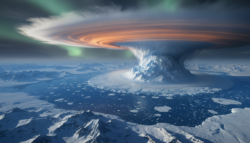
The light starts to feel wrong at 2:17 p.m. The shadows get sharper, the air gets a little cooler, and the busy four-lane road on the edge of town suddenly sounds… careful. People leave hair salons with foils in their hair, baristas press their faces against the windows, and a delivery driver stops the engine and stares up at the pale sky with a pair of cardboard glasses still in their wrapper.
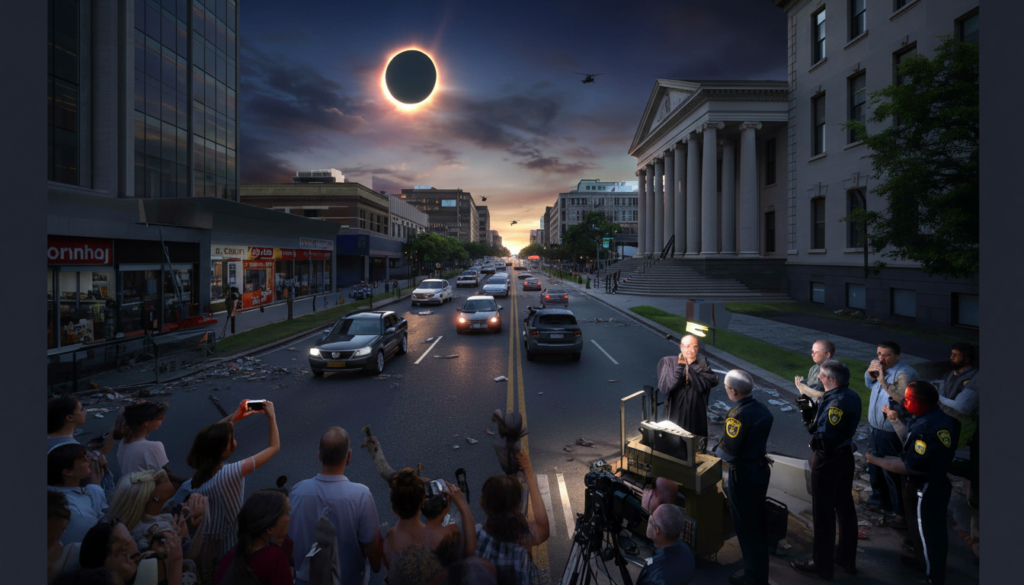
A siren wails somewhere, then stops in the middle of the howl.
The mayor is trying to sound calm into a bunch of microphones on the steps of the courthouse. Behind him, the police chief is whispering and looking at his phone. An invisible tide is about to roll over this city, bringing the longest solar eclipse of the century.
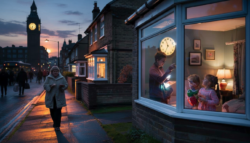
And officials say they’re scared of something they can’t really control, even though they smile in public.
When it goes from noon to midnight, nerves show
The phrase “day will turn to night” has been said so many times that it sounds like something from a play or a movie. Then you talk to the people who are in charge of keeping the city standing when the sky gets dark for a long time. They speak a different language. They talk about traffic jams, power outages, drunk drivers, and a sudden rise in 911 calls from people who are just freaking out.
It’s just the moon moving in front of the sun on paper. There are red dots and worst-case scenarios on their screens.
Last week, a mid-sized state in the path of the eclipse quietly ran a full-scale test. Not the astronomy part, which is easy, but the way people reacted. They showed what happens when hundreds of thousands of extra cars suddenly fill up rural highways, with people stopping to film the sky.
They thought about what went wrong in past eclipses, like cell networks slowing down, hotels being full, gas stations running out of gas, and fights breaking out in parking lots as people fought over spots and views. One planner told me that they are treating this like “a slow-motion evacuation of a stadium in reverse,” but the stadium is half the country.
When officials say they are afraid of chaos, they don’t mean the end of the world or planes crashing to the ground. They’re talking about very human things, like people buying things in a panic, conspiracy theories spreading faster than corrections, and crowds acting strangely when the light changes.
The science behind the eclipse is completely predictable. What happens when millions of people who are a little stressed and haven’t slept much stare at the sun for the longest time anyone has ever seen? That’s the unknown.
And this is where they start to blame the media.
When warnings turn into news stories and news stories turn into fear
You get a strange double message in emergency briefings. Officials beg people to get ready calmly, but then they go to press conferences that turn into short, punchy headlines that sound like doom. “Officials are afraid of chaos,” “police are getting ready for unrest,” and “experts are warning of a blackout meltdown.”
People on local talk radio are comparing the eclipse to Y2K, the pandemic, and “Judgment Day rehearsals.” A sheriff in a rural county told me that people are asking him more about “potential rioting“ than about safe viewing glasses.
That disconnect started for him with one viral clip on a national cable show.
That part cut a three-minute, detailed public safety briefing down to a 15-second sound bite about “authorities fearing mass panic in the path of darkness.” Attached is a video of supermarket shelves emptying out during a storm and a generic picture of police in riot gear.
The clip was all over social media within hours. People in sleepy towns along the path of the eclipse suddenly thought they would have to deal with thieves at sunset, even though the eclipse is at its peak in the middle of the day. A fire chief told me that crews now spend half of their prep meetings “undoing the TV version” of what they said the day before.
From far away, this sounds almost silly. The sun goes away for a short time and then comes back. People take home cool pictures. That’s all there is to it.
It’s easy to see the feedback loop up close: officials talk carefully, networks pick out the most dramatic phrases, social media makes the fear worse, and the next day the same officials feel like they have to warn even more loudly. *The noise level keeps going up, even though the facts haven’t changed.
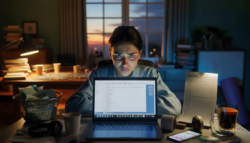
Let’s be honest: no one reads a calm, balanced safety bulletin as closely as they click on a headline that says “eclipse mayhem.” That’s what makes this whole hysteria debate so quiet.
How to enjoy the eclipse without going crazy
You don’t need a bunker if you live near the path of totality. You need a plan that is easy for people to understand. It’s like going to a street fair with a sky that looks like it could rain at any moment. Plan ahead where you’ll watch, how you’ll get there, and how you’ll get back when everyone else leaves at the same time.
The day before, charge your phone and fill up your tank. Also, choose a place to watch that doesn’t require creative parking. Bring water, snacks, and an extra layer of clothing. When the sun goes down, the temperature usually drops as well.
When the news cycle gets loud, it’s easy to want to do what you always do: scroll, refresh, doom-read, and repeat. That’s how little bits of advice like “buy food early” or “expect traffic” turn into “stockpile” and “gridlock.”
You don’t have to change everything about your life for this. You have to give it a push. Go shopping a little earlier. Go a little slower. Take more time than your app says you need. Plan for the day of the eclipse like you would for a big concert or game in town.
We all know what it’s like to realize that what you were afraid of was mostly in your head.
One town’s public safety director told me, “We’re not afraid of the sky.” People are scared that when they hear “once in a century” on TV, they will forget that they still need to use their common sense.
Use certified eclipse glasses or other ways to look at the sun that don’t directly hit your eyes. Normal sunglasses don’t work against direct sunlight.
Think like a traveler: expect bathrooms, gas stations, and roads to be busy. Everyone’s stress level goes down when they are patient.
- If you can, stay close to home. Sometimes the best view is from your own street with your neighbors, not from the “perfect” spot three hours away.
- Don’t doom-scroll too much; just check one or two trusted sites and then log off. Your nervous system will be grateful.
- Plan your way out. The eclipse ends, and the traffic starts. It can make the difference between a traffic jam and a smooth ride if you wait 30 to 60 minutes before driving.
We get to choose the story between being amazed and worried.
When the cameras are off, officials talk in a strange way that is honest. They say they’ve never seen anything like this before, not because of the astronomy, but because of the mix of awe, suspicion, and just plain digital noise that surrounds it. The longest solar eclipse of the century is now more than just an astronomical event; it’s also a mirror.
A mirror for how much we trust institutions. A reflection of how we deal with the unknown. A mirror for the kinds of headlines we click on.
At the same time, you can feel two forces pulling on you. On one side, the primal, childlike gasp when the sun’s halo shows up and the birds stop singing. On the other hand, there are police radios buzzing and people quietly watching each other as much as the sky. There is a version of this eclipse that is mostly about people being amazed together, not people being scared together.
The truth is that both versions are out there, and the one that wins will spread faster than any news alert.
In a few weeks, the eclipse will be over. The longest shadow of the century will have come and gone. The story we tell about how we acted when day turned to night will stay with us. Did we block highways to get a better shot, or did we just walk out into our own streets? Did we yell at people we didn’t know, or give them an extra pair of glasses?
The real experiment might not even be in the sky. It’s all about how we deal with a rare, predictable moment of darkness without making up more than the sky is actually giving us.
| Key point | Detail | Value for the reader |
|---|---|---|
| Officials fear “chaos” | Concerns focus on traffic, crowd behavior, and emergency services strain, not on astronomical risk | Helps separate real-world issues from exaggerated, apocalyptic narratives |
| Media can fuel hysteria | Dramatic headlines and clipped sound bites amplify fear and distort nuanced safety messages | Encourages readers to consume news critically and reduce their own anxiety load |
| Simple preparation beats panic | Basic planning around travel, supplies, and expectations turns the eclipse into a shared experience, not a crisis | Gives readers practical steps to enjoy the event calmly and confidently |
Questions and Answers:
Question 1: Do the authorities really think that people will act like they are going to riot or end the world during the eclipse?Not in any serious, evidence-based way. Most agencies are getting ready for a lot of traffic, stressed-out visitors, and more routine emergencies, not widespread civil unrest.
Question 2: Will planes or power grids be in danger when the sky gets dark?Energy managers and aviation experts say that the systems can handle much bigger changes than just a short loss of sunlight. There may be small changes to flight routes or times, but there is no imminent collapse.
Question 3: Should I stock up on food and gas like I would before a natural disaster?It’s smart to have a small buffer, especially if you live in a crowded viewing area, but you don’t need weeks’ worth of supplies. Don’t think of it as a bunker mentality; think of it as getting ready for a long weekend.
Question 4: Is it safe to let pets and kids play outside during the eclipse?Yes, as long as kids wear the right eclipse glasses and are watched. Pets don’t seem to be drawn to the sun like people are; they act like it’s dusk.
Question 5: How can I tell the difference between real information and hype?Look for advice that is the same from local authorities, observatories, and reputable science news sources. Be careful of posts that use scary language, show only one clip, or give more fear than useful information.