I first saw it when I was making coffee at my grandma’s house. There was a pine cone in the middle of every pot on her windowsill, like a tiny guard on duty. Pine cone, pine cone, pine cone, geranium, ficus, fern. I thought it was an old-fashioned decoration, like how she put lace doilies under everything.
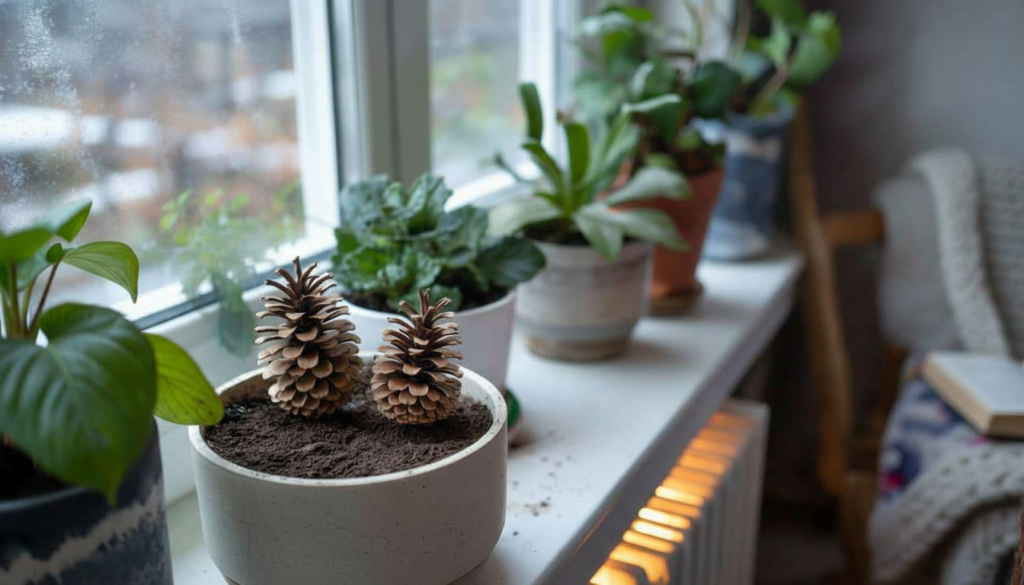
Years later, I began to notice the same thing happening in the homes of other older people, always in the winter and always on the ground. Same gesture, different houses.
It seemed more like a quiet rule that everyone over 60 knew than a trend.

Why older people began putting pine cones in pots of plants
If you had grandparents who lived in a house with a jungle on the windowsill, you probably saw this little scene every fall. It’s cold outside, so we put on thicker sweaters and turn on the radiators. Then, like a ritual, someone brings in a basket of pine cones from a walk and carefully puts them on the soil of the houseplants.
No long speech or how-to. A little movement of the hand, as if the pine cone already knew what to do.
One of my retired neighbors still does it every November. She lives on the fifth floor and has a long balcony full of pots. She treats each plant like a roommate. She’ll say, “Time to put their hats on,” as soon as the days get shorter. Then she’ll drop a cone or two on the soil of each pot and pull them closer to the window.
She says that this is the best way for the plants to survive the winter. Less mold, fewer fungus gnats, and less ugly green film on the ground. She shrugs and says, “That’s how my mother did it, and that’s how her mother did it too.”
A mix of observation and old-fashioned practicality is what makes this habit work. A pine cone is light, dry, and has pockets of air in it. It covers the soil a little bit, but not all the way, so air can get through and the top layer is shaded. That alone keeps the surface drier, which is bad for fungus gnats and slows down mold.
People from older generations didn’t talk about microclimates or aerating soil, but they did know what worked on a cold windowsill where plants were getting too much heat and not enough water. Their “pine cone trick” was just a low-tech way to keep the ground from getting too wet and to protect fragile roots in the winter.
How a simple pine cone really helps your plants in the winter
It’s almost too easy to use a pine cone the old-fashioned way. Pick a clean, fully opened cone and put it on the soil near the center of the pot. Press it down just enough so that it doesn’t wobble. Then you water it like you normally would, letting the water run around it instead of on top.
The cone works like a small roof. It breaks up the water’s impact, so you don’t make craters in the soil, and it protects the base of the plant from sudden temperature changes near the window.
This trick really works well for winter problems that people don’t talk about when they buy a pretty monstera. People tend to water more when the air is dry, which is when fungus gnats show up out of nowhere. They love the top layer of soil because it’s always dark, warm, and wet.
The surface dries a little faster and is harder to get to with a cone on it. There are fewer places for the bugs to lay their eggs, and the soil doesn’t get as hard between waterings. Let’s be honest: no one really does this every day, but this one little thing helps lessen the damage from our inconsistent winter care.
There is also a small, almost invisible change in the weather happening right under that cone. The cone slowly takes in and lets out some moisture, which keeps it from getting too dry or too wet all the time. The air pockets between its scales help to keep the soil from getting too wet. *Over the course of weeks, the cone slowly breaks down, releasing a small amount of organic matter back into the potting mix.*

Long before we had Instagram plant doctors, old gardeners noticed that the soil stayed healthier where the cone sat. Less crust on top, fewer bad smells, and a smoother change from fall to spring for roots that don’t like being disturbed or repotted in the winter.
How to do the pine cone trick at home (without thinking too much about it)
It looks like the method is very simple, but some things from the “old ways” make it easier. Pick cones that are dry, open, and have fallen from the tree. They shouldn’t be green or sticky with resin. Leave them on a radiator or a sunny windowsill for a few days if they are wet from the forest floor.
Then put one cone in the middle of small pots or two or three in bigger pots. Make sure there is some space around the plant’s stem so it can breathe easily. Over the course of a few weeks, water them slowly and see how the soil surface changes.
Some people go too far and bury the cone or cover the whole surface with mulch. At that point, good intentions start to hurt the plant. If the soil is completely cut off from light and air, it can stay too wet, which can cause it to rot instead of protect it.
You might also want to pick up any pretty cone from a park and put it right in your pot. That way, tiny bugs, mold spores, or pollution from the street can hitch a ride. You don’t need to sterilize them like you would lab equipment; a quick rinse and dry will do. Just don’t skip that step. We’ve all had that moment when a “cute idea” suddenly brings a lot of fruit flies into the kitchen.
People over a certain age don’t usually say this as a tip or hack; they just do it. One grandmother told me, “The pine cone tells the plant where it came from: the forest.” She laughed after saying it, but she kept carefully arranging the brown scales on the soil, as if they really brought a piece of calm from outside into the hot living room.
Choose the right cone: it should be dry, open, and not moldy or sticky.
- If you got it outside, rinse it off and let it dry before using it.
- Don’t bury it; just put it on top of the soil.
- Use it mostly in the winter when the windowsills get cold and the heating is on.
- From time to time, check the soil under the cone. Lift it up and feel the moisture with your fingers.
- If the cone gets soft, moldy, or falls apart completely, you should replace it.
A small winter tradition that links plants, memory, and common sense
When you start to see pine cones on potting soil, it feels like a secret code that has been passed down through kitchens and balconies. It’s not a miracle cure or a substitute for good light or smart watering; it’s just a simple way to make winter less harsh for plants that live between glass and a radiator.
Going out to get a few cones and bringing home a piece of the cold air can also be calming. You can then use the cones to make a quiet protection ritual for the green corners of your house. People in the past didn’t call it self-care or biophilia; they just did what worked and did it again.
That’s probably why this gesture stays with me. It doesn’t cost anything, feels strangely soft, and gives us a reason to look at our plants more closely during the times when they are having the hardest time. You could try it on a couple of pots this winter, not because you’re superstitious, but because it’s a small experiment based on years of experience.
Some habits last longer than the people who started them because they are beautiful and because they work quietly and stubbornly.
| Key point | Detail | Value for the reader |
|---|---|---|
| Natural “roof” for soil | Pine cone shades the surface, slows evaporation, softens watering impact | Helps reduce fungus gnats and soil compaction in winter |
| Gentle microclimate | Air pockets and gradual moisture exchange under the cone | Roots experience fewer stress shocks from heating and drafts |
| Low-cost winter ritual | Free, reusable object tied to seasonal walks and family habits | Easy way to protect plants while reconnecting with older know‑how |