The first frost came in the night without making a sound. The garden looked beautiful in the morning, like it was set up for a photo. The grass was covered in silver, the sun was trying to break through the mist, and everything was quiet and still. Then there were the little things that ruined the postcard effect. A robin nervously hopping around a bowl of frozen water. A hedgehog track that ends suddenly at the edge of a concrete path.
You stand there in your slippers with a mug in your hand, feeling lucky to see all of this but also a little guilty. It’s hard for wild animals in the winter, especially the tiny ones that live just a few feet from our doors. They don’t need big gestures or fancy tools.
Sometimes all they need is a tennis ball.

A simple tennis ball can change a winter garden in a quiet way.
A tennis ball looks silly sitting out there in the grass by itself. A bright green dot that was left behind after summer games. But that same ball can help those fragile lives that pass through our gardens at night and in the morning.
When it gets cold, small birds and hedgehogs suddenly have to deal with a lot of hidden traps, like frozen water, ponds with steep sides, open drains, sharp netting, and deadly garden ponds. That’s when this simple, cheap, and easy-to-find thing can help.
It’s not about making your garden a place for animals to live. It’s about getting rid of a few deathtraps without making a big deal about it.
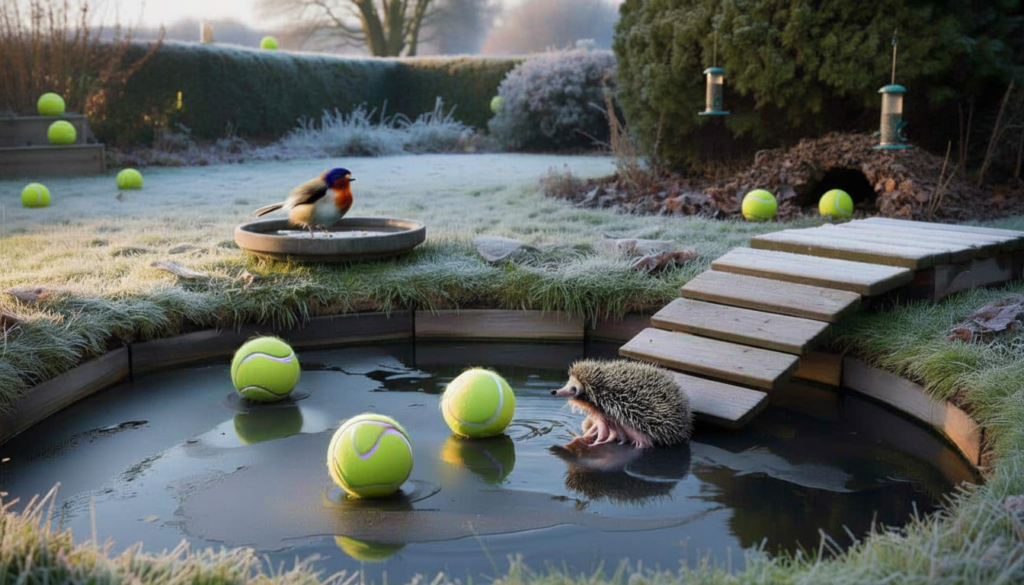
A few winters ago, a number of wildlife rescue centers in England started sharing the same strange picture: a line of tennis balls floating on dark garden ponds. At first, it looked like a joke. After that, there was an explanation. The balls stop the whole surface from freezing over, leaving small open circles of water where birds can drink and bathe, and where hedgehogs that fall in can breathe and hold on.
One volunteer told the story of a little hedgehog that was found holding on to a tennis ball at the edge of a pond. Its tiny claws were stuck deep in the felt. The ball had just enough grip on him to keep him from falling back into the cold water. He probably wouldn’t have had a chance without that extra texture.
On a random Tuesday in January, a child’s toy made the difference between life and death.
The logic is easy to understand from a practical point of view. When water freezes, a completely flat surface turns into a smooth, deadly slide for any animal that falls in. Birds can’t grip, hedgehogs can’t climb, and cold water makes them weak in a matter of seconds. The physics of the scene change when a tennis ball is floating there.
It breaks the smooth surface, which slows down the process of making a continuous ice sheet. It has a rough surface that claws, beaks, or small feet can grab onto. Just one or two balls are enough to keep a drinkable spot open longer in small basins or tubs, especially in the early morning when animals are already tired from the night.
The gesture is small. The effect is too big.
How to put tennis balls in the right places to help birds and hedgehogs
If you have a balcony or a small courtyard, just walk around outside to get started. Find a container that can hold water, like a pond, trough, old bucket, watering can, or a big plant pot saucer. You can drop a tennis ball anywhere water can pool and then freeze.
One ball is enough for a small bowl or bucket. Two or three for a medium pond, with enough space between them so that at least one area stays ice-free. Put them down gently; don’t throw them in like you’re serving at Wimbledon. If you have a deep pond with steep sides, put the balls together with a sloping escape ramp, like a plank of wood, a rough brick staircase, or a piece of wire mesh secured to the bank.
Don’t think of it as redecorating; think of it as making little emergency exits.
People often fall into traps that they set for themselves, and they usually mean well. The first thing is to use balls that are too heavy or full of water. When tennis balls get old and wet, they can sink halfway and become useless. So, when they start to absorb water or get mossy, it’s time to switch them out. The second mistake is to only think about the balls and not how to get to them. A tired hedgehog won’t be able to get out of your pond if the edges are made of smooth plastic or stone.

Let’s be honest: no one really changes their garden every day of winter. That’s why it’s a good idea to set up things that can work on their own most of the time. Pick solutions that you can almost forget about but that still get the job done when you’re busy or away.
Your future self will be grateful to you when you wake up in the morning frost.
A wildlife rehabilitator from a small French shelter said it best: “People think that saving wild animals means using syringes and incubators.” A lot of the time, it starts way before that, with someone who floated a tennis ball instead of leaving a cold, smooth trap.
Use balls that are bright colours so you can easily see them and get them when you need them.
Put shallow water dishes on the ground with tennis balls in them for hedgehogs and birds that don’t like deep ponds.
Look at your garden nets, football goals, and fencing. Cut or lift the bottom edges so that a hedgehog doesn’t get stuck while looking for water.
Put some dry leaves or straw near thick bushes to give animals that pass through extra shelter.*If you have a dog, keep a separate set of “wildlife balls” outside so they don’t have to be taken inside all the time to play.*
A new way to see your garden this winter
When you start to see your garden through the eyes of the animals that walk through it, everything changes a little. That pond could be a trap or a way to stay alive. That toy that was left behind becomes a safety buoy. The hedge in the back stops being “just a hedge” and turns into a path for nighttime travel, a place to get out of the cold wind, and a place to hide from the neighbor’s cat.
This is the quiet revolution going on in a lot of gardens right now: regular people making small changes without any fuss, just because they don’t want a bird or a hedgehog to die ten meters from the kitchen window. A few tennis balls, a ramp, a shallow dish of water, and some leaves on the ground.
These actions won’t fix the climate or make all ecosystems better. But they add a little bit of kindness to the world around us, one small, fuzzy green circle at a time.
Main point Detail Value for the reader
Tennis balls that float on waterThey slow down freezing on the whole surface and make textured grip points.Helps birds and hedgehogs drink and get out if they fall in.
Putting balls and ramps togetherA simple plank, bricks, or mesh from the water level to the bankLowers the chance of drowning in ponds and troughs
Check the winter gardenCheck the edges, nets and containers once at the start of the season.Stops hidden traps with little time and effort
Questions and Answers:
I really need tennis balls, or can I use something else?
You can use other things that float, like small pieces of wood or ping-pong balls, but tennis balls are better because the felt on them gives animals a better grip than smooth plastic or bare wood.
How many tennis balls should I put in my pond?
Two or three balls spread out are usually enough for a small pond (up to 2 meters wide). Four or five can fit in bigger ponds, but only in the places where animals are most likely to fall or drink.
Will this really keep the water from freezing all the way?
Not always, though, especially when it’s very cold for a long time. The balls mostly slow down full freezing and leave small openings open longer, which can still save lives in the early morning and during mild frosts.
Is it okay for my cat or dog to drink water that has tennis balls in it?
Yes, having clean tennis balls in the water doesn’t change how good it is for pets. Just stay away from balls that are falling apart or covered in mould, and get new ones when they wear out.
Besides tennis balls, what else can I do for hedgehogs and birds in the winter?
Leave some dead wood and leaf litter, don’t use slug pellets, cover drains and steep pits, and if you can, make small holes in fences so hedgehogs can safely move between gardens.