I saw it happen just before the grocery store closed. A man in a hurry picked up a head of broccoli, then stopped, put it back, and picked up a cauliflower instead because “it looks healthier.” The woman next to him filled her cart with cabbage for soup and said, half-jokingly, “Ugh, my kids think these are three different kinds of torture.” No one around them knew that they were all shopping for the same family secret.
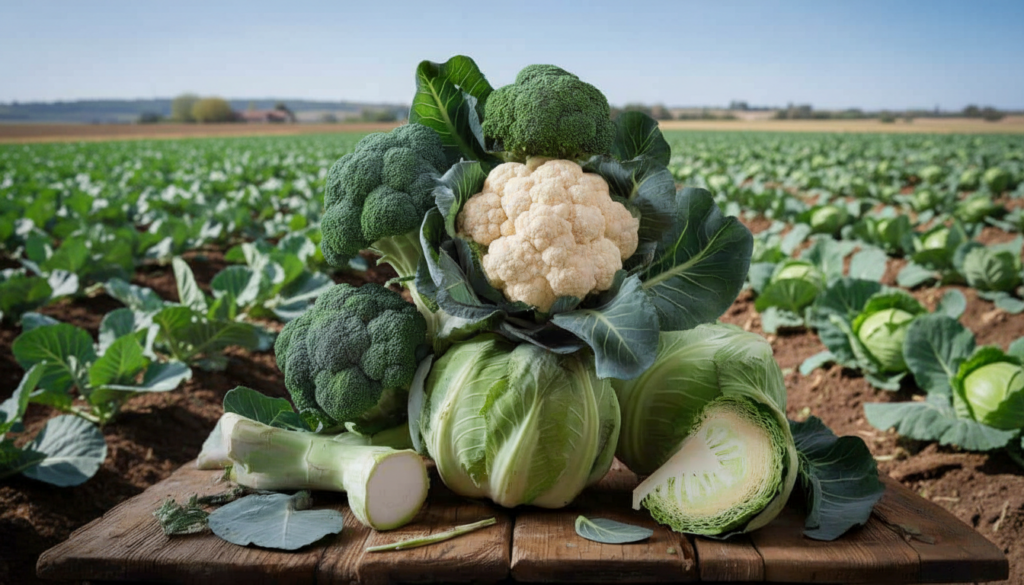
Same aisle. Same shelf. Three vegetables that look very different from each other but are actually the same.
The funny part is? They’re basically different parts of the same plant.

One plant, three faces: the quiet scandal of the vegetable aisle
Look closely at the produce section while you stand in front of it. Broccoli, all green and proud, like little trees standing in a row. Cauliflower, pale and thick, sitting in its leaves like a brain that someone forgot to plug in. Cabbage, round and heavy, is a reliable winter friend that you can put in plastic bags or stack in rustic crates.
They don’t look or act like they’re the same. They seem like three different foods, each with its own reputation.
If you ask around, you’ll hear it. “I like roasted cauliflower, but not broccoli.” Or, “Cabbage is only for coleslaw, right?” A teenager who hated Brussels sprouts told me he could eat broccoli but not cabbage because “that one smells like defeat.”
But botanists would find this drama funny. In the language of plants, cauliflower, broccoli, cabbage, kale, Brussels sprouts, and even kohlrabi are all the same species: Brassica oleracea. Same base of genetics. The same wild ancestor that used to grow on rocky European coasts and looked like an unremarkable weed.
We were the ones who changed. For hundreds of years, farmers were obsessed with different parts of the same plant. Some people chose cabbage because it has bigger leaves. Some people liked broccoli and cauliflower with big flower buds. Brussels sprouts were still loved by some people because they had tight little side buds.
With a lot of stubborn human patience, one species slowly turned into a whole cast of characters. One plant turned into a whole family meal.
How people “edited” a wild weed to make it fit on your dinner plate
Imagine the original plant: wild cabbage growing on cliffs along the Atlantic Ocean. Not the kind of thing you’d want to post on Instagram. Some plants had thicker stems, plumper leaves, or more developed flower clusters than others, which early farmers noticed. So they did something really easy: they saved seeds from the plants they liked the most.
Those little choices changed the plant over the course of many generations. The leaves got bigger and turned into cabbage. Broccoli and cauliflower grew from bigger flower heads. The plant stayed the same type. Our hopes changed its body.
People who grow vegetables like to tell this story. A farmer in a small Italian village hundreds of years ago kept saving seeds from the plants that had the biggest, densest green “flowers.” That preference gets bigger and bigger every year. His neighbours do what he does. Traders take those seeds to other places. At some point, the original wild form left the fields and was replaced by what we now call broccoli.
People in the Mediterranean and further north needed dense, storable food to survive long winters, so the same thing happened with cauliflower and cabbage. Statistics today show that there is one species that has been broken up into dozens of named varieties, each of which is linked to a certain landscape and way of life.
The trick is that Brassica oleracea is very adaptable from a biological point of view. Its genes let it change a lot depending on which traits are strengthened. Farmers didn’t have CRISPR or DNA labs. They only had time, hunger, and observation.
So broccoli is really the plant’s flower clusters. Cauliflower is also flower tissue that was stopped earlier in its growth. Cabbage is a tight, layered ball made from the plant’s leaves. Different parts of the body, but the same genetic song. This is the quiet power of selective breeding: it’s not a sci-fi story, it’s just people paying close attention.
This secret can be used in your kitchen and garden.
A small door opens in your kitchen once you know these vegetables are the same kind. You start to trade them without worry. Roasting broccoli? Try adding cauliflower florets at the same time and in two colours. Are you making stir-fried cabbage? Add broccoli stems that have been peeled and cut into thin slices. They act like a mild cabbage.
A good rule is to think about how things feel, not what they are called. Head like a cabbage? It can handle braising. Do you like delicate florets like broccoli or cauliflower? They get crispy and caramelised the same way when you cook them on high heat for a short time with some oil and salt.

A lot of people get stuck because they think each vegetable is a rulebook. Steaming broccoli. Cauliflower is a “healthy rice.” Cabbage for soup or salad. They get bored, blame the vegetables, and go back to eating beige food.
There is also the cycle of guilt. You buy a huge cabbage with good intentions, use a quarter of it for salad, and then let the rest of it slowly die in the fridge. Let’s be honest: no one really does this every day. The key is to think of them as actors who can play any role. You can still play if you have cabbage and a little cauliflower instead of broccoli.
We’ve all been there: you open the crisper drawer and see a half-cabbage that you forgot about that looks like it’s judging your life choices.
Use the family link to change that moment:
When you think “one species,” switch out broccoli, cauliflower, and cabbage based on what you have in the fridge.
You can make a mixed tray bake out of leftovers by tossing them with oil, salt, and spices and roasting them at the same temperature.
Cut by shape, not name: thin strips for quick frying, big chunks for slow braising, and florets for roasting.
Don’t throw away the stems. When you peel and slice them, they taste like soft cabbage.
If you have a small garden, you can only grow one type, but you should cook it in all three “roles” to see how they are similar.
What happens when you see one plant instead of three vegetables?
When you think about it this way, the vegetable aisle doesn’t feel like a catalogue anymore; it feels like a family reunion. You stop saying “I hate cabbage” and start asking, “What part of this plant do I like, and how do I cook it so it doesn’t bother me?” That little change is strangely freeing.
You might try more things. Try roasting cabbage steaks like you would cauliflower. Make chips out of broccoli leaves (yes, you can eat them). Instead of coleslaw mix, use shredded stems. That one stubborn plant, Brassica oleracea, suddenly becomes a toolbox instead of a chore.
It’s also strange to find comfort in knowing that a lot of what you eat comes from small choices made by people hundreds of years ago. A nameless farmer picked a leaf, a bud, and a stem. On Tuesday night, you pick a recipe. Different times, same urge: to make a plant fit your taste, your climate, and your life a little better.
That could be the real story behind broccoli, cauliflower, and cabbage. Not that they are the same plant in a technical sense, but that they show that what we care about changes over time. Our tastes don’t just affect what we eat. Sometimes, they quietly change the way nature works.
| Key Point | Detail | Value for the Reader |
|---|---|---|
| One species, many veggies | Broccoli, cauliflower, and cabbage are all forms of Brassica oleracea | Helps you swap and combine them confidently in recipes |
| Different parts, different roles | Cabbage is leaves, broccoli and cauliflower are enlarged flower structures | Gives you a clear logic for cooking times and textures |
| Selective breeding power | Centuries of farmers choosing specific traits reshaped one wild plant | Offers a new appreciation for everyday food and how it got to your plate |
FAQS
Is it true that broccoli, cauliflower, and cabbage are all the same plant?
Brassica oleracea is the same species, but they are different cultivated varieties, just like dog breeds are all one species with different shapes and traits.
Can I always use one instead of the other in recipes?
You can often switch them out, especially in soups, stir-fries, and roasted dishes. However, you may need to change the cooking time for denser cabbage compared to delicate florets.
Which is better for you, broccoli, cauliflower, or cabbage?
All three are high in fibre, vitamins C and K, and plant compounds that protect you. The small differences between them don’t matter as much as the fact that you’re eating them often.
If they are all the same species, do they all taste the same?
No, selection changed the flavour strength, texture, and sweetness, but if you pay close attention, you can taste a common “brassica” note, especially when they’re raw.
Can they pollinate each other in my garden?
Yes, they can cross if they bloom at the same time because they are the same species. This is only important if you want to save seeds instead of just eating them.