The kettle makes that little “clack” sound and then turns off. You can already picture the first sip of tea. You lift the lid without thinking about it, and there it is again: that white crust on the bottom, like a thin layer of chalk. The water still boils and the tea still gets made, but that limescale film looks… wrong. It’s not dirty enough to throw away the kettle, but it’s also not clean enough to ignore.
You think about the usual things. Vinegar that makes the whole kitchen smell bad. Soap that makes bubbles and tastes bad if you don’t rinse it off ten times. You close the lid and act like you didn’t see anything.
But there is a different way.

Why your kettle keeps getting limescale
If you watch an electric kettle that gets used every day, you’ll see a pattern. The base is shiny and metal at first. After a few weeks, light rings start to show up, like coffee stains on a white mug. They get bigger and thicker over time, making the bottom rough and matte. The sound of boiling even changes; it gets harsher, like sand.
You might feel a little guilty every time you pour hot water over your herbal tea, like you’re ignoring a small warning sign at home. But the kettle still works, so it’s tempting to put off the problem until “next weekend.” That magical weekend when we’ll do everything.
A young dad I talked to joked that his kettle was “the limestone mine.” He lives in an area with hard water, drinks at least five cups of tea a day, and his partner uses the same kettle to make baby bottles. He admitted, “I descale it when I remember.” “Which is… not often.”
He had vinegar once. The smell filled the apartment and stayed on the spout. The next two coffees he made smelt faintly like salad dressing. He was also scared of leaving soap residue, especially since there was a baby involved. The limescale stayed, layer after layer, like the rings of a tree that show how many times you forgot to clean.
When heated, the minerals in your tap water, mostly calcium and magnesium, turn into crystals. Hard water has more minerals, crystals, and crust. This crust protects the heating element over time. The kettle takes longer to boil, uses more electricity, and the base can even get too hot in some places.
That chalky stuff not only wastes energy, but it also breaks off into tiny flakes that end up in your mug. It won’t hurt you, but it can change the taste and feel of food. That thin white film that bothers you every morning has a real, physical reason for being there. It’s not just for looks. It’s your water that leaves a mark every time it boils.
The easy trick is citric acid, the quiet hero.
Many careful home cooks swear by something other than vinegar or soap. It’s citric acid. This powder looks like sugar, works like a mild magic eraser, and doesn’t smell like a jar of pickles that broke in your kitchen.
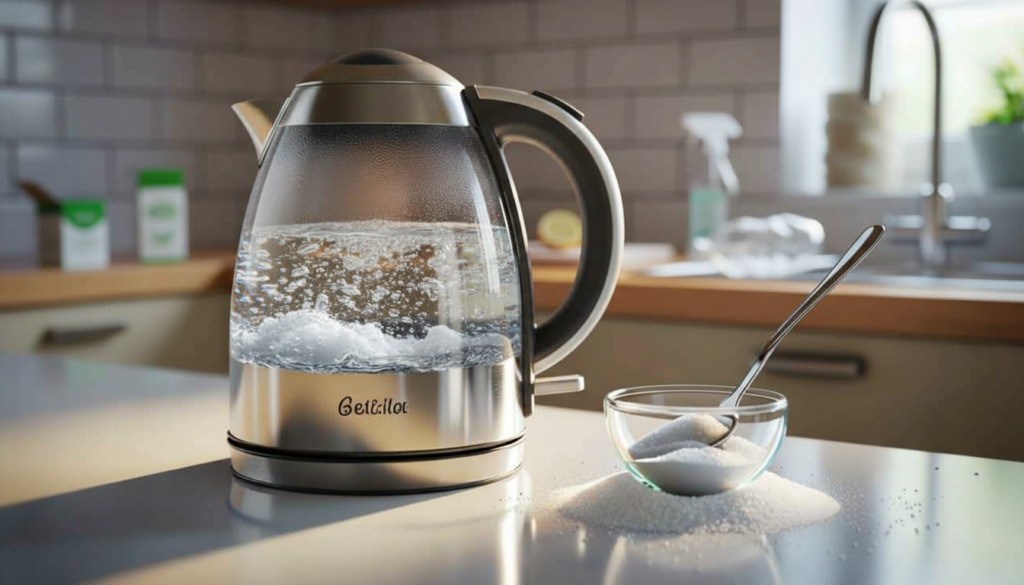
This is the basic move. Put cold water in your kettle up to the halfway point. Put in about one tablespoon (about 15 grams) of food-grade citric acid for a standard 1–1.7 L kettle. Turn on the kettle and let it boil all the way through. After that, unplug it and let the hot solution sit for 20 to 30 minutes. When you pour it out, the limescale usually comes off in flat, soft sheets. You just need to rinse it off with clean water and boil it again with clean water. No smell of sourness, no taste of soap.
A lot of people find citric acid by chance. A coworker told me she bought a small tub to make syrup for homemade lemonade. One day, tired of her “rocky” kettle base, she threw some into the water on a whim. “I didn’t expect anything,” she said with a laugh. “Ten minutes later, I looked inside and it was like someone had switched my kettle.”
Coffee lovers often use citric acid to clean their espresso machines, and people who like to preserve food use it to make jams and jars more acidic. You can buy it at grocery stores, online, and in the baking aisle because it is safe to eat. It doesn’t leave a smell that spreads through the whole house like vinegar does. It doesn’t foam and rinses off cleanly, unlike dish soap. The whole thing is strangely satisfying and almost too easy.
Citric acid is a weak organic acid that likes to stick to minerals like calcium and magnesium. It doesn’t scrub when it meets limescale; it dissolves. When you pour the liquid out, those chalky deposits turn into a form that dissolves and washes away. No scratching the metal, and no harsh industrial product.

That’s why a lot of manufacturers allow or even suggest using mild acidic descalers. Compared to abrasive pads, a soft acid bath is better for gaskets, seals, and heating elements. *You’re not attacking the kettle; you’re just getting back to its original surface.* If your water is very hard, doing this process twice in a row is often enough to save a kettle that you thought was permanently broken.
Doing it right: little things make a big difference
This is a clear and easy routine. When you see the first white ring come back, get your citric acid. This happens about once a month.
1. Take the kettle out of the wall.
2. Add cold water until it is half full.
3. Depending on how crusty it looks, add 1 to 2 tablespoons of citric acid.
4. Bring the kettle to a boil once.
5. Wait 20–30 minutes before using the hot solution.
6. Pour it out, and if you need to, gently wipe the inside with a soft sponge or cloth.
7. Rinse with clean water, boil again, and throw away the water.
That’s all. No long scrubbing, no gloves, and no streaming eyes from the vinegar fumes. Just a half hour of peace and quiet while you do something else nearby.
But there is a small trap. We tend to get excited and go overboard when we find a way that works. Citric acid is not very strong, but it is still an acid. It won’t clean better if you pour in half the tub or leave the solution overnight. In fact, it might stress some materials, especially if your kettle has plastic parts or a decorated inside.
It’s also a bad idea to use a knife, metal spoon, or gritty sponge to scrape off stubborn limescale. That can scratch the coating or heating plate, making tiny grooves where new limescale will stick even better. To be honest, no one really does this every day. So a gentle cycle once a month, without “brute force,” is a good, human rhythm. Your kettle doesn’t need to be punished. It needs a little bit of kindness every now and then.
The products that are quiet and not very exciting can sometimes have the biggest effect on our daily lives. One home barista told me, “Citric acid is the unsung hero of my kitchen.”
No smell, no fuss, just clean metal and tasty water.
Use citric acid that is safe for food so you know it’s safe to use around anything you eat or drink.
For a normal electric kettle, stick to a small dose of about 1 to 2 tablespoons.
Don’t rush to scrub; the acid is doing the hard work.
If you use the kettle to make baby bottles, rinse it out and boil it again with fresh water once.
If you have hard water, do it again every 4 to 6 weeks. If your water is softer, do it again every 2 to 3 months.
A small home ritual that changes the taste of your tea
At first glance, cleaning a kettle is the kind of task that goes at the bottom of the to-do list, below “sort receipts” and “fix that door that squeaks.” It seems small, even unimportant. But this small change in routine has a clear effect: the water is clearer, it boils faster, the bubbles are quieter, the taste is cleaner, and the electricity bill is a little lower. Each cup of tea or coffee is a little more honest because it doesn’t have as much mineral dust or strange flavours.
It’s also strangely calming to see a dull, grey interior come back to life with so little work. The kettle looks younger after half an hour of waiting and one tablespoon of white powder. For a moment, you feel like the things you use every day are on your side again. We’ve all been there, when the house feels like it’s falling apart in places you don’t want to see. A simple, odourless descale is a way to say “not today” without saying it out loud.
When your kettle turns off and you see that chalky ring at the bottom, you will know that vinegar or soap is not the answer. A few grains of citric acid in a small jar in the cupboard and the choice to make your morning routine cleaner.
| Key point | Detail | Value for the reader |
|---|---|---|
| Citric acid as main solution | Mild, food-grade powder that dissolves limescale without smell | Effective cleaning without vinegar odor or soapy aftertaste |
| Simple monthly routine | Boil water with 1–2 tbsp citric acid, let sit, rinse, reboil | Easy habit that keeps the kettle efficient and extends its life |
| Avoid aggressive methods | No metal scrubbing or excessive acid doses, respect materials | Protects the appliance, prevents damage, and maintains performance over time |
FAQ:
- Question 1Can I use lemon juice instead of citric acid powder?Yes, but it’s less concentrated and less predictable. You’d need a lot of juice, and the descaling will be weaker. Citric acid powder is purer, cheaper per use, and easier to dose.
- Question 2Is citric acid safe for stainless steel kettles?Yes, when used in small quantities and short contact times. A 20–30 minute soak is fine for stainless steel. Avoid leaving it overnight and always rinse afterward.
- Question 3Will citric acid damage plastic parts or seals?Used occasionally and in the right dose, it’s generally safe. Don’t use boiling-hot solutions on fragile plastic lids for hours; just follow the quick-boil-and-soak routine and rinse well.
- Question 4How often should I descale if my water is very hard?About once a month is a good target. If you boil water many times a day, every 3 weeks may be ideal. You’ll quickly see your own rhythm by watching how fast the white ring comes back.
- Question 5Can I use citric acid to descale my coffee machine too?Often, yes, but always check the manufacturer’s instructions first. Many machines tolerate mild acids, but some brands require specific descaling products to protect internal parts and warranties.