The robin lands on the garden fence like a dropped note. Its bright red chest stands out against the dull grey sky. Its little feet shuffle, its head twitches, and its black bead eyes scan the lawn for anything that might be good to eat. You can tell it’s used to people because it gets bolder and bolder every time the back door opens. It could be the same bird that saw you hang up the laundry last week. It could be a different one. In either case, it looks hungry.
You drink your tea by the window and feel a small sense of duty. The weather has changed, the ground is harder, and the worms aren’t there like they were in late autumn. The RSPCA says that this is when the birds in our gardens are having a hard time.
The weird thing is that the answer might already be in your kitchen.

Why the robins in your garden suddenly need some help
We think nature has everything under control when the weather is nice. Birds are flying around the hedges, leaves are still hanging on to stubborn branches, and from a distance, the lawn looks almost like spring. But for little birds like robins, these weeks can be the hardest. The cold snaps are sharper, the days are shorter, and every hour they don’t eat can mean they lose body fat they really need overnight.
Robins are brave little birds, but being brave doesn’t help when you’re hungry. They use up energy very quickly, especially when it gets close to freezing. A bird that looks like a happy garden visitor is actually on a tight energy budget.
The RSPCA gets a lot of calls every winter about birds that are “fluffed-up” and sit still for long periods of time. That puffy look isn’t cute; it’s a way for them to stay warm by trapping air in their feathers. They use up a lot of calories to do this. When the weather is really bad, robins can lose up to 10% of their body weight in one cold night.
Imagine that robin in your garden, hopping around on stiff grass. It’s not just for fun. It hunts insects, worms, and grubs that have suddenly become hard to find. They may be hiding deeper in the soil or not moving at all. One missed meal can make a big difference.
This is why the RSPCA is telling people to reach for something unexpected when they see robins in their gardens: oats from the kitchen cupboard. Rolled oats are soft, full of energy, and easy for a robin to eat, especially when natural food is hard to get to.
Birds don’t know how much electricity costs or how much food costs at the store. They know, without a doubt, if today’s foraging will keep them warm tonight. When you scatter or soak a handful of plain oats, you are entering that unseen maths problem. You are quietly and gently giving them an advantage.
The RSPCA wants you to put out this easy-to-find food.
The RSPCA’s advice is surprisingly simple: if you have robins coming to your yard, put out a small amount of plain, uncooked porridge oats. That’s all there is. No need for a special feeder or a subscription to fancy bird food. The same oats you might pour into a bowl on a busy weekday morning.
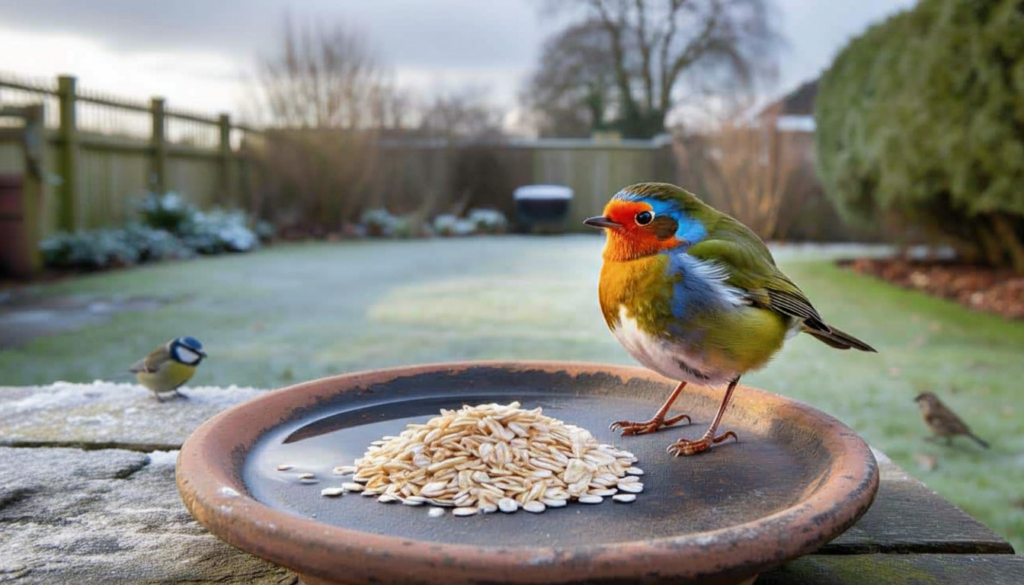
Put them on a flat pot saucer, a low bird table, or even right on a protected part of the patio. Robins are naturally ground feeders, so they will happily hop down to look at anything that is on the ground. One or two tablespoons is enough for one garden, and you can add more once or twice a day when it’s really cold.
One wildlife officer from the RSPCA told me about a small cul-de-sac where one robin had “adopted” three front gardens. Everyone thought they were feeding a different bird until they looked at the pictures. One neighbour put out mixed seeds, another crushed up peanuts, and the third, who was confused by all the online advice, just used the oats she had in her cupboard.
Can you guess where the robin spent most of its time? The little red-breasted bird came to the low saucer of oats like clockwork, grabbing beakfuls between dashes under the hedge. Not because it was fancy, but because it was easy to make, soft, and ready to eat without a fight.
This makes perfect sense. Oats have carbs and some fat, which give a small bird a quick burst of energy that it can use right away to warm up. They are also small enough for a robin’s beak and don’t need to be cracked like hard grains. For a bird that wants to save energy, every second it spends fighting with tough food is a waste of energy.
That being said, they are not a full diet. Robins still need bugs, worms, and other natural sources of protein from the soil and leaf litter in your garden. On days when nature’s buffet is closed, the oats fill in the gaps. *Think of it as the snack that keeps them going through the worst of their shift.
How to safely feed robins oats without making common mistakes
This is the easy way that wildlife carers do it over and over. Only use plain, unsweetened porridge oats that have “oats” as the only ingredient. Put a thin layer on a flat, clean surface, like a low table, a stone slab, or even the bottom of an upside-down plant pot. To keep robins safe from cats and magpies, keep it close to cover, like a hedge or shrub.
You can give them dry food or food that has been lightly moistened with a splash of water to make it softer and less dusty. Having a small bowl of fresh water nearby is a big plus. Birds need to drink and clean their feathers even when it’s cold outside so they can stay warm.
The “what” is not the problem for most of us; it’s the “how much” and “how often.” It seems nice to pile on a lot of food, but leftover damp oats can clump, get mouldy, and attract rats at night. A little bit every day is better than a big meal once a week. To be honest, no one does this every day. Instead, focus on the coldest, frostiest spells when birds are really having a hard time.
Watch out for flavoured instant oatmeal packets hiding in the cupboard. Wild birds don’t need the sugar, salt, milk powder, and flavourings that are in those. Muesli mixes with chocolate or raisins are also a big no for wildlife in the garden.
An RSPCA spokesperson told me, “People think that taking care of birds means making big gestures.” “Actually, a few plain oats, some fresh water, and a safe, quiet place can mean the difference between a robin living through a cold snap or not. It really is true that little things in little gardens add up.

Only use plain, unsweetened porridge oats. No flavours, sugar, or salt.
During cold spells, give them a thin layer once or twice a day, not big piles.
Put food low to the ground, close to bushes or hedges so it can hide quickly.
Every day, get rid of any wet leftovers to keep mould and mice away.
Even when it’s cold, put a shallow dish of clean water in the room and change it often.
The quiet connection between your kitchen and the red breast on the fence
When you go outside with a handful of food, robins will come up to you almost as if they know you. One second they’re a blur of motion in the hedge, and the next they’re a small, expectant figure a few feet from your boots. It doesn’t seem like “managing wildlife.” It feels like a meeting.
The RSPCA is really asking us to notice that encounter and do something about it when they tell us to put out oats. That moment when the robin turns its head to look at you? That’s a living thing that is betting that your garden is worth the risk today.
We’ve all been there: you pull the curtains at 4:30 and see that it’s already dark. Your day was full of emails and chores. Birds outside don’t get to scroll or snooze like we do. They have a short amount of time during the day to find enough food to last them through the night. Your extra cupboard item becomes part of their fragile equation.
You don’t have to be perfect. You don’t have to make your garden a bird sanctuary with Latin plant lists and expensive feeders. One small, consistent action, done over and over again on the hardest days, says without words that you’ve been seen.
You will know the story behind the red flash on the fence next time you see it. A body that is light and trying to keep warm. A fast heartbeat that uses up every bit of energy it has. There is time to go to the back door with a spoonful of oats between when your kettle boils and when your toast pops.
For generations, robins have shared our gardens and doorsteps. They sang their song through the winter mornings long before we had central heating or double glazing. That bag of porridge you always have in your kitchen is now part of a much older conversation between people and birds. It’s not big. It’s not great. But it might be just right on a raw, calm morning.
| Key point | Detail | Value for the reader |
|---|---|---|
| Plain oats only | Use unsweetened porridge oats with no added sugar or salt | Protects robins from harmful ingredients while giving safe energy |
| Small, regular portions | Offer a tablespoon or two during cold spells and clear leftovers | Supports birds without attracting pests or mouldy food |
| Feed at ground level, near cover | Use low trays or saucers close to shrubs or hedges | Makes robins feel safer from predators and more likely to feed |
FAQ:
Can I feed robins dry oats straight from the packet?
Yes, plain dry porridge oats are fine. You can also dampen them slightly with water if you prefer, but never cook them into sticky porridge for birds.
Are instant flavoured porridge sachets safe for birds?
No. Those usually contain sugar, salt, milk powder and flavourings that are unsuitable for wild birds like robins.
How often should I put oats out for robins?
Once or twice a day during cold, frosty or snowy spells is ideal. In milder weather, you can reduce how often you feed.
Can I mix oats with other foods for robins?
Yes, you can mix plain oats with grated mild cheese, chopped unsalted peanuts, or specialist insect-based bird food, as long as everything is unsalted and unflavoured.
Will feeding oats stop robins from finding natural food?
No. Robins still forage for insects and worms. The oats simply provide an extra energy boost when natural food is harder to find.