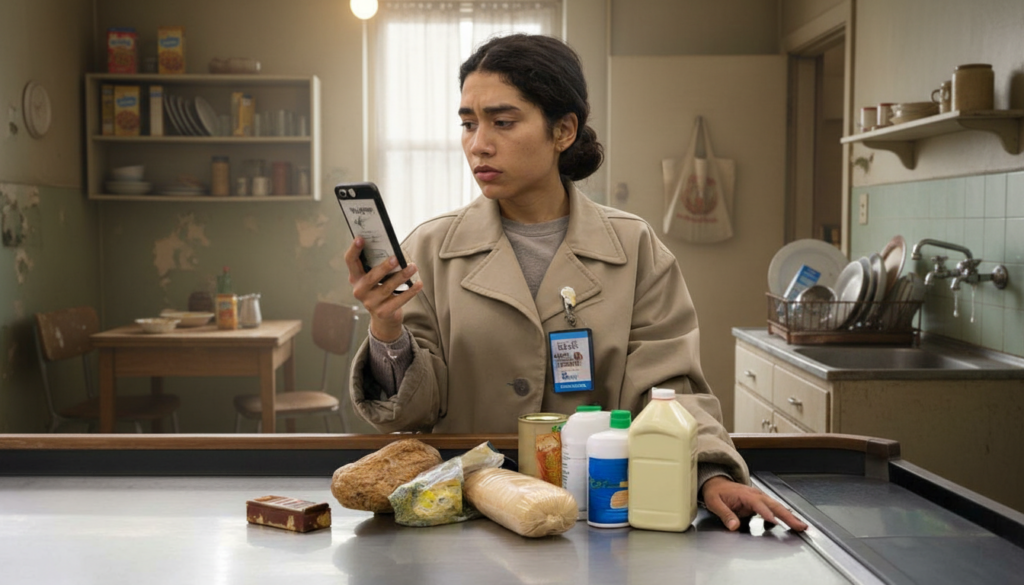
The woman in front of me in queue at the grocery store kept checking her banking app. Milk. Check out the screen. Loaf. Take a look at the screen. When the total came up, she quietly took a chocolate bar off the belt and put it to the side. There was no drama; just a small, practiced gesture that said everything about her life so far.She looked neat in her clothes and had her job badge clipped to her coat, but the way she looked at the prices told a different story. When you get a raise, you don’t just forget about the time you spent as a child watching your parents count coins on the kitchen table.
1. They keep track of every “small” cost, even if they make a lot of money.
People who grew up poor often do maths in their heads all day. The extra coffee someone suggests after work, the phone bill, the bus fare, and the washing powder. Their brain turns everything into food or rent. Ten dollars isn’t “just” ten dollars; it’s two days’ worth of school lunches or half of your electricity bill. It can look cheap from the outside. It feels like survival inside. When you see bills piling up in a drawer, you learn to look for trouble in every receipt. The habit doesn’t care that you have a steady job now. It keeps saying, “Can we really afford this?” over and over again. Daniel, 34, is a software engineer who makes more money than his parents ever thought possible. Almost every day, his coworkers order lunch to be delivered. He puts the leftovers in an old container that is a little bent on one side. He laughs when the team says, “Let’s just order; it’s only fifteen bucks.” He says he’s not hungry. That’s not right. He has already turned that $15 into ‘half a tank of petrol’ or ‘two days’ worth of groceries’. He grew up in a house where ordering pizza at the last minute meant that someone’s prescription would be delayed. That equation never really goes away from your body. This behaviour is not just about money on a psychological level; it’s about control. Being poor as a child often makes life feel like it will never be stable. Prices rise, jobs are lost, and a broken fridge can cause a family crisis. As adults, those kids become people who keep track of every penny because they are afraid of being caught off guard again. So they learn to spot “hidden” costs that people from more comfortable backgrounds don’t even notice. Fees for renewing subscriptions, service fees, interest rates, and parking tickets. They’re not being over the top. Their nervous system still remembers how hard it was to be poor.
2. They keep things “just in case” and have a hard time feeling safe.
The cupboards are a very obvious sign of behaviour. People who had empty fridges as kids often make little forts out of things they might need. There were tins stacked in rows, extra soap, spare socks, and loyalty cards for every discount store within 20 kilometres. Their body doesn’t fully trust what their bank account says, even when it says “You’re fine.” They keep food, clothes, tools, old phone chargers, and chairs that are only half-broken because they “might be useful one day.” It might look like a mess from the outside. It feels safe from the inside. Think of Ana, who lived in a caravan with her single mother for part of her childhood. She is 38 years old, owns a small flat, and works as a nurse to make a living. You can find six bottles of shampoo, four laundry detergents, and enough toilet paper to last through a zombie apocalypse in her hallway cupboard. She laughs when her friends make fun of her, but there is a flicker in her eyes. When she was a kid, she had to wear the same dirty uniform to school for three days in a row because they ran out of detergent. That shame will always be with her. Now, every time something goes on sale, she buys extras. She knows that the supermarket will still be there next week, but that doesn’t matter. The logic behind this is very clear. Scarcity teaches your brain that things can disappear without warning. Society tells you to get rid of things, live simply, and have less. Someone who grew up poor hears that and thinks, “You clearly never ran out of food on a Sunday night.” Let’s be honest: no one really lives a perfectly minimalist life that is organised on Instagram every day. For adults who have been poor, things can feel like armour. The bad thing is that this way of coping sometimes stops them from enjoying their current stability. Every object is a small insurance policy against a disaster that may never happen.

3. They work too hard, have trouble resting, and have a hard time with success.
One of the most interesting things about poverty survivors is how they work. They say yes to extra shifts, answer emails at midnight, and feel bad about taking time off. They are so afraid of “going back” that they feel like they are in danger when they rest. If they slow down, the old nightmare comes back to them: red bills, shut-off notices, and eviction. So they go after promotions, side jobs, emergency funds, and qualifications. They seem ambitious to their coworkers. Inside, it’s often just fear. It doesn’t feel like a reward to rest; it feels like tempting fate. Think about Malik, a 29-year-old manager who grew up in public housing with a father who was always sick. As a child, he saw his mother work two jobs, sleep only four hours a night, and still worry about the rent. He still has a second freelance job “for security,” even though he makes a good living. Friends ask him to go away for a long weekend. He says no because of “deadlines.” The truth is that spending money on a trip and not working during those days sets off that old alarm system in his chest. He remembers the months when missing a shift meant no heat. Success doesn’t erase these memories; it just changes how they look. There is also a strong, quiet tension that comes with enjoying success. People who grew up poor sometimes feel bad about having more than their parents did. Some people always feel like they don’t belong, like one bad month will show that they “never really belonged” in this new world. They might downplay promotions, hide good news, or keep living far below their means because they feel like spending is wrong. This is where the emotional toll of being poor really shows. It doesn’t just stop with money. It affects how you value your own time, your right to rest, and your belief that you deserve good things without having to work hard for them.
How to Deal With These Behaviours Without Letting Them Take Over Your Life
One useful thing to do is to make those habits of survival into choices. You can start by naming what’s going on instead of trying to “fix” yourself. If you say no to going out because you don’t have enough money, stop and think, “Is this about my real bank balance or my old fear?” Some people think it helps to make clear “safe” rules. For instance, you could set aside a small amount of money each month for guilt-free treats or save a certain amount of money that, once you reach it, gives you permission to take time off. This way, the part of you that needs safety gets proof, and the part of you that wants to live a little gets some air. A common mistake is to go to extremes, like not spending anything because “something bad could happen” or suddenly spending too much after years of not having enough and then panicking. Both of these reactions come from the same wound. It’s not wrong for you to act this way. To be kind to yourself, talk to yourself the way you wish adults had talked to you when you were a child. Instead of “Why are you like this?””Of course you’re scared; you learned that money can go away.” What little thing feels safe today? Small, repeated actions, not big changes to your life, are what usually make you feel emotionally safe.
“Being poor as a kid doesn’t just affect what you buy. It changes what you think you can hope for.
List the things you won’t give up

Your inner child needs to know that rent, food, and bills are all basic costs that are covered. Put a “joy line” in your budget. Even a small amount of money set aside each month for fun can slowly teach your brain that you can survive and have fun at the same time.
Keep an eye on safety, not just scarcity.
10 Different Ways Adults Who Grew Up Poor Act
When you look at things from a distance, you can see patterns. The little tics, the quiet pauses, and the strange mix of being kind and strict. People who grew up poor often have a set of adult behaviours that are easy to spot in everyday life. They aren’t universal, but a lot of readers will be able to relate to at least a few of them.
Growing up poor leaves scars, but it also gives you a special kind of wisdom.
When you start to think of these behaviours as echoes of childhood instead of “bad habits,” things get easier. You understand that the person who turned down the restaurant invitation isn’t boring; they might be fighting off a wave of panic that their body learned when they were eight. The coworker who brings a lot of Tupperware and doesn’t want to split the bill evenly is probably not trying to be difficult. We’ve all been there, when an old version of you takes over before you can stop it. For people who grew up poor, money, safety, and self-worth are all tied up together so tightly that it can take years to untie them. It’s not about putting people in boxes when you name these 10 behaviours. It’s about putting words to things that people often don’t talk about. You are not alone and you are not broken if you see yourself in these lines. You learned how to live in situations that most people would never have thought of. Those skills helped you and maybe your family stay afloat. Now the question is how to use the knowledge without letting fear control every choice. Some readers might want to share these signs with a friend or partner, not to accuse them, but to say, “This might help me understand myself better.” Some people might just sit with the list and see which behaviours still work for them and which ones hurt more than they help. There is no single method to recover from poverty. There are only true stories, slow changes, and the realisation that safety can feel like something other than stress.