Many gardeners are stepping away from bulky plastic compost bins and letting the soil handle the hard work instead. Traditional composting can feel overwhelming — constant turning, checking moisture levels, and balancing materials takes time and patience. Without care, piles can turn into a smelly mess or a soggy heap that never fully breaks down.
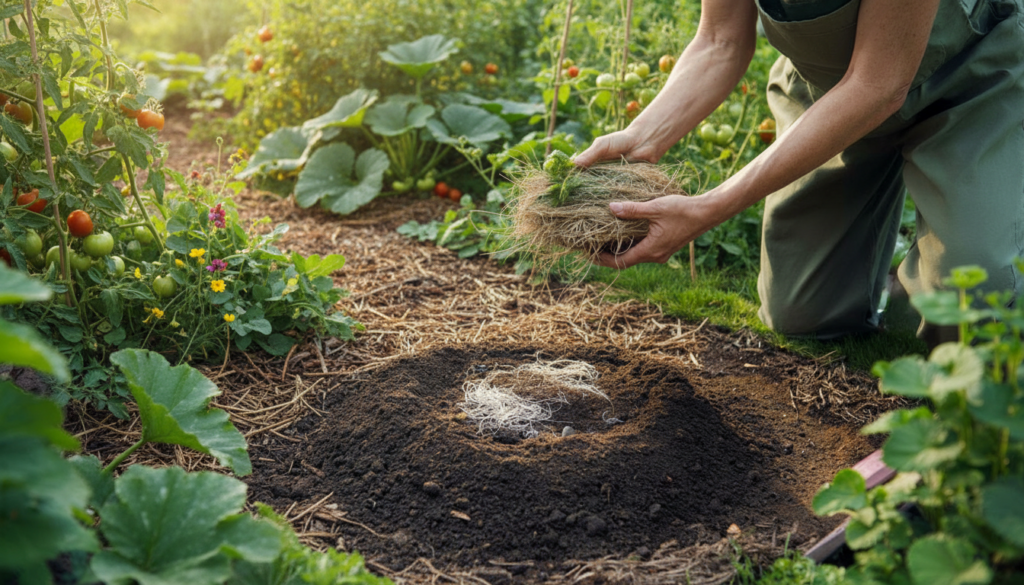
Now, more home gardeners are choosing a simpler path by creating a small in-ground system where natural life does the heavy lifting. Instead of managing a container, they focus on building a living habitat that feeds the soil directly.
How In-Ground Composting Actually Works
Beneath the surface, countless organisms are already breaking down organic matter every single day. Earthworms shred leaves, beetles chew through plant stems, and fungi slowly transform waste into rich nutrients. This underground activity forms part of the soil food web, a natural recycling system that never stops working.

Unlike above-ground bins, the soil maintains stable temperatures and balanced moisture. Over time, waste transforms into dark, crumbly nutrient-rich humus that improves plant health and encourages stronger root growth in nearby beds.
Creating a Safe Corner for Biodiversity
Start by choosing a quiet corner of your garden that doesn’t receive harsh sunlight all day. Avoid waterlogged spots and areas too close to house walls. Even a small patch can become a thriving biodiversity zone if layered correctly.
Begin with small twigs for airflow, add dry leaves or shredded cardboard for carbon, and finish with thin layers of fresh plant waste. Press it lightly but leave air pockets. This layered structure creates a balanced ecosystem where worms and microbes can thrive.
What to Add and What to Avoid
Not every kitchen scrap belongs in an open in-ground system. Cooked food, meat, dairy, and bones can attract pests and create unpleasant odors. Instead, focus on vegetable peels, coffee grounds, eggshells, and soft prunings. Always cover fresh scraps with dry leaves to prevent exposure and maintain clean decomposition.

Avoid thick branches unless chopped small, and limit grass clippings to thin layers. Too much wet material can upset the balance and cause strong smells. A mix of dry and fresh inputs supports a healthy breakdown process without constant maintenance.
Signs Your Soil Is Doing the Work
One of the first signs of success is shrinkage — the pile slowly sinks as materials decompose. What once looked sharp and dry becomes soft, dark, and earthy. A healthy compost patch smells like a forest after rain, not garbage or ammonia.
If you gently lift a section, you may spot earthworms and delicate white fungal threads weaving through the material. These are signs of an active underground workforce. Their steady activity produces improved soil structure that benefits nearby plants.
Benefits for Plant Health and Garden Care
This hands-off method doesn’t just manage waste — it gradually transforms your soil. Organic matter improves drainage in heavy clay and helps sandy soil retain moisture longer. The result is soil that is easier to dig, weed, and plant in.
Nutrients are released slowly, supporting steady plant growth rather than sudden bursts. Many gardeners notice lusher growth near their composting corner because the soil becomes richer and more alive. Over time, this method builds a low-maintenance garden supported by a naturally balanced system.