In many homes across the UK and Europe, the hot water cylinder works silently in the background — and quietly wastes energy at the same time. While modern boilers and heat pumps get all the attention, the traditional storage tank often sits in a cupboard, loft, garage, or basement losing heat every single day. If the tank is poorly insulated, it constantly reheats water that has cooled down, even when no one is using it. That heat loss can account for up to 20% of the energy used to store hot water. You end up paying for electricity or gas that never reaches your taps — it simply escapes into cold air around the tank, especially during winter when temperature differences are highest.
How a Simple Insulation Jacket Reduces Heat Loss
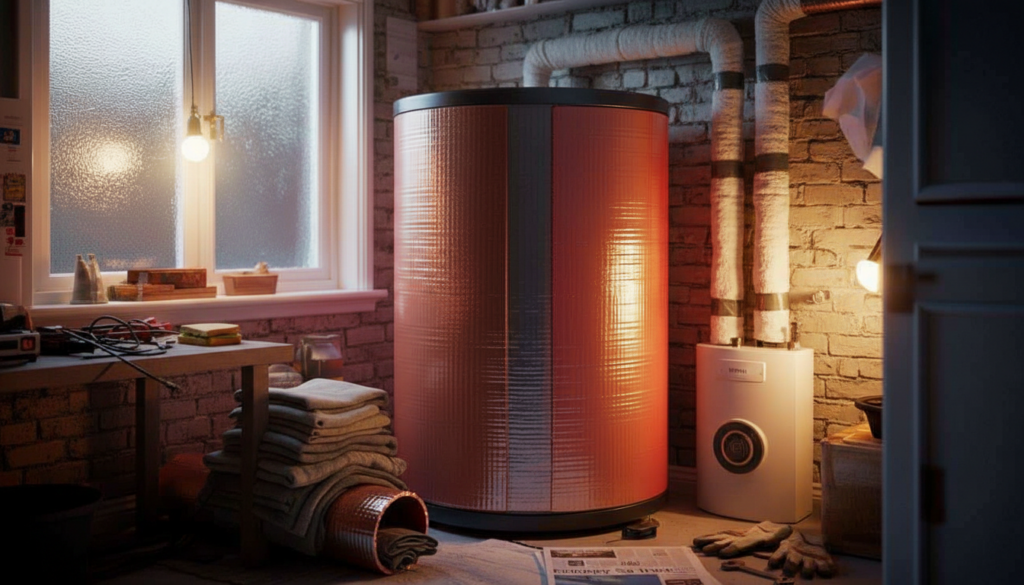
The solution is surprisingly straightforward: wrap the cylinder in an insulation jacket. This flexible thermal layer surrounds the tank and slows down heat transfer to the surrounding air. With better insulation, stored water stays warm for longer, meaning your boiler, immersion heater, or heat pump cycles on less frequently. The result is lower energy consumption without reducing your hot water supply.
A standard cylinder jacket combined with pipe insulation can typically reduce hot water energy use by 15–20%. For many households, that translates into savings of around £50–£60 per year. The impact is even greater if the cylinder is located in colder areas like garages, lofts, or unheated utility rooms. In those spaces, insulation becomes one of the most cost-effective upgrades you can make.

Where Insulation Jackets Deliver the Biggest Savings
Insulation jackets are particularly effective in certain situations:
– Older cylinders with minimal built-in insulation
– Tanks installed in lofts, garages, or basements
– Homes relying on electric immersion heaters
– Larger households with high hot water demand
Because standing heat losses occur continuously, even small improvements in insulation can create noticeable savings over time. Homes with electric heating systems often see the fastest financial return due to higher electricity prices.
Cost of a Cylinder Jacket and Payback Time
Hot water tank insulation kits are widely available in DIY stores and online. Most kits include the insulating wrap along with straps or adhesive tape for fastening. Prices usually range between £20 and £50 depending on size and thickness. Pipe insulation sleeves cost only a few additional pounds.
Given potential annual savings of £50 or more, many households recover the cost within a single heating season. After that, the insulation continues delivering savings year after year. For a relatively small upfront expense, the long-term return is strong and predictable.
How to Install a Hot Water Tank Jacket in 20 Minutes
Installing a cylinder jacket is typically a simple DIY task. No specialist tools or plumbing experience are required.
Basic steps:
1. Switch off the power supply to the immersion heater or connected heating circuit.
2. Lightly clean the surface of the cylinder.
3. Measure height and circumference to ensure proper fit.
4. Wrap the jacket around the tank, starting from the rear side.
5. Keep thermostats, inspection covers, and valves accessible.
6. Secure the jacket tightly with provided straps or tape.
Even if your tank already has thin factory insulation, adding a modern jacket can significantly improve performance.
Best Materials for Effective Heat Retention
Different insulation types provide varying levels of thermal resistance:
– Polyurethane foam: Lightweight and highly effective for its thickness.
– Mineral wool: Good thermal performance with added sound dampening.
– Reflective foil layers: Designed to reflect radiant heat back toward the tank, especially useful in colder spaces.

When comparing products, check thickness and thermal resistance ratings (often listed as R-value or heat loss figures). Higher resistance means lower ongoing heat loss.
Don’t Forget Pipe Insulation
Heat loss does not stop at the tank. Bare hot water pipes, especially those running through cold areas, can waste additional energy before water even reaches the tap. Foam pipe sleeves — sometimes called pipe lagging — are inexpensive and easy to install.
Focus on:
– Hot water pipes near the cylinder
– Pipes running through lofts or garages
– The first section of the cold feed pipe to reduce condensation and heat exchange
Adding pipe insulation can increase overall savings and deliver hotter water more quickly at taps and showers.
Realistic Energy Savings Explained
An electric hot water cylinder may consume between 1,500 and 1,800 kWh annually. A 15–20% reduction could save roughly 225–360 kWh each year. At electricity prices of 25–30p per kWh, that could mean £55–£100 in annual savings.
Gas-heated systems typically have lower unit costs, so the monetary savings may be smaller, but the reduction in wasted energy remains meaningful — particularly during periods of volatile energy pricing.
Understanding Standing Losses and Payback
Standing losses refer to the heat a cylinder loses while simply keeping water warm between uses. Insulation directly reduces these losses.
Payback time is the period required for bill savings to equal the cost of installation. With inexpensive cylinder jackets, payback is often less than one year, making it one of the quickest efficiency upgrades available.
Additional Benefits Beyond Lower Bills
Improved insulation does more than reduce costs. By stabilizing water temperature, it reduces strain on heating elements and may extend system lifespan. Hot water remains consistent for longer periods, improving comfort during showers or baths. Insulation can also reduce minor expansion noises from metal components.
From an environmental perspective, every kilowatt-hour saved reduces overall energy demand and carbon emissions. A simple insulation jacket and pipe lagging may be small upgrades, but together they quietly improve efficiency, comfort, and sustainability throughout the colder months.