The bananas on the kitchen counter seemed to age overnight. On Monday they were bright yellow and full of promise. By Wednesday, brown freckles appeared. By Friday, they were soft, sticky, and headed toward that “banana bread someday” stage that usually ends in the trash. One woman, tired of repeating this cycle, paused before tossing another overripe bunch. She remembered a simple tip she had once seen and decided to try it. Two weeks later, she was still peeling firm, yellow bananas that looked almost freshly bought.
The Real Reason Bananas Ripen So Fast
Bananas have a reputation for betraying you at the worst time. You buy them slightly green, imagining smoothies and quick breakfasts. Then suddenly, they all ripen together as if they agreed on a deadline. Within days, black spots spread, the smell intensifies, and the fruit bowl looks like a reminder of wasted money.
The science behind this is ethylene gas. Bananas naturally release it as they ripen. This gas acts like a signal, telling the fruit to soften, sweeten, and change color. The highest concentration escapes from the crown — the cluster where all the stems connect. Once that gas builds up, it speeds up the ripening of the entire bunch. One banana turns, then the next, and soon the whole group follows. It’s not bad luck. It’s chemistry happening quickly in a small space.

The Simple Plastic Wrap Trick That Slows Ripening
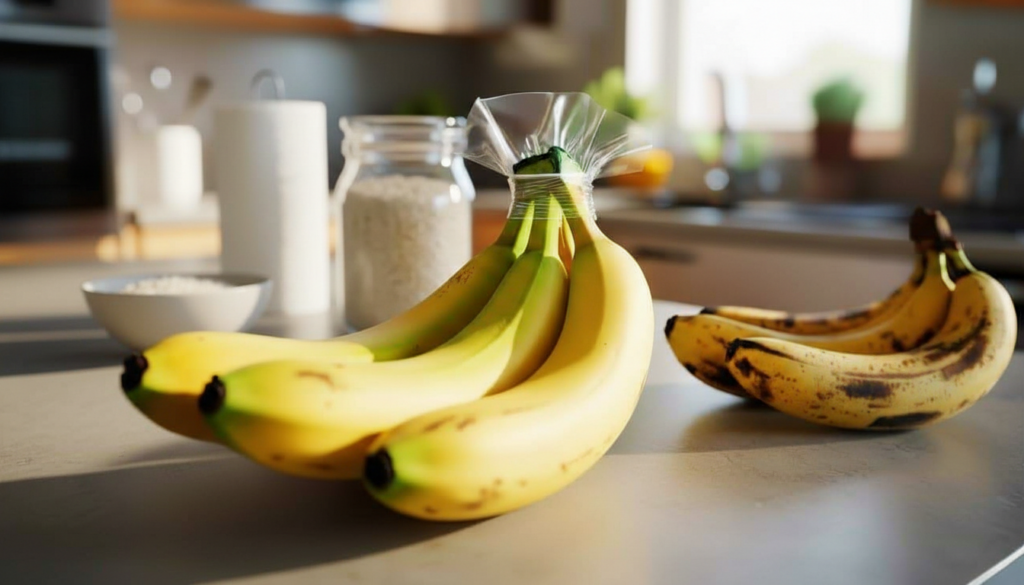
The solution isn’t high-tech or expensive. It’s sitting in most kitchen drawers: plastic wrap. The trick is surprisingly specific. You don’t wrap the entire banana. You only wrap the crown, the area where the stems meet.
When you tightly cover that stem cluster with plastic wrap, you reduce the amount of ethylene gas that spreads to the rest of the fruit. Ripening doesn’t stop completely, but it slows down significantly. In practical terms, bananas that might last four or five days at room temperature can remain yellow and firm for up to ten to fourteen days.
In real life, it’s simple. Bring home slightly green bananas, place them on the counter, and wrap the crown snugly. Press the plastic down firmly so there are minimal gaps. Over the next week, while other fruits come and go, your bananas stay steady — yellow, firm, and ready when you are.
How to Make This Kitchen Habit Work Even Better
For the best results, start early. Wrap the stems as soon as you bring the bananas home, especially if they’re still a bit green. Keep them at room temperature and away from direct sunlight. Avoid placing them next to apples, avocados, or tomatoes, since those fruits also release ethylene and can speed things up.
If you want even more control, you can separate each banana and wrap each stem individually. It may look a little excessive, but in warm kitchens it can add extra days. Once the bananas reach your perfect ripeness, you can move them to the refrigerator. The peel may darken, but the inside will stay firm for several more days.
This isn’t magic. It’s simply managing ethylene in a practical way, the same principle used in large-scale fruit storage — just applied on your kitchen counter.
Why This Small Trick Changes More Than You Think
Seeing bright yellow bananas still sitting in your fruit bowl after nearly two weeks feels oddly satisfying. It’s not only about saving a few coins, though that helps. It’s about reducing waste and feeling more in control of everyday routines.
Families waste fewer bananas during busy weeks. People who live alone don’t feel pressured to eat them all at once. Grocery planning becomes easier because you’re not racing against a four-day countdown.
Sometimes the difference between a useless tip and a genuinely helpful one is surprisingly small. In this case, it’s just a tight piece of plastic around a stem. But that small habit can quietly reduce food waste, stretch your budget, and make your kitchen feel just a little more organized.

Frequently Asked Questions:
1. Does wrapping banana stems really help?
Yes. It reduces ethylene gas spread, which slows the ripening process.
2. Should I wrap each banana separately?
You can, especially in warm kitchens, but wrapping the whole crown is usually enough.
3. Can I still refrigerate bananas afterward?
Yes. Once ripe, refrigerating them keeps the inside firm even if the peel darkens.
4. What if I want to avoid plastic?
You can try reusable food wraps or beeswax wraps to achieve a similar effect.
5. Why do bananas turn brown inside sometimes?
Internal browning can happen from bruising or advanced ripening, even if the peel still looks fine.