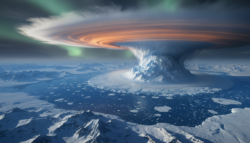
It was Friday night when the word “Snowmageddon” went from cable news to grocery store checkout lines. Radar swirls in electric blue lit up phone screens, group chats were full of screenshots of snow totals, and every family member texted the same thing: “They’re saying up to 60 inches.”
The sky outside still looked pretty calm. A light gray that doesn’t hurt. Kids jumped on sleds that were still around from last winter, and adults pretended they weren’t always looking at storm models like stock charts.
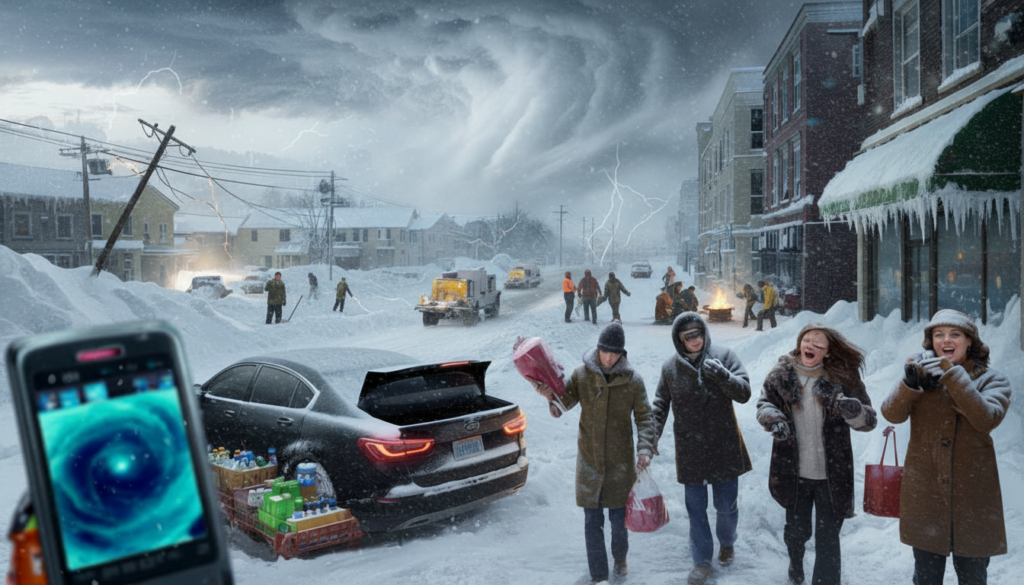
Some of the neighbors stacked firewood in tight, nervous piles. Some people rolled their eyes and made plans for brunch anyway.
Is it Snowmageddon or just another storm?
The storm looks like something out of the Bible on TV. Like a movie trailer, a countdown clock ticks down to landfall, and animated snow bands crawl across huge touchscreens. Red banners scream “SEVEREWINTER THREAT.”
The story is quieter outside of those screens. A barista takes off tape to put up a sign that says “might close early.” A dad in a parking lot tries to fit one more bag of rock salt into a trunk that is already full. A city worker in a bright vest leans on a shovel and says that people forget about winter quickly.
The unease lives in the space between the noise and the snowflakes.
Meteorologists say that some mountain areas could get up to 60 inches of snow, which is a lot. That’s not a little bit of snow or a day off. That kind of snow can bury sidewalks, swallow cars, and turn weekend plans into quiet survival drills.
By noon, hardware stores in upstate towns run out of generators. Neighbors in suburban cul-de-sacs trade extension cords and fight over whose snowblower can handle “the big one.” People in the city line up for batteries and instant noodles, half convinced and half feeding off the excitement of everyone else.
We’ve all been there, when getting ready feels like too much and not enough at the same time.
It’s not just the snow that makes a winter storm “Snowmageddon.” It’s how fear, algorithms, and old trauma come together.
People don’t think of “historic storm” as rare anymore because of years of extreme weather like bomb cyclones, record heat, and flash floods. It sounds like something that happens all the time, which changes how risk feels. At the same time, TV networks and social media are fighting for our attention, and nothing grabs a tired brain like a headline about the end of the world.
The end result is a messy mess: real danger wrapped in show, and a public trying to figure out what’s hype and what’s survival instinct.
How to get ready when you can’t trust anyone
The first thing you should do to calm down on a weekend like this is to walk around your own space. Not the path of the storm or the hashtag that is trending. Your real home, your street, and your neighbors.
Look at where the wind blows snow against your door. Check for that branch that is already hanging over the power line. Ask yourself this simple question: “What will be the first problem if we lose power for 24 to 48 hours?” Heat, medicine, food, or just being bored.
Make a small, realistic plan from there. Not at the level of a bunker. Not too much, though, so that if the worst headlines come true, your night still looks like card games by candlelight instead of panic.
This is where the emotional roller coaster starts. One channel calls it a “historic crisis,” and another calls it “media hype.” Your cousin on Facebook says that storms were worse in the 1980s. Your local emergency alert tells you to stay off the roads in a calm way, but it doesn’t go overboard.
People stop moving. They either don’t buy anything or they buy too much. They doomscroll forecasts but forget to charge their phone. Let’s be honest: no one really does this every day.
A softer approach works. Ask yourself, “What will I really use this weekend, storm or not?” A full tank of gas, extra blankets, shelf-stable food, and a power bank. That way, nothing feels like a waste, even if the storm doesn’t live up to expectations.
One experienced forecaster told me, “Forecasts are getting better, but your zip code isn’t a TV studio.” “We give the range. Your job is to get ready for the top without going crazy.

Pay attention to your micro-climate.
Don’t just watch national TV; check local alerts too. Hills, lakes, and cities with a lot of heat change everything.
Get what you need anyway
Think of things like rice, pasta, canned beans, pet food, and baby supplies. Not new survival tools.
Don’t plan for the end of the world, plan for power loss.
Flashlights with new batteries, charged devices, and a way to stay warm in one room.
Speak to someone close by
Instead of scrolling through your phone again, you could knock on the door of an older neighbor or start a group chat.
Set your “no-go” point early.
Make a rule for yourself: no more driving after X inches of snow or Y miles per hour of wind. No “just a quick run.”
Storms, climate anxiety, and the problem of trust
*Underneath all this snow and all-caps headlines, there is a deeper story.* It’s the quiet break in our beliefs about risk and who we trust when the sky turns white.
Every new “once-in-a-century” event feels like proof that climate change has already messed up the seasons for some people. They hear an alarm bell that has been ringing for years and see 60-inch forecasts. Some people roll their eyes at the same maps and say, “We’ve always had storms; they just name them better now.”
That split is more than just a fight over dinner. It’s affecting who leaves early, who stays put, who votes for what, and who thinks the government will save them when things go wrong.
There isn’t enough room for the government side of this picture in a headline. Local crews are aware that their plows are getting old and their salt budget is low. Emergency managers send out calm, responsible messages, but they get lost in a sea of memes and “SNOWPOCALYPSE” thumbnails.
In some cities, officials make detailed plans for the winter, like where to put shelter beds, warming centers, and plow priority routes. Some people have a plan that says, “We’ll react when we see it.” People know which is which. The last big storm is still fresh in my mind: the side street that wasn’t plowed, the 911 call that took too long, and the neighbor who froze while waiting for help.
One storm, one response, and one cleared intersection at a time.
This is where the media panic label hurts. People stop paying attention to warnings when news outlets make a big deal out of a small event. When they downplay a real monster, cars get stuck and houses go dark. And the newsroom doesn’t always draw a line between the two. It is drawn in the air.
There is one simple truth in all of this: snow doesn’t care who you voted for, what channel you watch, or if you think the models are too big. It just falls.
Not only is the question this weekend “How many inches?” It’s whether we can get through that fall—together as neighbors, cities, and a country—without letting hype drown out the hard lessons we’ve learned from a warming world.
How this storm might affect us
When the last flake falls, people will judge the storm by how many inches of snow fell, how many power outages there were, and how many viral videos of cars buried in snow there were. Some people will say, “I knew the media was blowing things out of proportion.” Others will think about the worst gusts that happened at 3 a.m. and wonder how close the disaster line really was.
The more interesting measure is below: who talked to whom, who helped whom, and who decided that getting ready for climate chaos isn’t an overreaction but a new kind of common sense. These winter weekends are like dress rehearsals for a time when extremes happen more often and aren’t as shocking.
That might sound like a lot for a snowstorm. A lot of people feel the same subtle change when they stand by the window and watch the world turn quiet and white. This is weather, but it’s also a mirror. Of our habits, our trust, our politics, and how patient we are with each other.
The storm will go away, but the questions it left on the doorstep will stay.
| Key point | Detail | Value for the reader |
|---|---|---|
| Media hype vs real risk | Storms get branded “Snowmageddon,” blending genuine danger with attention-driven drama. | Helps you decode headlines and respond based on reality, not just fear. |
| Personal, not abstract, preparation | Start with your home, street, and specific vulnerabilities before giant checklists. | Makes prepping cheaper, calmer, and tailored to your actual life. |
| Climate and trust under the snow | Extreme forecast exposes divides over climate change and faith in government readiness. | Gives context for the emotions and arguments that surface every “historic” storm. |
Questions and Answers:
How much should I believe a forecast that says there will be 60 inches of snow?
Don’t think in exact numbers; think in ranges. If reliable local sources say there will be multiple feet of snow, get ready for travel, power, and basic services to be severely disrupted, even if your final total is lower.
Are the news stories about these winter storms really overblown?
Some news outlets use dramatic language to keep people interested, but the risks that are really there can still be very real. Check local weather services and emergency alerts against flashy news coverage.
What should you do 24 hours before a big storm to stay safe?
Fill your prescriptions, top off your gas tank, charge your devices, gather flashlights, and pick one room where you can stay warm and comfortable if the power goes out.
How do I bring this up without getting into a fight about climate change?
Stay on the same page about safety, local effects, and practical steps. You don’t have to agree on the causes of global problems to work together to clear a sidewalk or check on a neighbor.
What if the storm isn’t as bad as we thought it would be?
Use it as a practice with low stakes. Instead of thinking of the event as a “false alarm,” think of it as practice for the next one, which might be even bigger. Eat the food you bought and keep your gear in order.