By 4:30 p.m., the parking lot behind the strip mall was already starting to turn white. Fat, lazy flakes floated under the orange streetlights, landing on hair, shoulders, and windshields. The manager of the grocery store was putting up a handwritten sign on the door that said, “We will stay open during the storm.” A woman in a red fleece read it, sighed, and sent a text with her mouth closed. Plows were lining up on the highway. An official in a neat suit begged people to stay home if they could on local TV. The storm maps glowed deep purple. The message was clear: don’t drive.
At the same time, thousands of workers were looking at their phones, wondering what their bosses would say.
One text could tell them if they would be safe or scared tonight.
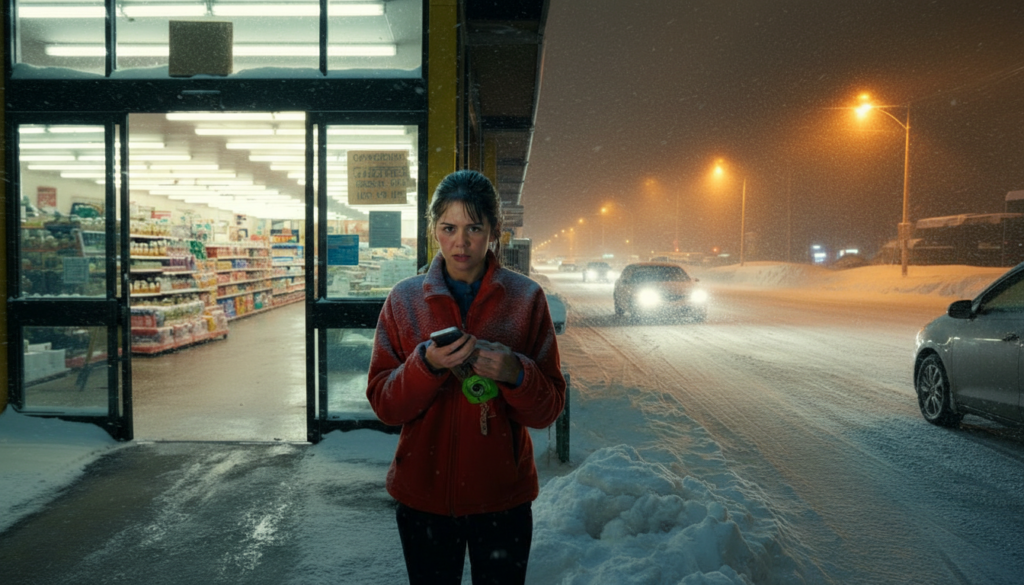
When the weather says “stay home,” but your boss doesn’t
The first flakes always look so pretty. They start to feel like a test after that. At 7 p.m., the heavy snow starts to fall in thick sheets, covering lane markings and hiding black ice under a clean white carpet. Officials get up to the microphones and say the same thing over and over: “Please stay home if you don’t have to go out.”
That phrase hurts a lot of people. Because their rent doesn’t care about travel warnings. Their shift still “needs coverage.”
For example, Liz is a 28-year-old barista at a coffee chain in the suburbs. At 5:12 p.m., her city’s emergency alert went off with the message “Hazardous travel conditions.” Don’t drive unless you have to. Two minutes later, her work group chat started to light up. The manager said, “We’re staying open normal hours tonight.” Anyone who doesn’t come needs a note from a doctor.
Liz lives 18 miles away, down a highway that gets flooded with spinouts every storm. She doesn’t get paid sick days. She drives a used Honda with worn-out tires, and if she misses a shift, her bank account goes into overdraft. She sat on the couch with her coat on and her car keys in her hand, watching the snow cover the curb.

It’s not uncommon for there to be a difference between what public safety messages say and what really happens at work. It’s part of how many low-paying and service jobs are set up. Officials talk about “non-essential travel,” but many businesses, especially restaurants, stores, warehouses, and call centers, quietly say they are essential to stay open.
The risk moves down the chain: from the company to the manager, from the manager to the worker, and finally to the person driving on an icy overpass at midnight. **That risk is not often shared fairly.**
What people really do when they are told to stay home and show up
People start doing math on nights like this. Not totals of snow, but trade-offs. “If I leave an hour early, drive 20 miles under the limit, and park on the side street instead of the slope…” It turns into a mental flowchart of risk. Some workers call a friend who has an SUV. Some people sleep on the couch of a co-worker who lives close to the store. Some people quietly pack a bag, ready to be stuck if the buses stop running.
A few people call in and hope that their name won’t be on the next schedule with fewer hours for some reason.
We’ve all had that moment when you look at your phone, read the boss’s message again, and your stomach drops. Last winter, a warehouse worker in a city in the Midwest said that his boss told him, “If the delivery trucks can make it, so can you.” The trucks had chains on their tires for snow. He had a ten-year-old car and two kids who lived with him.
In another case, drifting snow trapped a fast-food crew inside until 4 a.m., when they served almost no customers and watched cars slide outside. No one was given hotel rooms. They took turns sleeping on chairs in the dining area, wrapped up in their thin work hoodies.
There is a simple truth behind all of this: many businesses are much more flexible than they let on. Some people have already shown it. They close early and still make it. They put staff who can work from home online. They put up signs that say “Closed for the safety of our team” and get people to come back, not lose money.Culture, not infrastructure, is what keeps many people in place. A culture that praises “toughing it out,” sees staying open during a blizzard as a badge of honor, and quietly calls caution weakness or lack of commitment.
Choosing yourself without getting fired
A little planning can make a big difference on stormy days. People who have lived through a lot of bad winters often take screenshots of local weather and emergency alerts. Some people have a simple script ready in their notes app that says, “The roads in my area are unsafe and under a travel advisory.” I can’t drive in tonight. I can make up hours this weekend.
It’s not magic. But it helps to have the words ready when your hands are shaking. It bases the choice on safety, not fear or laziness, and it shows that you acted on official warnings, not just a whim.

The emotional battle is real. You could be the only one in your group chat who says, “I’ll try to make it.” That might make you feel like you’re being betrayed or like you’re being too dramatic. But bodies and cars don’t care about how people get along at work. Snow doesn’t give you grades based on how hard you work.
Let’s be honest: no one really reads the storm policy in the employee handbook every day. People use their gut feelings, what happened last time, and whether someone got in trouble for staying home to make decisions. That’s why talking to your coworkers ahead of time, sharing weather alerts, and even agreeing on a line you won’t cross can help with the loneliness.
Marco, who works nights at a big-box store, said, “Last year I drove through a blizzard because I was afraid of getting written up.” “I spun out on the ramp and ended up in a ditch.” When the same thing happened this year, I texted my boss, “I’m not going to risk the ditch again.” I still got a warning. But I also made it home safe.
- Keep local emergency alerts on and take pictures of travel warnings.
- Before the storms hit, write your boss a short, polite safety text.
- Before everyone starts to panic, talk to your coworkers about the limits you all have.
- Find out what your state says about emergency orders and refusing to work in unsafe conditions.
- Write down everything: the forecast, your messages, and any replies you get.
Where safety, loyalty, and survival meet
People remember nights like this for a long time. Not because of how much snow fell or what the storm was called, but because of how they were treated when their safety and their paychecks were at odds. The person who was told, “Do what you want, but don’t expect extra shifts next month,” will remember that long after the snow melts.
The one whose boss told them to “stay home, we’ll figure it out” will remember in a very different way.
For businesses, storms are like looking in a mirror that makes them uncomfortable. They show if “our people are our priority” is just a saying or a way of doing things. For workers, they make the quiet question sharper: “If I got hurt on the way in, would anyone at this company really help me?” Many people keep driving because they don’t want to take the risk of telling the truth. *But storms like these also plant seeds of determination, like to look for better jobs, join a union, or draw stronger lines the next time the sky turns white.
No one can stop a snowstorm. Who takes the risk, who gets to say “no,” and whether staying alive on the road is seen as disloyalty or common sense can all change. As the plows work all night and the news reports on accidents, a quieter count is going on in kitchens, break rooms, and group chats. When the weather gets bad, people are deciding how much their safety is worth and who really deserves their work.
| Key point | Detail | Value for the reader |
|---|---|---|
| Know your safety line | Use official alerts and personal limits to decide when driving is too risky | Helps you act with clarity instead of guilt or panic |
| Prepare your script | Draft short messages to employers explaining storm-related absences | Reduces stress in the moment and documents your reasoning |
| Notice how employers respond | Track which workplaces respect safety and which don’t | Guides long-term choices about where to stay, fight, or move on |