At 7:00 a.m., your phone lights up and says, “Drink water.” You swipe it away.
“Stretch for five minutes” came ten minutes later. Forget it.
When “Call your mom” comes up at 8:30 p.m., you’re rolling your eyes like your phone is your boss, coach, and slightly passive-aggressive roommate all at the same time.
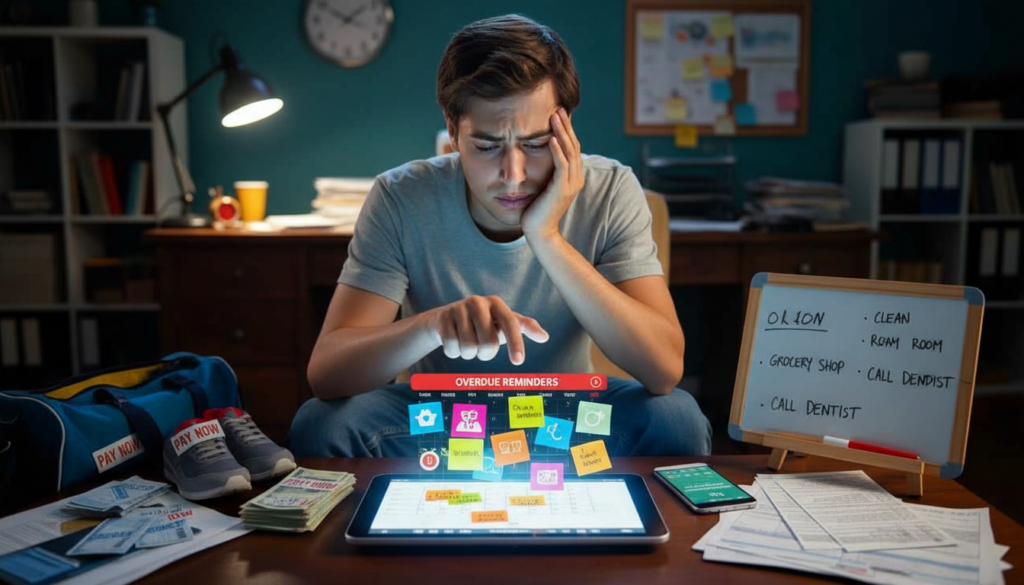
The weird thing is that you set those reminders for yourself.
You wanted to stay in touch, drink more water, and move around more.
But those same helpful nudges feel like little accusations on a Tuesday when work is messy and your head is full.
Why do messages we asked for feel like nagging from someone we don’t know?
And why do some reminders seem easy to follow, almost comforting, while others make you want to fight back right away?
There is something going on in the space between a notification and your reaction.
The real story is in that little space.

Why some reminders feel like an attack on your day
First, remember that a reminder always comes in the middle of something.
You’re in a meeting, scrolling through Instagram, stirring pasta, or doing a doomscroll on the couch.
Then a little box pops up and says, “Stop what you’re doing.” Instead, do this.
Your brain sees it as a small break.
Not bad, not dramatic, just a little distraction.
If you stack ten or twenty of those up in a day, they add up to a background noise that annoys you but you don’t really notice until you want to throw your phone against the wall.
Most reminders also have a hidden judgment in them.
They quietly say, “You wouldn’t remember this on your own.”
Imagine this scene.
You finally have time to sit down and watch Netflix with some snacks.
Your “Go to gym” reminder, which you set up during a burst of motivation on Sunday, goes off at 7:15 p.m. look at it.
The person who set that reminder clearly thought you would be someone else by Thursday night.
The guilt comes in right at that point between “ideal you” and “actual tired you.”
Research on notifications shows that timing and mood are more important than the words used.
When you’re already stressed, a reminder feels like pressure, not help.
On a better day, the same message might feel like a gentle push instead of a slap on the wrist.
There is a simple dynamic behind the irritation: loss of control.
Even if you wrote the command yourself, each alert is a small command from outside.
Your brain is wired to protect your freedom, so anything that sounds like “You must…” makes you resistant at a low level.
That’s why the same sentence can mean very different things depending on how you say it.
“Go for a run” sounds like a command.
“Want to get some fresh air?” sounds more like an invitation.
We are not robots waiting for jobs.
We’re people who are trying to protect our limited time and energy.
If reminders don’t respect that, they stop being helpful and start to feel like little bosses in your pocket.
Making reminders friends instead of foes
One simple change makes a big difference: make reminders that feel like help, not orders.
That starts with words.
Change commands into cues.
Instead of saying “Write for 30 minutes,” say “Could now be a good time to write?”
Instead of saying “Stop scrolling,” say “Look up for 30 seconds?”
Those little question marks are important.
Even if you end up doing the same thing, they make you feel like you have a choice.
You go from “I’m being told” to “I’m deciding.”
Also, make sure that reminders are linked to more than just time.
“Stretch for two minutes after coffee” is better than a random alert at 9:43 a.m.
Another helpful tip is to cut your list of reminders in half, then in half again.
Most of us fill our days with notifications that we think are good for us.
It becomes a full-time job to drink water, write in a journal, meditate, take care of your skin, take vitamins, walk, learn a language, and read.
To be honest, no one really does this every day.
When everything is marked as urgent, nothing feels important.
Choose two or three things that are most important to you for the next month and give them the “premium reminder” treatment.
You can keep everything else on a quiet list that you check once a day.
You’ll feel less like you’re being chased and more in charge.

Your reminders will go from “nagging parent” to “calm friend.”
The way you talk to yourself is also important.
A lot of people write reminders that sound like a mean coach: “Stop putting things off.” “Don’t be lazy.” “Change your diet.”
It’s not surprising that those alerts make people defensive.
Instead, write reminders as if you were texting a close friend you trust.
A friend you like, not one you’re secretly upset with.
Just changing the words can make you feel better about following through and make it feel less heavy.
“The voice in your reminders quickly becomes the voice in your head.”
Don’t give orders; send invitations.
To protect your freedom of choice, change “Do X now” to “Want to do a bit of X?”
Be in line with real life
Instead of making up routines, plan around your real-life habits, like coffee, your commute, and lunch.
Stop saying “guilt” words.
Take out “should,” “stop being,” and “don’t” from your notifications.
Cut down on the noise
Keep only a few reminders active so that each one has a real meaning.
Every week, get rid of or change things that don’t fit your current energy level or season of life.
Living with reminders that are in line with your reality
If your reminders are always bothering you, it’s not because your system is broken; it’s just not in sync with your real life.
Things that looked great in a Sunday planner don’t always work out on a crazy Wednesday, and that’s not a failure on your part.
Think of reminders as soft nudges from a future you who knows you’re busy, flawed, overwhelmed, and still trying.
A version of you that isn’t yelling, but is quietly holding a light on the path you said you wanted.
That’s the change: from strict scripts to help that can change.
You can try things out.
For a week, turn off half of your alerts and see what you really miss.
Change the harsh words to neutral questions and see how your body responds.
Some reminders will stay the same, some will change, and some will go.
The real win isn’t “never forgetting anything again.”
It’s creating a small, human system that you don’t secretly hate that works with your busy days, protects your energy, and still pushes you toward the life you say you want.
| Key point | Detail | Value for the reader |
|---|---|---|
| Language shapes reaction | Invitations and questions feel less controlling than commands | Makes reminders easier to accept and less emotionally charged |
| Less is calmer | Fewer, better-placed notifications reduce background stress | Gives a sense of control and lowers daily annoyance |
| Match reminders to reality | Align alerts with existing habits and current energy | Boosts the chance you’ll actually follow through |
Questions and Answers:
Question 1Why do I get mad right away when a reminder pops up, even if I set it?
Answer 1: Because your brain sees it as an interruption and a small loss of control. It can also show you how far away you are from your best self, which can make you feel guilty or defensive.
Question 2: Should I turn off all notifications to feel less stressed?
Answer 2: Not always. Turn off all but 2–3 of the alerts that aren’t necessary, and then keep the ones that are. Then make changes based on how your stress level and follow-through change.
Question 3: What is a good example of a “kind” reminder?
Answer 3: “Want to read two pages?” or “Want to take a short walk?” It gives you options instead of barking orders, and it’s gentle and clear.
Question 4: How often should I go over my reminders?
Answer 4 Most people only need to do it once a week. Take five minutes to get rid of old goals, change the times, and rewrite any harsh or guilt-inducing language.
Question 5: What if I don’t pay attention to my reminders?
Answer 5: That’s data, not proof that you’re lazy. Usually, it means that the reminder’s timing, wording, or size of the task doesn’t work with your real day. Change those before you judge your willpower.