Its soft wingbeats and low call, which were first picked up by a microphone and then by surprised eyes, are now shaking up discussions about extinction, genetic resurrection, and what saving biodiversity should look like in the 2020s.
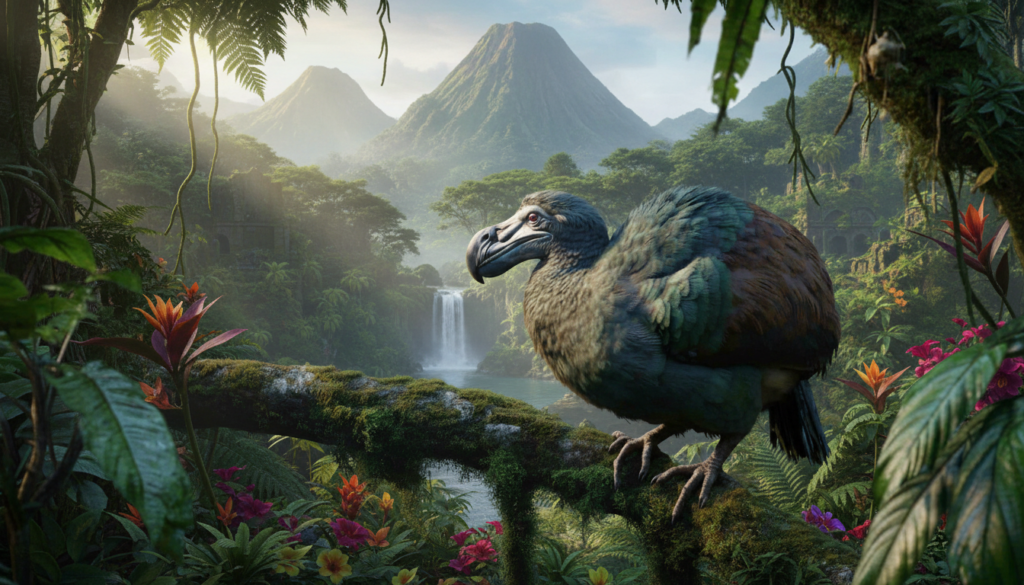
A ghost bird comes back to the Uafato forest.
No one had seen the manumea, a big, deep-chested pigeon that lives only in Samoa, in five years. Birdwatchers, hunters, and people who lived in the area all said the same thing: it was quiet. A lot of scientists were afraid it had gone extinct without anyone noticing.
In October and November 2025, field teams working in the forest of Uafato on the northeastern side of the island of Upolu started to tell the same story. They saw a unique pigeon move through the upper branches. It had a stocky body, short, rounded wings, and a heavy beak that looked like it had teeth.

The manumea was last seen in 2020, but it has been seen several times on its own in a single Samoan valley, putting to rest fears that it was gone for good.
The Samoa Conservation Society confirmed the observations after comparing notes from guides, locals, and birdwatchers. There is no picture yet. The bird doesn’t often leave the canopy and is careful when it sees movement on the ground. But experts were sure that at least one population is still alive because the sightings have been so consistent.
This wasn’t totally unexpected. In May, an AI system that had been trained to recognize bird calls flagged a recording from the same area as “high probability manumea.” A bird lover in the area said they saw one in 2024. It was easy to ignore each data point on its own. They make things look a lot better when you look at the 2025 reports.
A relative of the dodo that is still alive
Didunculus strigirostris is the scientific name for the manumea. It means “little dodo.” In 2002, the journal Science published research that linked it to the same strange group of island pigeons that gave rise to the dodo of Mauritius and the flightless solitaire of Rodrigues.
The manumea can still fly, but not very far, unlike its famous cousins. It has changed over time on islands where there were no big predators, which affected how it acts and how its body is built. It’s not very aggressive, takes a long time to reproduce, and only eats certain things. Those traits worked well in a forest that was mostly intact and had few dangers. They are terrible in a landscape that people have changed.
The bird’s hooked beak, which is very strong and has tooth-like ridges on the edges, is what stands out the most. That tool lets it crush and eat big, hard seeds that most other birds don’t eat.
The manumea is one of the last heavy-duty seed dispersers in Samoa. It eats big fruits and drops seeds all over the forest.
Some types of trees might have a hard time growing back without it, which could change the structure of Samoan forests over time.
The slow death of islands
From a common bird to a life-or-death situation
People who lived in the 1970s and early 1980s say that the manumea was a common sight. Hunters knew it, and kids could hear its call. Its population has since dropped sharply.
Deforestation: lowland forests have been cut down or broken up for farming, logging, and roads.
People bring invasive animals like rats, cats, dogs, and pigs that raid nests and eat eggs or chicks.
Climate change: storms are getting worse and rain patterns are changing, which hurts the trees that birds rely on for food.
Hunting pressure: even a little bit of hunting can push a species that breeds slowly over the edge.
Island species all over the Pacific follow a similar pattern. Being alone on islands with no predators makes animals fearless and able to specialize. When ships, guns, and rats show up, that same evolutionary history becomes a problem.
A warning from the dodo’s shadow
The dodo is now a worldwide symbol of extinction and is often used as a joke. For conservation biologists, the manumea is a living example that the story is not just a strange historical story.
Scientists can learn more about the dodo by studying this Samoan pigeon. They can learn how it moved, what it ate, and how it took care of its young. At the same time, they show how quickly a species can disappear when the forest around it is disturbed.
The manumea is at a point in evolution where it could go either way. If you save it, a whole new line of island pigeons will live on in real time.
How a tech company that was looking for the dodo ended up giving money to its cousin
Colossal Biosciences, a Texas-based start-up, has promised to bring back extinct animals like the woolly mammoth and the dodo. They are far from the steep valleys of Samoa. The company sells its vision with a mix of old DNA, gene editing, and a lot of advertising.

Researchers need to learn about living relatives before they can make any progress on a “new” dodo. This means looking closely at their genomes, behavior, and habitats. The manumea went from being a little-known island pigeon to a valuable research model all of a sudden.
Money for de-extinction projects is now going to surveys, DNA sampling, and community work in Samoa through partnerships and grants. The goal, at least on paper, is to collect data that could one day help make a dodo in a lab. In reality, that same fieldwork is helping to protect a real endangered bird.
High-tech dreams of bringing the dodo back to life have indirectly paid for boots on the ground to keep its Samoan cousin alive.
Some people don’t think this is a good deal. Ecologists who spoke to Mongabay and other news outlets say that focusing on futuristic resurrection sends the wrong message: that extinctions can be undone later with enough money and smartness.
They are afraid that governments and donors will put off making tough choices about protecting land, thinking that genetics will fix losses later. Critics also say that any “recreated” dodo would live in a very different Mauritius, with new predators and infrastructure all around it. Where would it really go?
Local guides, quiet woods, and the politics of getting attention
The people who saw the bird first
People who walk the ridges of Uafato every day are behind the news stories about AI and biotech. The first people to say that the bird might still be there were Samoan guides and villagers. They know what month each tree bears fruit, when hunting parties come through, and where pigs dig up the ground.
Now, conservation groups on the islands work closely with those communities. Some hunters have promised not to go into areas where manumea are known to live. Some people help set rat traps or take part in night surveys. For villages that are far away, this kind of work can bring in a small but steady amount of money and give them credit for local knowledge that was once thought to be “anecdotal.”
International science pays attention to what that collaboration does. A species can quietly disappear if no one speaks up for it. One with a small but dedicated local group has a better chance of staying around long enough for the world to notice.
Where the next sightings might happen
Researchers think there may be other groups of survivors on both of the main Samoan islands, Upolu and Savai’i, now that the bird has been confirmed in Uafato. There are still a lot of upland forests that are hard to get to that haven’t been surveyed.
People are leaving acoustic recorders in those areas that record sounds all the time. AI systems then look through thousands of hours of audio for the manumea’s unique call. The method is cheaper and less intrusive than having people around all the time, and it lets rangers deal with more urgent problems like hunting and logging.
AI listening posts and genome sequencing used to seem like things from the future, but now they are being used for something as simple as making sure a shy pigeon is still alive.
Why this one pigeon is important all over the world
For people who live far from the Pacific, the fate of one bird may seem far away. But the manumea brings up a lot of questions that are important for conservation all over the world.
| Issue | What the manumea shows |
|---|---|
| Extinction risk | Species can reach the brink long before formal extinction is declared. |
| Role of genetics | Genomic tools can aid both de‑extinction projects and classic conservation. |
| Local communities | People living with wildlife often spot changes long before scientists arrive. |
| Invasive species | Rats and cats remain some of the most damaging threats on islands. |
The story also talks about “functional extinction,” a term that ecologists use a lot. There may still be a species, but there aren’t enough of them to do their job in the ecosystem. In this case, a few manumea can live, but they don’t spread enough seeds to keep some tree populations healthy.
Now, practical conservation in Samoa needs to do more than just keep the bird on a list. It needs to increase its numbers, protect trees that bear fruit, and cut down on nest predation so that the species can shape the forest again instead of just haunting it.
What the manumea might look like in the next ten years
Scientists draw pictures of a few different possible futures. In the best case, stricter forest protection around Uafato and other strongholds works with aggressive rat control and community-led hunting rules. The number of manumeas stays the same for a while and then slowly goes up. Young birds begin to show up in new valleys. In 10 to 15 years, tourists with binoculars might be able to see one.
A middle-of-the-road scenario keeps the species alive, but only just. A few dozen birds are still alive in small groups, but they are very likely to die if a cyclone or disease breaks out. The species is functionally extinct and can’t come back without costly measures like captive breeding.
The easiest way to go down the darkest path is to ignore it. If the money runs out or the rules about how to use land get looser, chainsaws and predators could finish the job that the last few decades started in a few more years. This time, there would be no doubt about the extinction; only sadness that action came too late.
The manumea has avoided that last chapter for now. A cousin of the dodo is still flying in the dim green light of Uafato’s canopy. This makes the rest of the world think hard about which species we are willing to lose and which ones we will fight to keep.