It was late October, and it was getting dark when I first saw a rat in my garden. The air smelled like wet leaves and chimney smoke, and I was happily stacking logs when I saw a shadow move across the paving stones. I stopped. Then the “shadow” moved its tail and disappeared under the compost bin.
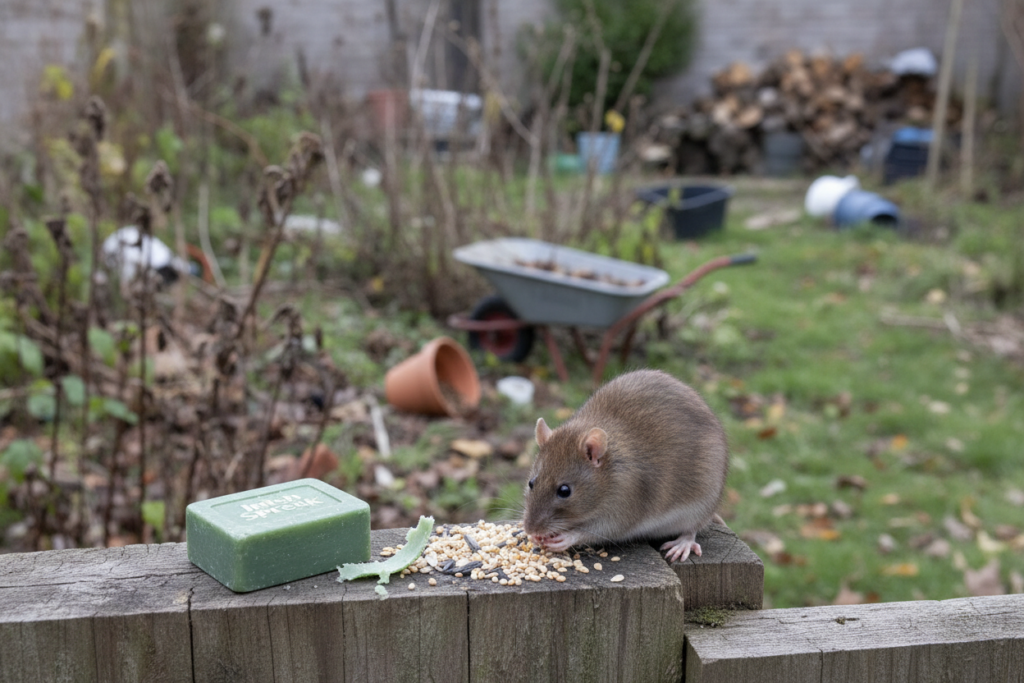
My stomach sank. My peaceful little garden turned into the back alley of a takeaway restaurant overnight. I began to picture nests under the shed, tunnels under the lawn, and little teeth chewing on everything in sight.
A neighbor told me later, almost in passing, that one simple bathroom item could keep rats from living there all winter.

I didn’t trust her.
Why rats suddenly love your garden in the winter
Rats see the opposite of what you see in your garden in November. Your yard is a winter vacation spot for them because it has soft soil, hidden corners, compost, bird feeders, and warm spots near the house’s foundations. As the weather gets colder, they look for a place to stay warm and safe, near food.
They can fit through a space the size of a thumb. You have rolled out the red carpet for them if you have one missing brick, one cracked vent, or one loose board under the shed.
Someone from Birmingham recently sent me a picture that sums this up perfectly. She had seen droppings in the greenhouse and then heard a faint scratching sound coming from under the deck. She thought squirrels were to blame at first. She then found a neat little burrow by the compost heap that looked like a tiny door in the ground.
Two weeks later, she saw three rats running along the fence line like it was a highway. The worst part? They came back every night at the same time, acting like they owned the place. That’s how quickly “maybe one rat” turns into a colony.
Rats don’t really want drama. They want three things: a place to hide, food, and a quiet place to have babies. The search just gets faster in the winter. They move toward gardens and then toward houses as fields are plowed and natural food sources become scarcer.
If they find a place to stay in your yard in November, there’s a good chance they’ll stay there, build a nest, and use your property as their home base. And once they get used to their new home, traps and poison are the messy, stressful part that no one wants.
That’s why that plain bathroom item suddenly becomes important.
The one thing you can put in your bathroom that makes rats think twice
Your neighbor is probably thinking of strong peppermint oil, which is often used in bath or shower products or sold as essential oil for home use. Most of us think of it when we think of toothpaste, menthol shower gels, or bath bombs that look like they came from a spa. Rats think of it as “get out now.”
They can smell things much better than we can. That fresh, tingly smell that wakes you up in the shower becomes a strong wall of smell for them, making it hard for them to find their way and telling them that this isn’t a good place to stay for the winter. When used correctly, it makes your garden look like a different place.
A retired caretaker I met in Leeds has made this into a small art form. He keeps a bottle of strong peppermint oil in the bathroom and uses cheap cotton pads to carry it around. Starting in October, he soaks some pads once a month and puts them in old jars with holes in the lids.
The little jars end up in classic rat hot spots, like behind the compost, near the shed, under the decking, and along the fence where he once saw runways in the grass. He hasn’t seen a single burrow since he started. He still gets birds, hedgehogs, and the odd fox, but rats? They’ve gone to find a quieter place to live.
 Satellite data shows the Iberian Peninsula is no longer moving the way researchers expected
This makes sense. You don’t want to kill or catch every rat in the area. You’re just making it clear that this garden is not nice. “Go somewhere else.” Strong smells like peppermint won’t get rid of a full infestation in a day, but they do something very important: they break the habit.
Rats are creatures of habit; they always go the same way and eat in the same places. When those places suddenly smell like something they hate, they stop, change their minds, and often decide not to stay there for long. That small pause is your winter edge.
How to use peppermint from the bathroom to keep rats away
The method is almost too easy to be true. Get a bottle of peppermint essential oil (or a very strong peppermint bathroom oil) and some cotton balls or pads. Soak them a lot so that the smell hits you as soon as you get close. Then put them in small containers with holes in them, like old jam jars or yogurt pots with holes in the lids. Anything that keeps the cotton dry will do.
Put these “smell bombs” in smart places, like behind trash cans, near compost piles, along fences where you’ve seen droppings, near gaps under sheds, and by any known burrow entrances. In the winter, you should refresh every two to three weeks, or sooner if the smell goes away. It’s not fancy, but it’s quick and surprisingly satisfying.
Timing and laziness are the two things that most people mess up on. We don’t do anything until we see a rat run across the patio. Then we throw down pellets and traps in a panic, promise to “stay on top of it,” and forget about it as soon as the days get longer.
Let’s be honest: no one really does this every day. The key is to work it into your daily life. You’re going to empty the bathroom trash? Take a quick sniff of the peppermint jar next to the compost and fill it up. Are you filling up the bird feeder again? See if the pad by the fence still has a strong smell. Every time, little, repeatable actions are better than one big heroic clean-up.
A pest control worker in London told me, “People think that rats are a sign of a dirty house.” “But I see them all the time in clean gardens. The difference is that some owners spend five minutes a month making their yard a bad place to live. Some people do, but others don’t.
Begin in the fall Put out peppermint sources in late September or early October, before the rats have settled on their winter homes.
Aim for the right areas Pay attention to dark, quiet places like sheds, compost piles, under decks, behind wood piles, and near drains and vents.
Combine with simple housekeeping: keep food waste safe, raise bird feeders, and get rid of thick clutter where mice can hide and build nests.
Change the smell often In the colder months, or after heavy rain if the jars aren’t sealed well, re-soak the cotton pads every 2–3 weeks.
Look for signs of danger Look for gnaw marks, greasy rub marks on walls, or new holes near buildings, and make those areas stronger.
Rats, winter, and the strange power of little rituals
It’s strange how calming it is to walk around your own garden on a cold night with a jar of peppermint in hand and listen to the quiet. You begin to notice things you usually don’t see, like the space under the gate, the way ivy has grown up the shed, and the soft patch of dirt by the fence post.
You aren’t just reacting to problems anymore; you’re reading the space like a map.
Rats are a part of city and village life, just like pigeons, foxes, or the neighbor’s cat that thinks every flowerbed is its own throne. You can’t really have total control. You can control whether your garden feels like a safe place for them to stay during the winter or just a place they pass through on their way to somewhere else.
A small, minty ritual from the bathroom drawer can quietly change that balance. You might start looking at other parts of the house the same way once you see how one small habit changes the winter story of your garden. Not with fear, but with a calm, practical mind and a little curiosity about what else is in your space when the nights get long.
| Key point | Detail | Value for the reader |
|---|---|---|
| Peppermint as deterrent | Strong peppermint oil overwhelms rats’ sensitive sense of smell and disrupts their routines | Offers a non-toxic, low-cost way to stop rats from overwintering in the garden |
| Strategic placement | Cotton pads soaked in oil, placed in jars with holes near sheds, compost, and fence lines | Maximizes effect using materials you already have at home, without specialist equipment |
| Regular winter routine | Refreshing the scent every 2–3 weeks and combining it with basic garden tidying | Builds a simple, sustainable habit that keeps rats away before infestations start |