Science says that difference isn’t an accident.
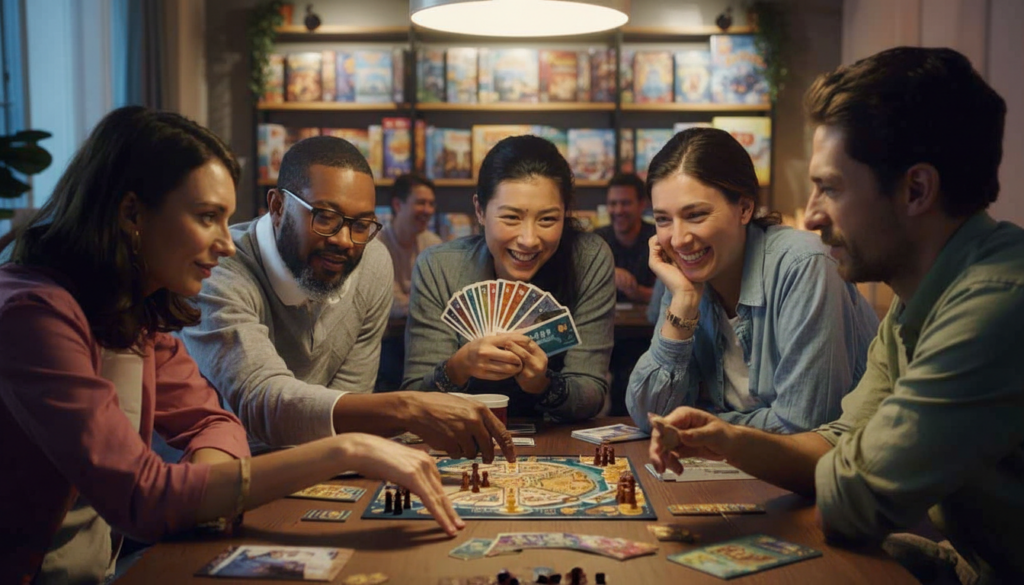
New studies show that our love of board and card games isn’t just because we miss them or want to kill time. It shows deeper personality traits, social habits, and even brain health patterns that can last into old age.
What your love of board games says about you
Researchers at the University of Plymouth did the study that started this discussion. PubMed has also published work on game-based activities and mental health that supports this. When you put all of these results together, they paint a surprisingly consistent picture of adults who keep playing board games.

People who play board games often tend to be more confident, more mentally tough, and more interested in making friends.
That doesn’t mean that all Monopoly fans look or act the same. Different types of players are drawn to different genres. Still, scientists can see some traits that show up again and again in big groups.
- More faith in the choices they make
- Speaking up in groups is easier.
- A stronger sense of belonging and social ties
- A habit of working on memory and strategic thinking
- Why games often draw in people who are sure of themselves
There are a lot of little choices to make in board games, like what card to play, when to take a chance, when to negotiate, and when to fold. People who like making decisions all the time often say they feel more comfortable trusting their own judgment when they’re not playing games.
Research cited in PubMed indicates that consistent participation in structured games is associated with enhanced life satisfaction. Part of the reason for that link is psychological: you practice making choices, see their effects right away, and learn that a bad choice doesn’t mean the end of the world.
Games give you a safe place to fail. You can lose badly, shuffle the deck, and start over without any long-term damage.
This can help you feel good about yourself over time. You learn to deal with uncertainty, defend a plan, and bounce back from mistakes, all of which are useful skills in real life.
Self-assertion: the quiet strength of taking a turn
Self-assertion is another interesting trait that board game fans have. This means being able to speak up, defend a point of view, and stick to a decision. Even easy games make players say “I’m doing this” in front of other people and deal with the reaction.
How games make you want to speak up
Many well-known games have systems that reward clear, confident participation:
Games like Catan or Diplomacy that involve negotiation encourage bargaining, forming alliances, and disagreeing openly.
Players in social deduction games like Werewolf or Among Us have to accuse, justify, and lie in a certain way.
If the team wants to win, cooperative games like Pandemic make shy players share their ideas.
This can be low-stakes training for people who have trouble standing up for themselves at work or in social situations. You learn to say “No, I’m not trading that card,” set limits, and deal with pushback.
Games are like practice for real-life conversations. You can argue, negotiate, and come to an agreement without putting your job or friendship at risk.
Social connection: cardboard as a way to bring people together
A strong need for shared experiences is probably the most obvious trait of board game fans. Pulling out a game at a family dinner or a night with friends is a great way to make memories and get people to put down their phones.

The Plymouth-linked study says that group games, especially for older adults, help people stay socially active and mentally healthy. To put it simply, they keep people talking, laughing, and feeling like they belong.
Why playing with others is good for your mental health
Being alone is a big risk factor for depression and even getting sick. Board games are a way to get together that doesn’t involve drinking, sports, or deep conversation. The rules give everyone something to focus on, which can be very helpful for people who don’t like being around a lot of people at once.
For a lot of people, the game itself is less important than the ritual: the familiar box, the inside jokes, and the fights over the rules that happen again and again.
Researchers say that games often make people more motivated and involved when they are in a group. People are more likely to be active when they have a common goal, like beating the game, getting a higher score, or outsmarting another team.
Cognitive benefits: a workout for the mind
In addition to personality, science shows that board game fans share another trait: they train their brains without even realizing it. At the table, people are always using strategy, memory, planning, and attention.
| Game element | Skill often engaged |
|---|---|
| Remembering cards or past moves | Working memory |
| Planning several turns ahead | Executive function |
| Reading other players’ intentions | Social cognition |
| Adapting to changing rules or events | Cognitive flexibility |
The review on PubMed says that doing mental activities like this may help older adults keep their brains healthy and even help them find problems early. Having trouble following rules or using simple strategies over and over again can be a sign of the first stages of decline, which means you should see a doctor sooner.
What “board games” really are
When researchers talk about board games, they usually mean a lot of different kinds of games. These include classic games like chess and Scrabble, modern strategy games, card games like Uno or bridge, and story-driven games where players work together.
Each group usually attracts people with different personalities. People who like abstract strategy games often enjoy being patient and thinking in a structured way. People who like party games may be more social and goal-oriented. People who play cooperatively often care more about working together and achieving goals as a group than winning on their own.
A quick example: two players with different styles
Picture two friends playing games together every week. One person likes to play complicated strategy games and learns all the rules slowly, thinking three turns ahead. The other person likes loud party games, jumping in, telling jokes, and not caring who wins.
Both fit the general “board game lover” profile: they are socially motivated, interested, and happy to be a part of things. But the titles they like best show different sides of their personalities: analytical on one side and expressive on the other. Researchers caution against inflexible classifications; however, they observe recurring patterns within substantial cohorts.
How to use this knowledge in real life
It’s helpful to know how games relate to personality in real life. Parents might pick cooperative games to help a shy child practice speaking up without feeling like they have to. During training, managers could use light strategy or team games to see how their coworkers talk to each other, negotiate, or deal with problems.
For older adults, playing games regularly at community centers or care homes can help them stay connected with other people and keep their minds sharp. If someone suddenly has trouble following rules they’ve known for a long time, they might need to see a doctor instead of just saying, “I’m getting older.”
When you look at it this way, a box of cardboard and plastic pieces becomes a small, useful tool for socializing, getting to know yourself, and improving your mental health.
If you’re not sure if you want to join a game night, starting with low-pressure games like simple card games, light cooperatives, or trivia can help. The scientific work shows that even a little bit of regular play can give you a lot of the mental and social benefits that serious board game fans get.