In North America and Europe, local governments and homeowners are looking for ways to keep pavements safe without harming the ground, burning pets’ paws or rusting cars. A new generation of smart low-tech tricks and de-icers is starting to change how we deal with ice on our doorsteps.
Why rock salt is being pushed to the side
Sodium chloride, the most common type of road salt, is cheap and works quickly, but it has a lot of side effects. It gets into the ground water, dries out plants, eats away at concrete and metal, and makes paws and skin itch. In cities with a lot of people, those effects add up.
A typical city can spread tens of thousands of tonnes of salt in just one winter. A lot of it ends up in rivers and garden soil.

The environmental bill is making councils and residents look for other ways to keep people on their feet. The goal is not to stop de-icing completely, but to use less of smarter products, along with better timing and simple traction aids.
Two options: melt the ice or hold on to it
There are two main groups of winter safety tips. The first method is to either melt the ice or stop it from sticking to the ground. The second one makes it easier to grip, so shoes, pram wheels and bike tires can still grip the ground even when there is still some ice.
Think of it as a set of tools: one melts thin, stubborn ice, and the other grips well in very cold or sensitive areas.
There is also a third strategy that is often missed: stop the ice from sticking in the first place. Before the snow settles, spraying or spreading a liquid solution can make shovelling much easier later on and cut down on the amount of product needed by a lot.
Calcium chloride, magnesium chloride, and CMA are softer de-icers.
When used correctly, a few salt-based products work at lower temperatures and are less harsh than regular rock salt.
Calcium chloride for very cold weather
Calcium chloride (CaCl₂) is a common upgrade. When it dissolves, it releases heat and pulls moisture from the air, which helps it break through ice quickly.
Works well down to about -32 °C (-25 °F)
Works quickly on stairs, tight corners, and shaded areas
Often sold in flakes or pellets for home use
If you only use it a little bit, it can help you use less de-icer overall. But using it too much can still stress the soil and plants nearby, so many experts say to only use it on the worst parts of the driveway.
Magnesium chloride is good for pets and plants.
Another common choice for homes with dogs or garden borders near the path is magnesium chloride (MgCl₂). It usually works down to about -23 °C (-10 °F) and leaves less gritty stuff behind than sodium chloride.
Veterinary groups often say that this is less irritating for paws than rock salt, but any de-icer can cause problems if animals lick a lot of it. A lot of pet-friendly products on the market are made with magnesium chloride and something that gives them traction.
CMA: the expert on not sticking
CMA, or calcium magnesium acetate, is a whole different animal. There is no chloride in it at all. Instead of breaking through thick ice, it stops snow and thin ice from sticking to the surface.
| Product | Main role | Typical use |
|---|---|---|
| Calcium chloride | Fast melting in deep cold | Steps, steep drives, shaded paths |
| Magnesium chloride | Gentler melting | Areas used by pets and near plants |
| CMA | Prevention and anti-adhesion | Before snow, on pavements and car parks |
CMA is often used as a preventative spray on high-risk surfaces like the outside of hospital entrances or train stations because it is usually more expensive. It breaks down into things that usually don’t hurt the structure of the soil as much.
Beetroot brine and mixes made at home
Beet brine, a dark, sticky liquid made from processing sugar beets and mixing it with a little salt, has been one of the more interesting options in recent winters. Some cities in North America already spray it on roads before it snows.
Beet brine can help salt stick to the road and slow down refreezing, which means less salt is needed while still making the surfaces safe to drive on.
Beet brine is usually only used on existing tarmac or concrete at home, not on new concrete or directly over delicate beds. It works best to stop ice from forming or during a snowfall, not as a magic cure for thick, shiny ice.
Some people make their own de-icing solution for their front steps or porch by mixing lukewarm water with a splash of dish soap and a little rubbing alcohol. The soap makes it less likely that ice will stick to the surface, and the alcohol makes it freeze at a lower temperature.

This kind of homemade mix is only good for very thin layers of ice, and you always need to sweep away the slush so it doesn’t freeze back into a glassy sheet.
Sand, ash, and grit give you traction without melting.
When the temperature drops or you want to keep things dry, like around planted areas, traction materials are very useful.
Quick grip with sand and wood ash
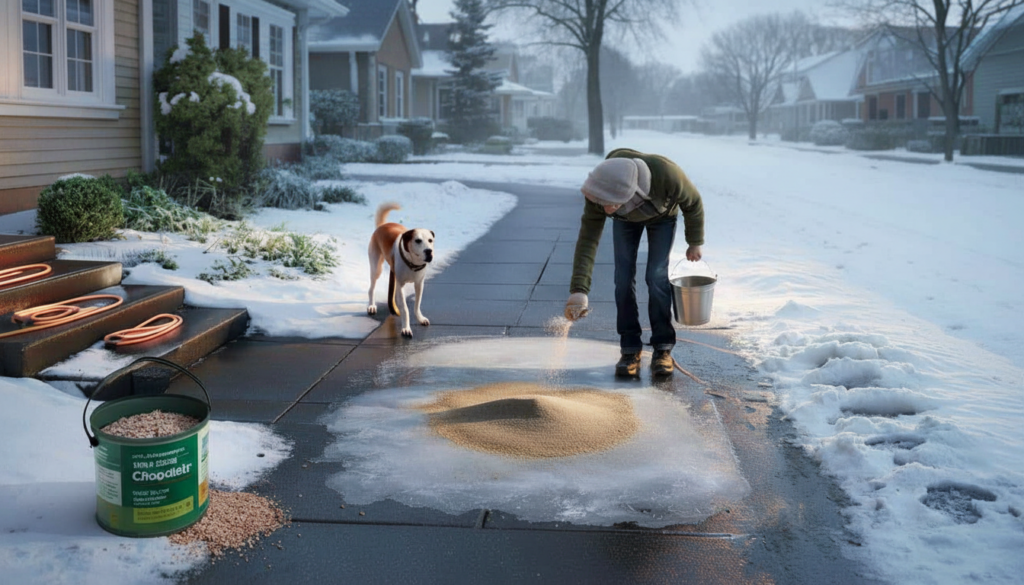
People still like plain sand. It sticks right away, and its darker colour helps it soak up some solar heat on sunny days. The bad thing is that it can block drains and needs to be swept up when the thaw comes.
You can get the same effect for almost no cost by using wood ash from a clean-burning stove. A little light on an icy path can make a big difference in how it feels underfoot. Ash also helps melt ice a little bit because it has minerals and leftover heat, but it can be messy and shouldn’t be dumped in thick layers.
Chips of wood and crushed stone
Fine wood chips and other larger particles stay in place better during freeze-thaw cycles, which makes them good for use on slopes or gravel drives. Many families like that they are less likely to track inside.
Some rural areas use “chicken grit” or “traction grit,” which is basically crushed granite or another stone that is sold for birds. These sharp, angular grains dig into ice and hold on tight without breaking down in the soil. You only need a thin layer, and you can sweep up and use a lot of it again.
High-tech driveways and heated mats
Technology can help people who have trouble moving around or who have very steep steps get rid of chemicals altogether.
You can clear a thin layer of snow and frost with electric heated mats that are laid out on the top few steps or a narrow walkway. They only run when they are needed, and you can roll them up when spring comes.
Fully heated driveways and paths are at the top of the budget scale. Pipes or electric wires that are put in below the surface heat it from below. These systems use a lot of power and only work in certain situations, like when there are exposed hills or busy apartment buildings with shared walkways.
How to pick the best option for your pavement
The best way to protect people, pets, plants, or all three depends on where you live.
If you live in a place with mild winters and a lot of pets, use magnesium-based products and traction, and don’t use too much chloride near lawns.
If you live in a very cold place, keep a small tub of calcium chloride for the worst spots and use sand or grit in other places.
Gardens near paths: use abrasives, CMA to stop ice from forming, and quick shovelling instead of heavy de-icing.
For small balconies or steps in the city, heated mats and a little bit of liquid de-icer may be enough.
You can cut your chemical use by half or more if you think ahead, clear early, use preventive sprays, and only target high-risk areas.
Important words and examples from real life
A lot of winter safety guides use the terms “anti-icing” and “de-icing” as if they mean the same thing. No, they are not. Anti-icing means doing things before or during a snowfall to keep the first layer from sticking together too tightly. De-icing comes later, when the snow or ice has already hardened or become compacted.
Think about a normal pavement in the suburbs. Before a freeze is expected, spreading a thin layer of CMA or light brine makes it easier to shovel snow the next morning. You might only need to shovel quickly and then sprinkle sand on the slick spots that are still there. If you skip that first step, you might have to use a metal scraper and pour a lot more chemicals to get the same result.
The school run is another possible situation. Parents are often worried about their kids falling down stairs and what gets on their dog’s paws. In that case, a lot of people choose a pet-friendly de-icer on the steps themselves, along with crushed stone or grit on the pavement where plants grow.
You don’t have to choose one or the other. Small changes, like using a mixed product instead of pure rock salt, only using beetroot brine as a pre-treatment, and saving strong de-icers for important areas, can help the environment while still making winter streets safe to walk on.