A 9-year-old boy in a brightly lit kitchen in the suburbs starts crying on a Tuesday night because his tablet battery dies at 12% instead of 15%. His mom runs over and says she’s sorry, promising ice cream, a movie, or anything else to “make it better.” A wave of comfort and distraction makes the homework he was supposed to finish disappear.
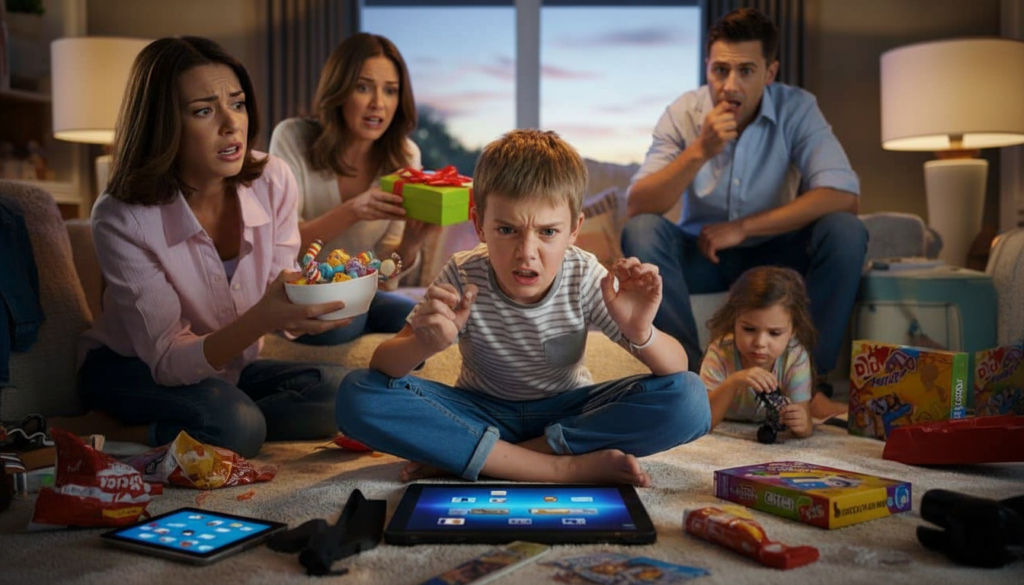
His father is watching with worry. He remembers walking to school in the rain, saving up for one comic book, and hearing “no” more often than “yes.” Saying “no” today feels like it could hurt. The family just wants to be happy, peaceful, and together.
The boy stops crying. He yells ten minutes later because the ice cream isn’t the right flavor.

That scene seems strangely familiar to me. And strangely creepy.
When happiness is a religion in the home
In a lot of homes, the happiness of the kids is what matters most. Parents plan, filter, change, and soften each day to keep their kids from getting bored, frustrated, or disappointed. People treat a bad mood like a fire that needs to be put out, not like a weather pattern that needs to be dealt with.
There is love behind this, and a lot of guilt too. Parents want to make a little island of happiness in the middle of long workdays, unstable economies, and scary news. But psychologists are beginning to warn that this “happiness-at-all-costs” parenting style may be backfiring without anyone noticing.
Kids learn that feeling bad is not normal. Not acceptable. Someone else is to blame.
A school counselor in London talks about her new “frequent flyers”: 15-year-olds who cry over a B+, a bus that is late, or a sleepover that is pushed back. In a dramatic way, they’re not weak. They can shout, talk things over, and ask for what they want. They have trouble standing up when life doesn’t immediately bend to their will.
One boy, who was the best in his class, had a panic attack when his favorite teacher went on maternity leave. He wasn’t just sad. He felt like the world had broken an unspoken promise to keep him safe. His parents stormed in and yelled at the school for “not caring about his emotional well-being.”
The counselor’s impression is clear: these kids have been taught to expect a life that is carefully planned, not one that is shared.
Psychologists refer to it as “discomfort intolerance.” The brain doesn’t get used to sitting with a bad feeling, so even small bumps feel like big ones. When parents always make things easier for their kids, their kids’ inner tools like patience, perspective, and empathy don’t get used or developed.
If I can’t ever hurt, then other people’s needs start to seem like threats. A sibling’s turn, a friend’s mistake, or a teacher’s rule can all feel like they are about you. That’s how we go from “I want to be happy” to “I want the world to revolve around what I feel right now.”
What started as protection slowly turns into permission to be selfish.
How to love deeply without making a comfort addict
One simple change that many therapists suggest is to wait a few minutes before getting help. When your child is upset because the game is over, they got a no, or the day just didn’t go their way, take a break. Sit next to them. Say what they feel.

So don’t fix it.
You could say, “I can see that you’re really upset.” When you’re having fun, it’s hard to stop. Then take a deep breath. Let the wave go by. The message isn’t “toughen up,” it’s “you are strong enough to go through this and come out the other side.” That little space between feeling and acting turns into mental muscle over time.
Parents often go through the same cycle: they feel bad, then they feel guilty, and then they go into rescue mode. The urge to “do the opposite” is very strong, especially for people who had cold or mean parents when they were young. So they fix it too much. Every annoyance feels like trauma. No feels like a betrayal every time.
We’ve all been there: when your child cries and you feel like a bad person for not fixing it right away. But many psychologists say that frustration, in small amounts, is not cruel. It’s training. Let’s be real: no one really does this every day. But every time you don’t jump in right away, you teach your child something about themselves: that they are not fragile.
A child psychologist told tired parents in a session, “Your job is not to stop every hurt.” You are the safe person they can turn to after they have been hurt.
Let them have small, safe fights. For example, let them lose the board game, wait their turn, or save their own money for something they want.
Say “and,” not “but.” For example, “You’re angry, and we still need to leave the park,” instead of “You’re angry, but we need to go.”
Tell them what you can and can’t do. For example, “I’m tired, so I can read one story, not three.” Children learn that other people have inner lives as well.
No instant entertainment; make boredom normal. Boredom is not something to get rid of; it’s often the door to creativity.
Don’t just celebrate success; also celebrate recovery. “You were upset and you calmed down” is just as important as “You got an A.”
A generation that is learning to feel, not just to be happy
It’s easy to see why people are upset about these results. Parents think that people are saying they love their kids too much. Professionals think that people are calling kids “spoiled” when they are really trying to figure out a new emotional climate. People who are already under a lot of stress don’t want to be blamed for anything else.
But there is another way to look at this study. Not as blame, but as a reflection. Many adults today also have trouble with discomfort. Instead of resting, they scroll; instead of feeling, they numb. Kids are just growing up in that same culture and showing it to us.
What if the real change isn’t about kids at all, but about how much we can handle emotional weather that isn’t sunny?
Main pointDetail Value for the reader
Happiness obsession can backfire Constantly removing discomfort teaches kids that any negative feeling is abnormal and unbearable. Helps parents rethink “rescue mode” and see how it shapes long-term resilience.
Discomfort builds inner tools Short moments of frustration or boredom are training grounds for patience, empathy, and self-control. Encourages families to allow small struggles instead of fearing them.
Love doesn’t mean instant fixing Being present with a child’s feelings, without immediately solving them, grows security and independence. Offers a concrete, doable way to support kids without feeding self-centeredness.
FAQ:
Question 1Are psychologists really saying parents shouldn’t care about their children’s happiness?Not at all. They’re saying that chasing constant happiness can undermine deeper well-being. The goal is a child who can feel sad, angry, or bored and still feel safe and loved.
Question 2How do I know if I’m “overprotecting” my child emotionally?One sign is if you feel panicked every time they’re upset, or if you often change rules, plans, or boundaries just to stop their distress in the moment.
Question 3Won’t letting my child struggle a bit damage their self-esteem?Small, manageable struggles usually do the opposite. When kids get through them with your support, they feel capable rather than fragile.
Question 4What if my child already seems unable to tolerate any frustration?Start with very small steps: tiny waits, small “no’s,” clear routines. Stay calm, name their feelings, and slowly lengthen the gap between feeling and fixing.
Question 5Can this approach work with teenagers, or is it too late?It’s not too late. Teens can learn to tolerate discomfort, especially when adults model it, speak honestly about their own limits, and stop organizing everything around avoiding conflict.