When it happens, you’re already late. The school run, the early shift, and the first cold commute of the year. You slam the door, start the engine, and in a few seconds, the glass on the windshield turns milky. The headlights behind you smear into white circles. You poke random buttons, turn knobs, and curse softly. While the clock keeps ticking, the glass stays stubbornly hazy.
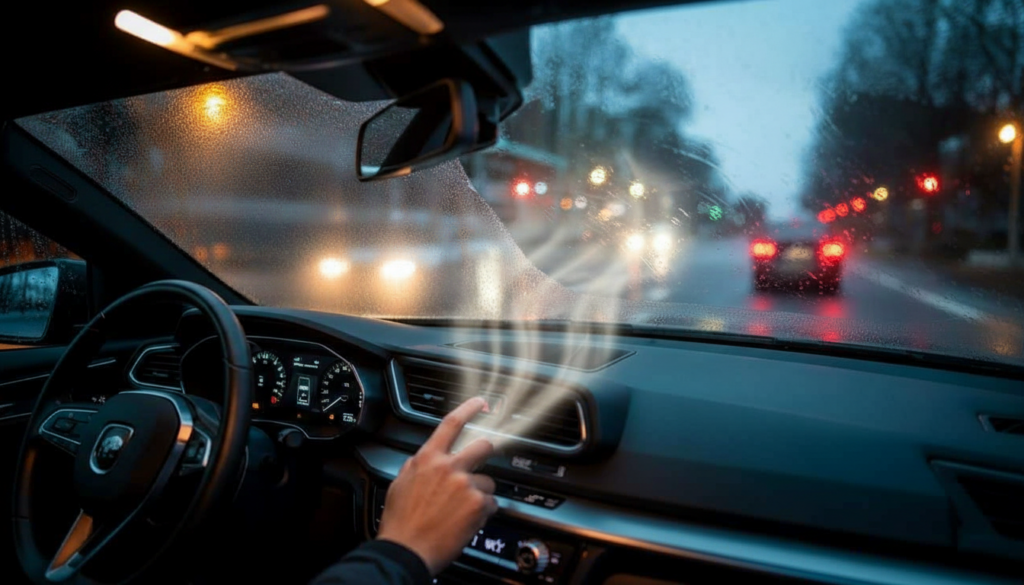
The world outside is clear and sharp. Inside, you’re stuck in a soft-focus nightmare, breathing in your own fog.
What was the worst part? Car experts say a simple dashboard combo can clear that fog in about half the time.

But very few people use it the right way.
The real reason your windshield gets foggy so quickly
It’s not magic that makes glass foggy; it’s math and water. When warm, humid air inside your car hits a cold windshield, it quickly turns into thousands of tiny drops. That’s your “mist.” It feels sudden, but it’s been building since you got in and started breathing, talking, and maybe drinking coffee.
Then the usual mistakes happen. Sending hot air at the glass. Turning the fan up all the way. Cleaning the inside with your sleeve. Everything feels alive and safe. But the fog just stays there.
If you ask any driving teacher, they’ll tell you the same thing. When new drivers take the test in the winter, their windows are fogged up like a sauna. They keep messing with the buttons and sliders, getting more and more nervous. Some people actually drive off with a small clear “peephole” scratched into the fog.
Taxi and delivery drivers who have been doing it for a while are different. They get in, flip two or three switches without even looking, and in less than 30 seconds, the windshield goes from being cloudy to clear. The same car, the same weather, and the same laws of physics. Different way to set up the dashboard.
On paper, the science is boring, but when you’re on a wet road at night, it’s very real. When you dry the air and change where it comes from, the fog goes away. If you heat the air without drying it, it will just stay warm and damp, which can keep the glass fogging up. When you recirculate the same cabin air, you’re breathing in your own breath again.
Car experts used humidity sensors and a thermal camera to test different combinations. The setting that won wasn’t the hottest or the one with the strongest fan. It was the one that dried the air the fastest and sent it right to the glass, where it was needed.
The dashboard combo that clears fog twice as fast
When your windshield suddenly fogs up, professionals say to do the following in order: First, press the front defrost button so that air only goes to the glass. Then turn off the air recirculation so that you get fresh air from outside instead of the humid air inside.
This is the most important part. Even in the winter, turn on the air conditioning and set the temperature to warm, not very hot. AC takes moisture out of the air in your car. It takes the moisture out of the air before it gets to the windshield. Warm, dry air hitting a cold surface clears fog much faster than hot, wet air.
When stressed, most drivers do the opposite. They hit “recirculate” to “keep the heat in,” turn off the AC to “save fuel,” and turn the heat up to full because they are freezing. That combination feels good, but it keeps moisture in the cabin and sends it right back to the glass.
Experts say it feels like “driving inside a kettle.” The steam comes from your breath, wet coats, wet floor mats, and even the snow on your shoes. *It’s no surprise that the windshield fogs up every time you breathe out.
One experienced mechanic I talked to said, “AC isn’t just for summer.” “On a cold, wet day, the quickest way to get rid of fog is to turn on the AC, turn off the recirculation, put the air on the windshield, and set it to warm.” People think that turning off the air conditioning saves gas, but it actually makes them more likely to get into an accident and makes it harder to see.
Press the windshield icon on the front defrost button.
Turn off the recirculation button and let in outside air.
Even when it’s cold outside, turn on the AC.
Set the temperature to warm, not the highest heat.
Set the fan speed to medium-high, then turn it down once you can see clearly.
Little things you can do to keep your windshield clear longer

After doing the “AC plus outside air” trick a few times, it becomes second nature. You get in, the glass fogs up, your hand goes right to the same three controls, and the fog goes away almost before your brain can figure out what’s wrong. That’s how bus and truck drivers work: they do the same thing over and over again.
Half of the battle happens before you even start the car. When the cabin warms up, all that moisture is in the air: wet coats thrown on the passenger seat, snow on the carpets, and a water bottle that was left behind rolling under the seat. Before the engine even starts, visibility starts to go down.
This is where reality and good practice meet. Let’s be honest: no one really does this every day. You don’t always knock the snow off the floor mats or leave the doors open for ten minutes to let the car air out. Life is too fast, kids are too messy, and rain is too wet.
But small rituals do help. Taking off your shoes before getting in. Not leaving wet gym clothes in the back. Instead of using your sleeve and smearing skin oil on the glass, keep a clean, dry microfiber cloth in the door pocket for emergencies.
Road safety trainers are surprisingly nice about all of this when you talk to them. They know that people are tired, busy, and not paying full attention.
One trainer told me, “There are no perfect conditions in real life.” “But if you know how to use your controls, you can fix a foggy windshield in just a few seconds. You don’t need a new car; you just need to change how you use the one you have.
Before you need them, learn how to use your defrost and demist buttons.
To cut down on misting, keep the inside of the windshield very clean.
Do not use your hand or sleeve, as this will leave greasy streaks.
Check the cabin filter: a clogged one keeps smells and moisture inside.
If you wear glasses, wait until the cabin is clear before putting them on.
A small change that makes your daily drive different in a big way
It’s strange how calming it is to learn a simple, useful trick like this. On a dark, rainy Monday, when everyone else is squinting at their fogged-up glass, you press one button, flip another, and watch the world come into focus. The stress goes down a notch. Your shoulders relax. You feel like you have a little more control over your moving bubble of light.
That’s what makes this expert tip so useful. It’s not just about smartly using AC or airflow diagrams. You can turn it on with your fingers in traffic, on a cold morning, with kids fighting in the back. It’s a small safety margin that isn’t used very often.
You begin to see patterns. That one intersection where people stop late because they can’t see well. The way headlights from cars coming toward you smear on wet glass when the inside isn’t properly demisted. The calm confidence of drivers who wait until they can see everything before they leave.
After you’ve seen how quickly the right setting clears your windshield, the old “wipe and hope” method seems strangely dangerous. You might even find yourself explaining the trick to a friend or your teenager one night when they are parked on a foggy driveway, their fingers tracing the now-familiar symbols on the dashboard.
Important pointDetail: What the reader gets out of it
Use AC in the winter. It dries the air in the cabin before it hits the glass.In about half the time, the fog clears.
Recirculation is offInstead of recycled breath, it pulls in drier air from outside.Keeps your car from fogging up again while you drive
Warm, directed airflowAir only goes to the windshield when it’s warm. You can see clearly without the car becoming a sauna.
Questions and Answers:
Should I always use AC to get rid of fog, even when it’s cold outside?Yes. Not only does the AC cool, it also removes moisture from the air. You can still set the temperature to warm while the AC dries the air. This speeds up the process of getting rid of fog without making you cold.
Does running the air conditioner in the winter hurt the system?No, running the AC regularly keeps the seals lubricated and the system in good shape. Because of this, many manufacturers say to use it all year long.
Will this way use a lot more gas or battery?There is a small cost in energy, but experts say it’s worth it for better visibility, less stress, and a safer drive. You can turn things down once the glass is clear.
What if my car doesn’t have a button for AC?Older or very basic models may only use heat and air flow. In that case, use outside air, send it straight to the windshield, and keep the inside of the glass very clean to keep it from fogging up.
Why does my windshield get foggy when there are people in the car?Every extra person brings breath, body heat, wet clothes, and even wet hair. There is a lot of humidity in a small space, so the “AC on, recirculation off” combination is even more important.