Some gardeners are letting the soil do the work instead of taking kitchen scraps to a plastic bin and turning them with a fork. By making a simple, hidden home for decomposers, they’re skipping the compost bin and seeing their borders come to life.
From a big compost bin to a factory for living soil
People say that traditional composting is good but hard work. You need room for a bin, and you have to turn the pile, keep an eye on the moisture, balance the “greens” and “browns,” and then wait for months. A lot of people just give up or end up with a stinky, slimy mess.

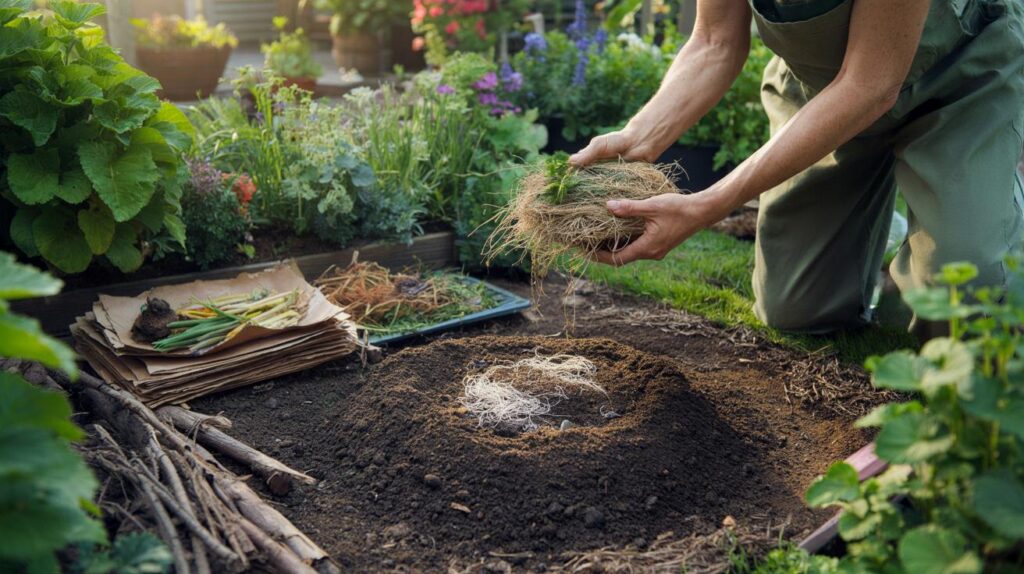
More and more people who garden at home are choosing to let composting happen right in the ground. No lid, no container, and no regular turning. The goal is to make a patch where natural decomposers can live and then feed that spot with garden waste and small amounts of raw food waste.
This method makes a part of your garden a permanent composting area, where worms and bugs do most of the work.
You don’t manage a pile; you manage a habitat. Once it’s set up, the system mostly runs by itself.
How composting in the ground really works
A large number of organisms are always breaking down organic matter below the surface. Earthworms shred and mix things up, beetles and woodlice chew through tougher bits, and a lot of fungi and bacteria break down what’s left. Their activity slowly releases nutrients that plant roots can take in.
This process happens above ground in a bin, and it usually needs help. The soil is usually cooler, more stable, and better balanced than other places. It keeps moisture in check, keeps temperatures from changing too much, and the tiny organisms that break down things already live there.
You could think of it as hiring an underground team to do your composting for you. They work all the time and never send you a bill.
Over the course of a few months, layers of leaves and twigs break down into a dark, crumbly substance that smells like dirt from the forest. Roots will naturally move into this better area, and you’ll see stronger growth in beds close by.
Making a small safe place for biodiversity
The first thing to do is find a quiet, protected place. It doesn’t have to be big. In a small garden, even a patch the size of a doormat can make a big difference.
Choosing the right spot
Choose a corner that doesn’t get full sun all day, every day.
Stay away from low spots where heavy rain collects and makes puddles.
To keep damp problems to a minimum, stay a short distance from house walls and fences.
Make it easy to get to so you can easily drop leaves and prunings there.
The goal is to make a loose, layered pile that will attract different types of animals to live in once you have the spot.
Putting the materials in layers
Three simple layers are a good place to start:
Layer What to usePart of the system
BaseSmall branches, twigs, and cut stemsMakes spaces and channels in the air for worms and beetles
MiddleLeaves that are dry, cardboard that has been shredded, and strawOffers bedding that is soft and full of carbon
TopFiner plant waste, thin layers of grass clippings, and vegetable peelsBreaks down quickly, which gets microbes going.
Lightly press down on the pile with your hands or feet to keep it from blowing away, but leave a lot of room inside. For clean decomposition, airflow is just as important as moisture.
A “do less” method that really works
This method is great for busy gardeners because it doesn’t need a lot of care. You mostly add material and check the moisture once the basic stack is in place.
The hardest part is not wanting to mess with it; the system works best when you don’t touch it.
What not to add
Not all trash can go into an open, in-ground system. Some things draw in rats, foxes, or flies, or make things take a lot longer.
No cooked food, meat, bones, or dairy products.
No plastic, glossy magazines, or “bio” bags unless you are sure they can be composted at home.
If the branches are thick, don’t use them unless they are cut into small pieces.
Don’t put in too many grass clippings. Instead, add them in thin layers or mix them with dry leaves.

You can use small amounts of fresh peels, coffee grounds, tea leaves, eggshells, flower heads, and soft prunings. A lot of gardeners have a small kitchen caddy that they empty into this corner on a regular basis. They always cover food scraps with a layer of leaves or shredded material.
Signs that the soil is working
The pile gets smaller over time. The fact that it is sinking is one of the clearest signs that it is breaking down. Things that used to be sharp and clear become soft, dark, and crumbly.
After a few weeks, if you carefully lift a small part, you might see pink or dark earthworms weaving between pieces of wood and leaf. Fungal threads can look like white strands, especially in pieces of wood that are rotting. These are all good signs.
Composting in the ground that is healthy usually smells like damp woods, not trash or ammonia.
Something is wrong if strong smells come up. A lot of the time, it’s because there is too much wet, nitrogen-rich stuff like grass or kitchen scraps. Putting a thick layer of dry leaves or shredded cardboard on top of the pile and leaving it alone usually brings things back to normal.
How it affects the health of plants and the care of the garden
This hands-off method does more than just get rid of trash. It slowly improves the way your soil is built. Organic matter helps particles stick together to form crumbs. This makes it easier for water to drain through heavy clay and stay in sandy ground.
That change in structure has real-world effects. Weeding and digging are easier with beds. Plants can handle short dry spells better because the soil holds moisture for a little longer. Nutrients are released slowly, which helps plants grow steadily instead of all at once.
A lot of gardeners notice that the edges closest to the composting corner are especially lush. Some people change the active patch every few years, turning the area where they composted yesterday into the area where they plant tomorrow.
Examples that work for gardens of different sizes
A small patio or courtyard
A small version is still possible, even with little room. Put an old bucket with no bottom in a planting bed so that it is slightly below the surface. Fill it up and take care of it the same way, letting worms come in from below.
A family garden with a lawn and beds
Pick a back corner that is hidden by bushes. Let the leaves, small branches, and seasonal prunings fall there. To keep pets and wildlife away, bury small amounts of raw vegetable scraps in pockets below the surface. You can move decorative plants closer to this nutrient-rich center over time.
Allotment or bigger plot
Some farmers make a series of composting strips in the ground between their vegetable beds. Each strip collects crop waste and weeds (without seed heads) for a year or two. Then, it becomes a productive bed while a nearby strip takes over the job of breaking down the waste.
What the risks are, what the limits are, and how to stay safe
This method has limits, just like any other low-maintenance system. Decomposition slows down in the winter in cold places, so a lot of fresh waste can stay around for months. Instead of dumping everything at once, spreading out the additions over the year helps keep that backlog from happening.
Rodents are another thing to worry about. Put food scraps a few inches below the ground and always cover them with dry matter. If you live in an area where rats are a constant problem, only focus on garden waste, or put your kitchen scraps in a sealed container and feed them to the soil in smaller, well-covered pockets.
You should also pay attention to weed seeds. Some of the seeds from plants that have already set seed may live if you add them. Cutting weeds before they bloom or drying them in the sun before adding them lowers the risk of them spreading to other beds.
Words that are useful and extra ideas for gardeners who want to know more
“Humus” and “soil food web” are two words that come up a lot when people talk about this method. At the end of decomposition, humus is the stable, dark part of organic matter. It helps the soil keep water and nutrients. The soil food web is the network of living things in the ground, such as bacteria, fungi, worms, beetles, and even moles. These living things interact with each other as predators, prey, and decomposers.
By giving a quiet corner a variety of plant material, you are effectively supporting the whole network. In-ground composting can turn a regular garden into a strong, low-maintenance space where plants and soil life keep each other in balance. This works best when combined with other gentle practices, like mulching beds with leaves, not digging too much, and using less synthetic fertilizers.