The waiting room had a faint smell of disinfectant and coffee that had been brewed too long. People moved around in their chairs, holding a phone in one hand and a bottle of water or a folded prescription in the other. A woman in her thirties told the nurse in a low voice that she hadn’t gone to the toilet properly in six days. An older man quietly said that he was scared to eat before long train rides.
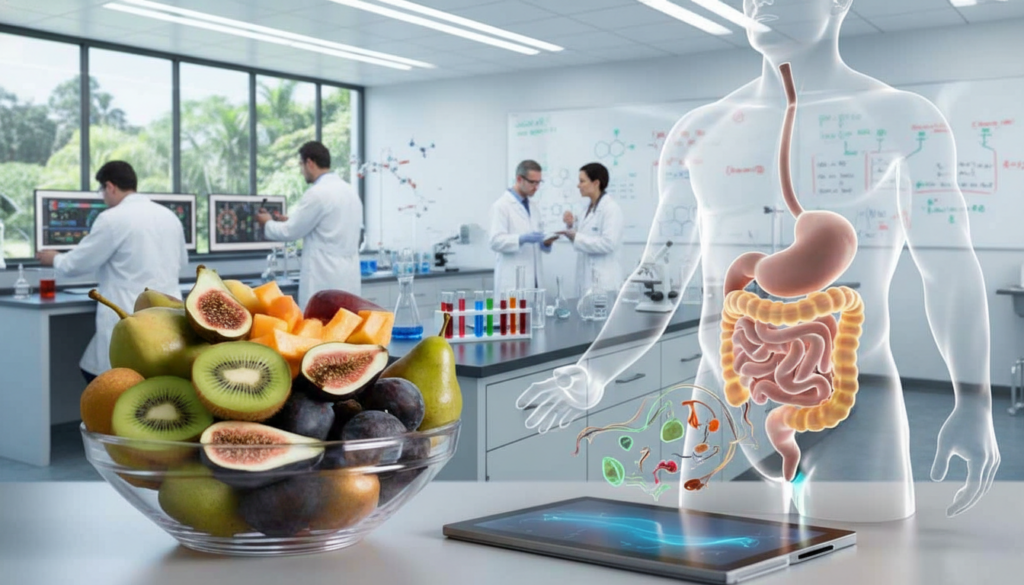
There was something strange on the doctor’s desk, next to the usual piles of papers: a plastic container full of sliced kiwi and papaya. The gastroenterologist pushed it forward like a prop in a magic trick and said, “This is where half of my consultations end up now.”
There is a surprising scientific story going on behind that small box of fruit.
One that starts with your gut’s motility and goes right through your fruit bowl.

Why some fruits are slowly changing the way your gut works
In any grocery store, you’ll see pyramids of oranges, kiwis, papayas, and bananas shining under cold lights. They seem simple and innocent, like extras in the health game. But now, gastroenterology labs are treating some of these fruits more like biochemical devices than snacks.
What used to be called “roughage” is now known to be a delicate orchestra of plant molecules, fibres, and enzymes that talk to your gut wall. Not just in theory. How quickly, how often, and how comfortably you go.
One group of researchers in Spain looked at adults who had tried everything from laxatives to yoga twists to get rid of their stubborn constipation. They told half of them to eat two green kiwifruits a day and the other half to keep doing what they usually do.
After four weeks, the people in the kiwi group said they were going to the toilet more often, weren’t straining as much and weren’t feeling as bloated. Tests showed that their gut transit time got shorter. Another study in Asia found that papaya puree helped with both constipation and irritable bowel syndrome (IBS), which is a mix of pain and diarrhoea. This wasn’t a juice cleanse that worked miracles. It was just a steady stream of fruit.
Researchers now focus less on “fibre” in general and more on the specific fibres and compounds found in each fruit. Kiwis have both soluble and insoluble fibre, as well as actinidin, an enzyme that seems to help move things through the gut and make stools softer. Papaya has papain, which may help break down proteins that are hard to digest. Prunes and figs have sorbitol and natural phenolic compounds in them that pull water into the colon and get it moving.
This is where the story gets interesting: these biochemical pathways were long thought to be boring dietary advice. But they are changing how your nerves fire in the gut, how your microbiome ferments, and whether your colon keeps things moving or stops them.
Making fruit a gentle gut “protocol” instead of a guess
One quiet change in gastro clinics is that doctors are now giving fruit as a dose instead of just a suggestion. They talk about how often, when, and in what combinations. Some people who have slow guts start with a “motility trio”: two green kiwis for breakfast, a small bowl of papaya or pear in the afternoon, and three or four prunes for dinner.
Not a sugar rush is the goal. You keep adding different fibres and plant chemicals throughout the day so that your colon never quite stops working. Instead of thinking of it as a one-time detox, think of it as teaching your gut a new daily rhythm.
A lot of people jump in with the wrong fruit at the wrong speed and then blame their bodies. They buy a huge bag of dried apricots, eat half of them in one sitting, and then spend the night doubled over, gassy, and angry. Or they go from eating white bread and cheese to huge fruit salads overnight and wonder why their stomachs feel like balloons.
The researchers I talked to kept saying the same thing: start low, go slow, and pay attention. If your gut is sensitive or reactive, you might only be able to handle one kiwi a day for a week. Next, you add one prune. After that, a few bites of papaya. Small, almost boring moves that can change how you feel about going to the toilet in the morning over time.

There is also the emotional side. People often turn to fruit as a “last resort” after using harsh laxatives or going on elimination diets because they are too embarrassed to talk about their digestive problems. A gastroenterologist from Italy told me:
“Patients come in expecting another pill. They roll their eyes when I talk about kiwis and prunes. They send emails two months later saying, “I finally go almost every day.” “Don’t take my fruit away, please.”
To get through this, researchers point out a few useful anchors:
Pick whole fruits more often than juices to keep the fibre and slow down the sugar hit.
As your “motility toolbox,” choose **green kiwis, prunes, figs, papaya, pears, and citrus.
Instead of eating them all at once before bed, spread them out over the day.
Add water and some movement, like a 10-minute walk, to your fruit.
Wait two to three weeks before judging the effect on yourself.
*Let’s be honest: no one really weighs out grams of fibre and phenolic compounds in their kitchen every day.
What this quiet fruit revolution means for our bodies
We’ve all been there: when your body feels like it’s working against you and a simple meal turns into a fight. The new agreement among gastrointestinal researchers doesn’t make that fight go away. But it gives you more hope: your gut isn’t a stubborn black box; it’s an organ that listens closely to small, repeated signals.
Those pathways that connect fruit compounds, gut nerves, and resident microbes are often overlooked, but they give you more options than most people ever hear about in a quick consultation. They also remind us that sometimes boring, regular rituals can help us feel better in our own bodies instead of making big changes.
| Key point | Detail | Value for the reader |
|---|---|---|
| Target specific fruits | Green kiwis, prunes, figs, papaya and pears carry fibers and enzymes linked to better motility | Know what to buy when your gut feels stuck |
| Think in routines, not bursts | Small daily portions spaced across the day work better than rare, massive fruit binges | Reduce bloating and discomfort while still getting results |
| Watch your personal response | Track symptoms for 2–3 weeks and adjust quantity and timing | Build a tailored “fruit protocol” that fits your own gut |
FAQ:
Question 1Which fruits are most studied for helping gut motility?
Question 2Can I just drink fruit juice instead of eating whole fruit?
Question 3How long does it usually take to feel a difference?
Question 4What if fruit makes me more bloated or gassy?
Question 5Can these fruits replace laxatives completely?