The air fryer still sits on the counter like a tiny spaceship, but the shine is gone. Crumbs line the basket, and the excitement that once surrounded it has faded. A year ago, it was the hero of weeknight dinners and viral TikTok hacks, promising golden fries without the guilt. Now, it mostly reheats leftovers or toasts bread, humming occasionally before slipping back into silence.
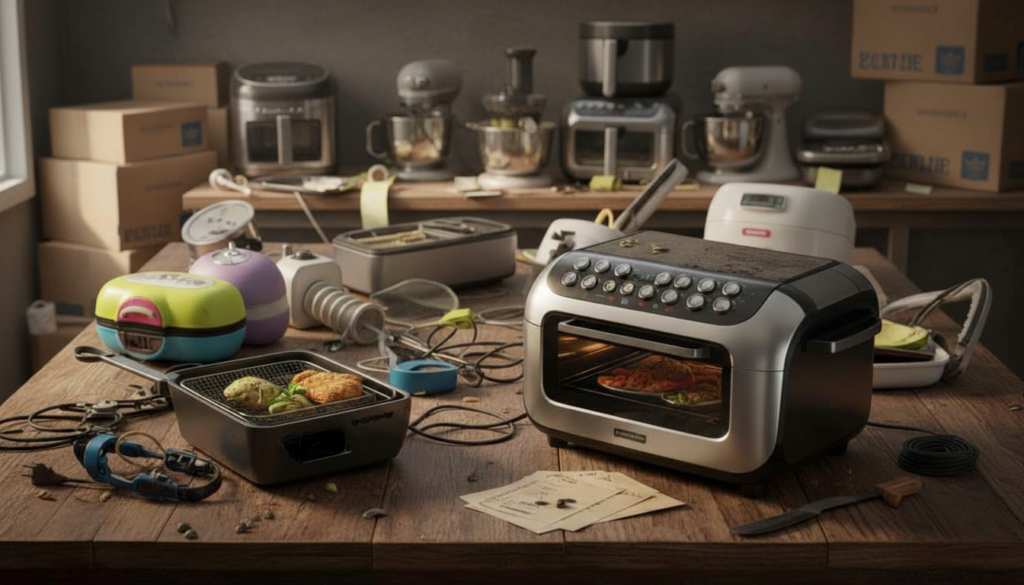
Scroll through social media today and you’ll see the next “essential” upgrade: a sleek, multi-mode kitchen cube boasting nine cooking functions and a premium price tag. It steams, grills, bakes, dehydrates, slow cooks, makes yogurt, and of course, air fries. All in one glossy box.
From miracle gadget to countertop clutter
The latest generation of multi-cookers claims to outperform the original air fryer. Brands highlight chef-quality results, smart touchscreens, and nine-in-one versatility. The promo videos look irresistible: crisp chicken, bubbling pasta bakes, shiny vegetables under perfect lighting.

On paper, it feels like the natural upgrade. Why own one function when you can have nine? Yet kitchen professionals say this is where many households repeat the same mistake.
Take Sophie, 37. After loving her air fryer during lockdown, she upgraded to a large multi-function cooker. The first week was full of experiments — grilled salmon, dehydrated fruit, even a roast chicken. Three months later, she mostly presses “air fry” or “reheat.” Cakes still go in the oven. Pasta still boils on the hob.
Experts see families spending £250 or more on machines that overlap heavily with appliances they already own. Energy-saving claims are often situational, not universal. And unlike sturdy pans or a well-built oven, many high-tech units don’t last nearly as long.
Let’s be honest: on a busy Tuesday, nobody cycles through nine cooking modes. The novelty fades. The presets feel excessive. And the revolution quietly becomes another box occupying precious counter space.
The expensive promise of “doing it all”
Before buying into the hype, advisers suggest a simple test: track what you actually cook for one week. Not your dream brunch menu — your real, everyday meals. Roast vegetables? Stir-fry? Pasta? Reheated leftovers?
Circle the methods you use more than three times. That list represents your real kitchen — not the aspirational version sold in glossy ads.
There’s a strong emotional pull behind these purchases. Watching someone pull perfect ribs from a futuristic appliance makes you think, “Maybe I’d cook like that too.” Marketers know they aren’t just selling hardware; they’re selling a vision of a calmer, more capable version of you.
What ads don’t show is the learning curve, extra cleaning time, trial-and-error meals, or the creeping energy costs once the excitement fades.
Many professionals now say that for most families, these nine-function units behave more like luxury toys than necessities. If you already own a reliable oven and solid cookware, the overlap is significant. The promised efficiency gains often apply only to small portions or specific situations — not everyday family cooking.
How to step back from the hype
There’s a calmer approach to kitchen upgrades. Start by choosing three meals you genuinely cook every week. Ask yourself: does this new device make them faster, better, or cheaper? If you can’t confidently answer yes to at least two of those, you may be paying for marketing rather than meaningful improvement.
Borrow before buying. Many neighbours, friends, or relatives already own one of these machines and rarely use it. A weekend trial tells you more than any influencer reel ever could.
Another overlooked issue is decision fatigue. Too many presets can complicate simple meals. Instead of sliding vegetables into a hot oven, you stand in front of a glowing screen wondering whether to select “roast,” “grill,” “air crisp,” or “combo.” That hesitation adds friction to what used to be effortless.
There’s also what experts call the “space tax.” Large gadgets push everyday tools into cupboards, disrupting natural cooking flow. Sometimes the tool meant to simplify life quietly makes it harder.
The quiet return to basics
In many kitchens, a subtle shift is happening. After years of chasing the next must-have appliance — spiralizers, juicers, stand mixers, air fryers, and now multi-mode towers — some cooks are returning to basics. Heavy pots come back out. Simple pan techniques improve. Dinner feels steadier, not trend-driven.

The air fryer era taught an important lesson: a “game-changer” can quickly become just another plug in the wall. That doesn’t mean multi-cookers are useless. For small flats without ovens, or for people with mobility challenges, they can be genuinely helpful.
But the smarter starting point isn’t the advertisement it’s your own routine. Look at your kitchen honestly. Which tools are always within reach? Which ones never collect dust? Those are your real workhorses.
Main Takeaways:
– Question the nine-in-one promise. Most homes regularly use only two or three functions.
– Track one week of real cooking habits before purchasing.
– Prioritise skills and quality basics over trend-driven devices.
– Wait 30 days before making an impulse buy.
– Only upgrade if the appliance clearly replaces something significant.
Questions and Answers:
Are nine-function cookers better than air fryers?
Not automatically. They offer more modes, but many users rely on just one or two, making the higher cost questionable.
Do multi-cookers save energy?
Sometimes for small portions or reheating. For larger meals or long cooking times, savings may be minimal compared to standard ovens.
What essentials should I own first?
A sturdy pan, a reliable pot, a sharp knife, and a dependable oven or hob cover most daily needs.
Who truly benefits from these gadgets?
People in small spaces or without access to a full oven often find them most useful.
How can I avoid impulse gadget purchases?
Follow the 30-day rule, test a borrowed unit, and only buy if it clearly replaces a major appliance or improves meals you cook weekly.