On a cold morning at the DGA test center in Saclay, the roar of a prototype fighter jet engine shakes the reinforced glass as engineers monitor steady green data lines on their screens. Inside, there is quiet satisfaction. Outside, across Brussels, Berlin, and Rome, there is visible tension. France’s deep control over advanced fighter jet engines has sparked growing unease among its European partners.
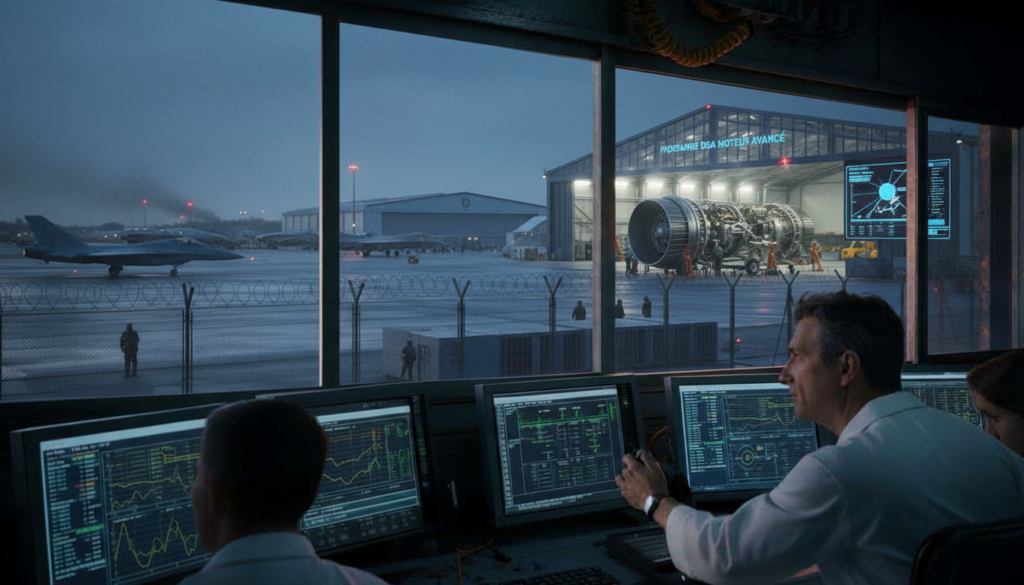
For Paris, safeguarding propulsion technology is a matter of national sovereignty and industrial survival. Decades of investment built an ecosystem where design, testing, certification, and export support remain tightly integrated under French leadership. For Germany, Spain, and Italy, however, joint defense projects are increasingly feeling uneven. They contribute funding and political support, yet the most sensitive engine knowledge appears locked behind national walls.
Inside the DGA System: Secrecy, Structure, and Strategic Control
To understand the controversy, you have to understand the structure of France’s Direction générale de l’armement (DGA). The agency does more than approve designs — it shapes them. Working closely with Safran, it funds classified research, manages propulsion studies under broad budget lines, and controls access to critical test facilities.

Engine programs are often divided into smaller technical packages with neutral names, embedded within wider “propulsion initiatives.” Sensitive annexes remain classified, limiting visibility for partner nations. From France’s perspective, this system protects national security and prevents technology leakage. Fighter engines involve extreme materials science, digital control systems, and stealth-sensitive design — areas where even small vulnerabilities can have major consequences.
From the perspective of other European partners, the opacity creates distrust. Limited access to testing data and roadmap planning fuels concerns about long-term dependency. When cooperation feels asymmetric, even well-intentioned secrecy can appear like strategic exclusion.
Future Fighter Costs and the Risk of Fragmentation
The Future Combat Air System (FCAS), jointly led by France, Germany, and Spain, was designed as a symbol of European defense unity. Yet propulsion remains one of its most delicate fault lines. If partners feel sidelined, they may push for alternative engine demonstrators or national propulsion studies, increasing duplication and cost.
Defense fragmentation is expensive. Separate development paths mean higher research spending, smaller production runs, and more complex maintenance systems. Ultimately, taxpayers across Europe could face higher bills for future fighter jets if cooperation breaks down. Export competitiveness could also suffer, as global buyers weigh industrial balance and long-term reliability.
Europe has faced similar fragmentation in the past with multiple fighter families and overlapping defense programs. The propulsion debate risks reopening that chapter — at a time when geopolitical pressure calls for unity rather than division.
| Main Issue | Current Situation | Potential Impact |
|---|---|---|
| Engine Expertise | Highly concentrated in France under DGA and Safran | Strategic advantage for France, dependency concerns for partners |
| Program Transparency | Classified annexes and limited access to test data | Growing mistrust among Germany, Spain, Italy |
| Future Fighter Costs | Shared funding but uneven technology access | Risk of duplication and higher taxpayer burden |
| European Autonomy | Strong capability but uneven industrial balance | Challenges in acting cohesively during crises |
Taxes, Jet Prices, and Europe’s Crisis Autonomy
At the heart of the debate are practical questions citizens rarely see in technical briefings. How much will future fighter jets cost? How much of that burden will fall on national taxpayers? And can Europe respond independently during a major security crisis?
Modern sixth-generation fighter programs are projected to cost tens of billions of euros in development alone. If engine cooperation fractures, parallel research programs could multiply expenses. That would increase defense budgets or redirect funds from other public priorities.
Strategic autonomy is not just about possessing advanced technology — it is about shared ownership of it. If Europe’s most sensitive propulsion capabilities remain concentrated in a single national structure, political friction may complicate joint decision-making during emergencies.
The real challenge is balance. France seeks to protect hard-earned technological leadership. Its partners seek equitable participation and long-term sovereignty. Whether Europe chooses deeper transparency or accepts industrial asymmetry will shape not only fighter jet costs, but also how effectively it can act as a unified power when crises demand swift, coordinated action.