Vantaa, which is on the outskirts of Helsinki, is getting ready for a major change in transportation that goes beyond just tracks and stations. A big French construction company and its Finnish branch have won a huge contract to design and build a new tramway that will connect historic districts, busy business areas, and the country’s main international airport.
A €420 million bet on the future of Vantaa
Destia, the Finnish branch of French infrastructure giant Colas, has signed the contract that is the main part of this project. City planners say that the new tramway in Vantaa’s western section is the most ambitious urban works program in Finland right now. Local authorities have chosen the group to build it.
The deal gives Destia €230 million for the first phase and €420 million over the life of the project. The whole tramway scheme is worth about €750 million.
 Toby Kiers wins the “Nobel of the environment” for work changing how we understand climate
The line, which is 19 kilometers long, will connect Tikkurila, Vantaa’s historic and administrative center, with Helsinki Airport. The tramway will go through residential areas, logistics zones, and Aviapolis, a fast-growing business area that is already being marketed as Finland’s most dynamic corporate hub.
It’s not just a simple upgrade to the transportation system. City officials say it’s the main part of a long-term plan for the city. Vantaa wants to add about 60,000 new residents and create about 30,000 new jobs along the tram line corridor by 2050.
A tramway built without stopping the trains
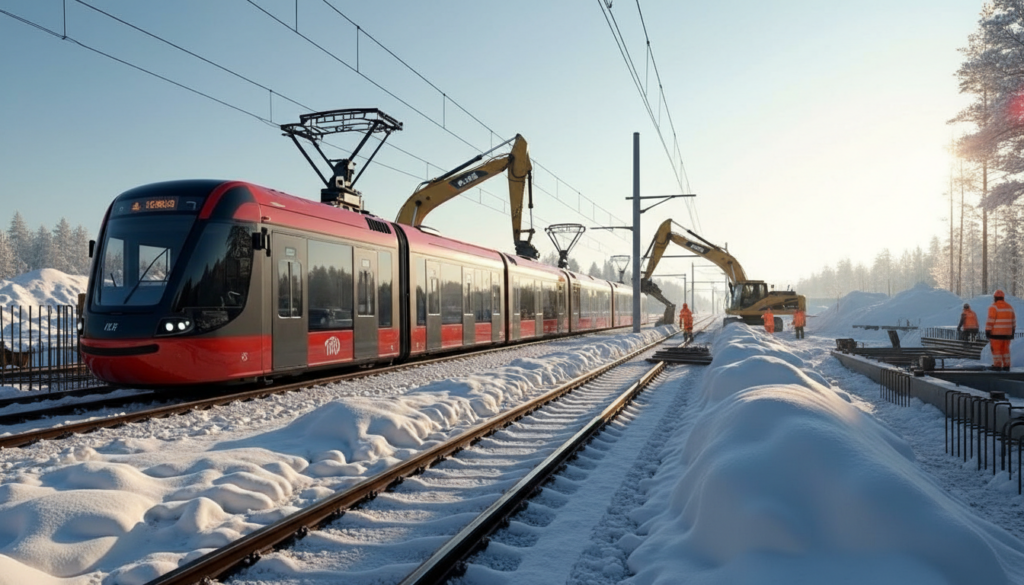
One of the most delicate parts is right under Tikkurila railway station, which is an important stop on Finland’s national network. Plans call for a new tunnel to be built under the working station, while commuter and intercity trains keep running above.
Colas is known for taking on tough jobs like this one all over the world, where they dig and build under one of the busiest rail hubs in the country without shutting it down.
Destia’s teams will not only lay new tracks, but they will also rebuild roads, add bike lanes, and completely replace buried utilities along the route. The tram project will be part of a bigger city makeover that includes upgrading water pipes, sewage systems, power cables, and phone lines all at once.
Build 19 km of tram lines
- Complete repair of roads and intersections on the surface
- New bike paths and other infrastructure have been built along the corridor.
- Updating the networks for water, sewage, electricity, and phones
- Building a tunnel under Tikkurila station without stopping service
- Building rail at -15°C
Destia has worked on important projects before. The company also worked on the Kalasatama–Pasila public transport project in Helsinki, which was another big city rail project. But the Vantaa tramway makes things even harder: there are lots of people living close together, traffic is always moving, and the temperature can drop well below -15°C in the winter.
Under those circumstances, pouring concrete becomes a race against time. If the material cools too quickly, it can break, which weakens the structure. Wind can rip thermal screens off in a matter of minutes, which makes teams have to rethink how they plan and protect each pour.
Not just engineering drawings, but also weather windows are used to plan each phase on a site like this.
Cold also affects the logistics of materials, workers, and machinery. From the design stage, heating systems for rails and switches must be built in. Worksites need safe areas to store and prepare parts so that nothing arrives frozen solid when it’s time to put it in place.
A city that wants to get smarter, not just bigger
Vantaa is the center of the Helsinki metropolitan area and, as of 2024, it is Finland’s fourth-largest city, with more than 250,000 people living there. More than 100,000 people work there for more than 10,000 businesses. The municipality is very important for Finland’s connection to the global economy because it has an airport on its land.
Local leaders want this growth to mean that people can get around more easily and that there are fewer emissions. The tramway is meant to take some of the traffic away from private cars and broken-up bus lines. It will create a reliable “spine” with regular service between residential areas, office clusters, and the airport.
The line will also connect directly to the current rail system at Tikkurila and other interchanges. This will make it easier for people to get from regional towns to the airport gates or from suburban areas to central Helsinki.
Colas is a French group that is comfortable in very bad weather.
Colas, a French infrastructure expert that works in about 50 countries, is behind Destia. The group has a reputation for working in tough places, from deserts to polar regions, and they make about €15.9 billion in sales each year and deliver about 45,000 projects.

The company has already put down tracks on Saudi Arabia’s Haramain freight line, where temperatures can get as high as 50°C. The rails and ballast have to be able to handle big changes in temperature. Colas engineers have also built roads on permafrost in Alaska, where the ground stays frozen but can change shape when it thaws out faster because of climate change.
| Country | Project | Extreme conditions | Technical feature |
| Saudi Arabia | Haramain freight line | Heat above 50°C | Stabilised ballast and expansion control |
| Canada (Quebec) | Airport runway works | Polar winters, difficult access | Material deliveries via ice roads and aircraft |
| Alaska | Permafrost road network | Frozen, unstable ground | Thermal insulation layers under the road base |
| New Caledonia | Port infrastructure | Frequent cyclones | Reinforced structures and weather-based scheduling |
| France (Alps) | Fréjus tunnel upgrade | Confined space, safety constraints | Ventilated works with strict time limits |
This sharing of knowledge goes directly into projects like Vantaa’s tramway. Engineering teams that know how to deal with desert heat or permafrost can apply what they know about how materials behave, managing risks, and making backup plans to Nordic winters and urban tunneling.
The Finnish tram contract is a way for France to show off its engineering skills as well as a way for Vantaa to get around.
What this means for people who live there and visit
For people living along the route, the coming years will bring disruption: road closures, redirected bus lines, noise and dust. City planners say that the end result will be a more comfortable and predictable commute. Trams typically offer higher capacity than buses and can run on frequent, clock-face schedules with priority at junctions.
For air travellers, the line promises a more direct connection between neighbourhoods and Helsinki Airport, reducing the need for car trips or multiple transfers. The tramway could also help ease traffic on existing rail links, which are very busy with people commuting from all over the region.
Local businesses stand to gain from higher footfall near stops and easier access for staff. Retail, hospitality and logistics firms in Aviapolis in particular are watching the works closely, as better transport could support new office buildings and hotels in the zone.
Key concepts behind a “tramway of the future”
When officials speak of a tramway of the future, they rarely refer only to the vehicle itself. Several technical and planning ideas usually sit behind that phrase:
Transit-oriented development: building homes, offices and services around stations so residents can live with fewer cars.
Intermodality: making transfers between tram, heavy rail, bus, bike and walking routes as smooth as possible.
Low-carbon operation: running vehicles on electricity from cleaner sources and steering people away from petrol and diesel cars.
Digital monitoring: equipping tracks and vehicles with sensors to track wear, energy use and passenger flows.
In cold climates like Finland, another layer matters: winter resilience. Rails, power lines and platforms must keep working despite snow, ice and long periods of darkness. Heating systems in track beds, sheltered waiting areas and careful lighting design all become part of the engineering package.
Risks, benefits and what could change next
Large infrastructure projects carry financial and political risks. Costs can rise if the ground conditions differ from surveys, or if inflation hits materials. When the weather is worse than expected, schedules can get pushed back. For Vantaa, delays would mean years of roadwork without the full benefit of the tram running.
If the goals are met, the benefits could be very big. A reliable tram line can raise land values and encourage property development near stops. A city with more public transportation can also lower emissions per person, make main roads quieter, and make daily life less reliant on cars, which is something that many young professionals and families like.
If Colas and Destia do well in Vantaa, they could get more rail and metro contracts in other Nordic countries. The real test for Finland’s planners will come a few years after the tramway opens, when they can see if it really was the backbone of Vantaa’s next growth phase or just another line on the map.