There is a quiet rebellion going on at the bottom of the garden, where the lawn ends and the flowerbed begins. A woman in dirty shoes is standing over a messy patch of leaves and stems. The sunflower stalks are brown, hollow, and leaning. The coneflowers from last year are a prickly mess, and the ground is covered in crumpled leaves in every shade of beige.
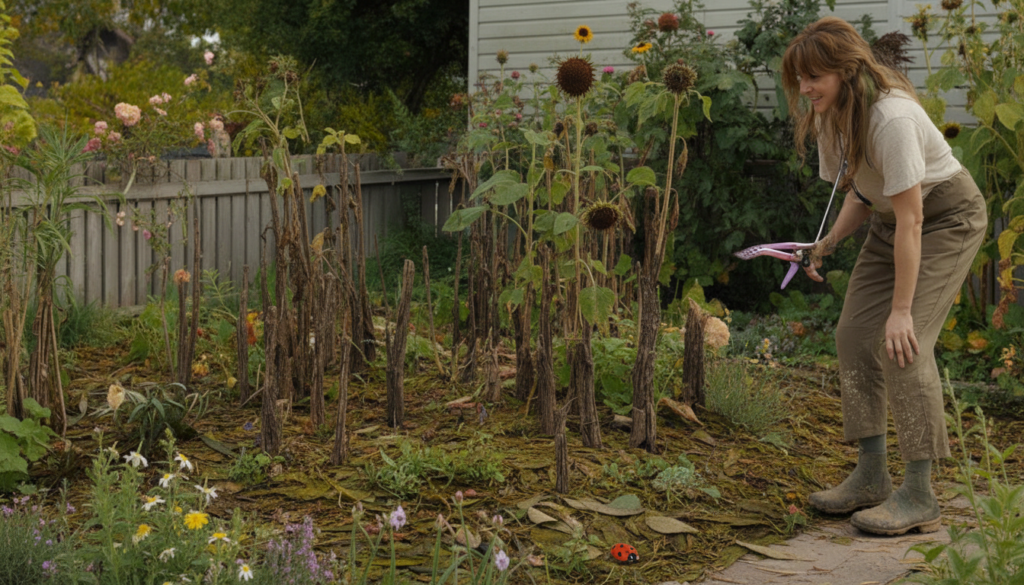
“Did you forget to clean up?” her neighbor says with a laugh as they lean over the fence.
She pauses, then smiles. “No.” I stopped.
The bed looks like it’s been half-taken care of and half-ignored. Your inner neat freak wants to fix this place with a rake and a green waste bin.

Something is moving under the dead stems.
Why “messy” beds are really alive
At first glance, a bed that has been cleaned very well looks like it has been successful. Black soil with no leaves out of place and trimmed edges. It looks good in pictures. You feel like you’re getting things done.
But stay there and be quiet for a minute. No buzzing, no rustling, and very little movement. The garden is no longer a place to live; it’s a place to show off.
Now picture the other bed, the one that looks a little crazy. The seed heads are still standing, the leaves are in soft piles, and there are a few broken stems where they fell. Birds jump around and look through the trash. A ladybug crawls out of a hollow stem. The scene isn’t as perfect, but it feels more alive.
You can see the divide in any community garden in late fall. One plot looked like it had just been mopped, while the next was full of dead plants and leaves that crackled.
I talked to a volunteer gardener who used to be a member of Team Clean. She put cut stems, dead leaves, and “anything that looked tired,” as she put it, into ten green bags every October. Her soil was hard and crusty by spring. There are fewer ladybugs and bees, but more aphids.
Something changed that year when she got sick and didn’t clean up. All winter, her beds looked messy, but the next season she saw more pollinators, fewer pest outbreaks, and soil that broke apart instead of clumping. She had done more good by being lazy than by having all those “productive” weekends before.
What goes on in those messy beds is simple and quietly revolutionary. Dead stems and leaves protect the soil from heavy rain, frost, and temperature changes by acting like a winter blanket. Fungi and bacteria eat through the plant material under that blanket, making it stronger and more fertile.
That mess is important for a lot of good bugs. Native bees build their nests in hollow stems and under dry leaves. Ladybugs and lacewings spend the winter in leaf litter. Ground beetles, which look for slugs, hide in dead plants. When we strip beds bare, we are basically kicking out a whole army of friends.
To be honest, no one really does this every day. Before every cleanup, you don’t check your beds for bugs that are sleeping. So, if you always clean “to the bone,” the damage doesn’t show up until later, but it builds up over time.
How to help more and clean less
This is the easiest way: don’t clean “thoroughly,” just “lightly.” Don’t cut plants all the way to the ground when they flop over and turn to mush. Instead, cut them back halfway or two-thirds. Leave the lower stems up so bugs can still use them as a place to hide.

Rake the leaves off the paths and lawns, then gently pull them into the beds like a loose quilt. You don’t want a thick, suffocating mat; you want a cover that looks like the ground in a forest.
Take away only the parts of the plant that are clearly sick. Everything else can stay where it is, slowly giving the soil and the life in it food.
The hardest part is in your head. We have learned to think that “tidy” means “good gardener.” A bed that is completely bare feels good. If you have stems and leaves on your bed, it can make you feel guilty or afraid that guests will think you’re lazy.
We’ve all been in that situation where you pick up the rake out of shame more than need. But that urge to clean too much can take away what your garden needs to grow on its own.
Begin with a small area. Pick one bed where you’ll try out easier cleaning for a whole year. Pay attention to what happens to the soil, the bugs, and the birds. Being curious makes you less of a perfectionist.
In one simple sentence, a soil ecologist I talked to said, “Every time you remove organic ‘mess,’ you export food and housing for the organisms that keep your garden alive.”
Leave some hollow stems that are 20 to 30 cm tall for native bees and small predators.
A thin blanket of loose leaves should cover bare soil, not a thick mattress that makes it hard to breathe.
- Don’t just get rid of plants that look bad; only get rid of ones that are clearly sick or invasive.
- Make one “wild zone” where you don’t do much and see who moves in.
- Wait until late spring, when most of the insects that have been hiding out all winter have come out, to do a lot of cleaning.
- Instead of putting woody stems in a bag, shred or chop them up and put them back on the bed.
- Look for birds, beetles, and spiders using the trash; their presence is the best way to judge your work.
- The quiet joy of gardening with what you already have
- The garden starts to feel different when you stop fighting every leaf that falls. Not so much like a project management spreadsheet, but more like a chat. You’re not just making things orderly; you’re also talking to all the little lives that share the space.
Letting some chaos happen can be a small relief. That stubborn corner of dried stems turns into a buffet for finches in the winter. The pile of leaves by the fence becomes a home for beetles and centipedes. Your job changes from cleaner to caretaker and from controller to collaborator.
The truth is that a garden that isn’t perfect can be more durable, more generous, and even more interesting than one that is. When you’re not looking, you start to notice the little rustles, the tiny wings, and the quiet work going on.
And little by little, the question changes from “How do I clean this up?” to “If I don’t live here, who does?”
| Key point | Detail | Value for the reader |
|---|---|---|
| Gentle cleanup beats total cleanup | Cut plants back partially, keep some stems and leaves in place | Protects overwintering insects and soil life while still looking intentional |
| Leaves and debris are resources | Use fallen leaves as a light mulch rather than exporting them | Improves soil structure, moisture retention, and fertility at zero cost |
| Timing matters for wildlife | Delay heavy cleanup until late spring, after insects emerge | Supports pollinators and natural pest control, reducing chemical needs |