This year, the orange tree next door was full of fruit. The branches are bending, and the big fruit looks like little lanterns over the fence. Mine, which was right next to it, looked… polite. There are a few lemons here and there, some leaves are turning yellow, and a lot of wood isn’t doing much. The same sun, rain, and soil. Different harvest.
Last week, that neighbor leaned over the fence with pruners in hand and said something that stuck with me: “I’ve been doing it since this week, and I’ve seen a real difference: one simple cut, every time.”
I watched him cut the same kind of branch over and over. It seemed almost too easy.
And that’s when things began to change.

The one-move trick for pruning citrus that no one uses
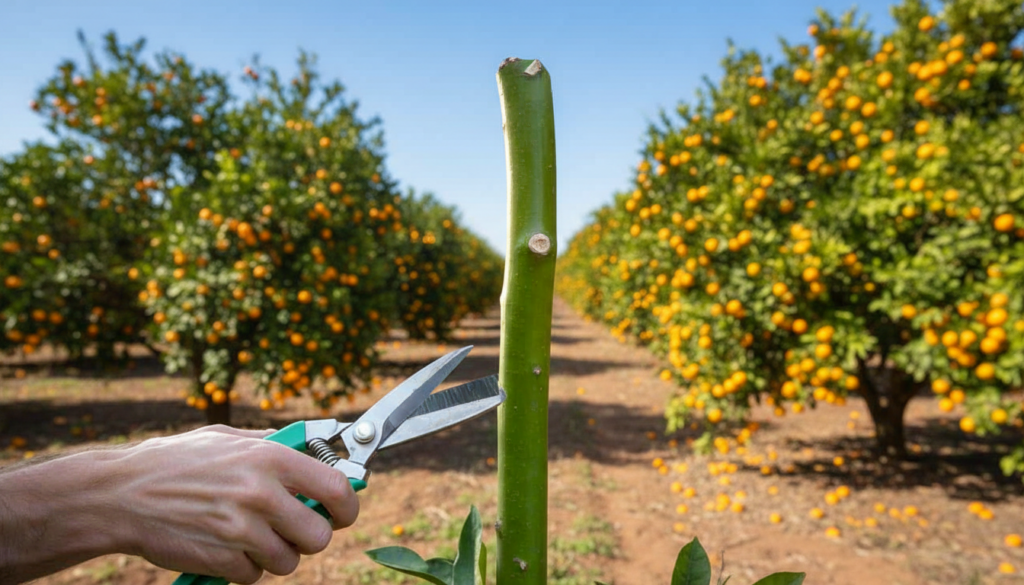
The move is almost too easy to be true: you cut off the vertical, non-fruiting shoots that grow straight up from your citrus, which are called “water sprouts.” These are the bright green rockets that look strong but don’t do anything. Instead of putting oranges, lemons, and mandarins on your branches, your tree spends its energy feeding them.
You can’t stop seeing them once you notice them. They are taller, smoother, and often have more leaves. They don’t have flowers. You cut them off at the base with sharp, clean pruners. One move. Every time, the same gesture. The tree suddenly opens up and looks like it can breathe again.
A small grower from southern Spain told me that he used to prune “with his heart,” cutting a little bit everywhere and hoping for the best. A local agronomist then walked through his grove and told him this one rule: on the first pass, cut down every vertical water sprout you see.
He tested it out for one season on just a row of trees. That row alone produced 20 to 30% more fruit the next year, and the oranges were clearly bigger. Same watering and fertilizer. The only new thing was that every few weeks, from spring to late summer, they would do “one-move” pruning.
He now walks through his grove with a small holster on his belt. Snip, snip, snip.
The logic is very simple. A citrus tree can only use so much energy. Water sprouts are like energy thieves because they grow quickly, suck up sap, and stay stubbornly vegetative. Not many flowers or fruit.
When you cut off those vertical shoots, the sap goes to the horizontal or slightly arched branches, which are the ones that actually hold the flowers. Light gets deeper into the canopy, air moves around, and branches get stronger with fruiting wood instead of soft, useless growth.
*You aren’t making the tree look better; you’re changing what it chooses to spend its money on.* Fruit instead of branches that show off.
How to make the cut that will help your harvest
Begin with a cool, clear moment. The best time is in the morning, when the tree isn’t stressed and the sun isn’t too strong. Walk around your citrus trees and look for vertical spears that often come out of the canopy’s center or from old, thick branches. They’re usually younger, lighter in color, and grow faster than the others.
Use clean, sharp pruners or loppers. Put the blade right at the base of the sprout, where it meets the branch, and cut it cleanly so that there is no stub. One cut per shoot, no half measures, and no tearing.

Take your time the first time. After a few branches, your eye will see them right away.
When you have the pruners in your hand, it’s very tempting to start shaping the whole tree. We’ve all been there: you start with “just a few cuts” and end up with half the tree on the ground.
Don’t give in to that spiral. For this method, only pay attention to the vertical water sprouts. Even if they look a little messy, leave branches that go sideways and hold leaves and possible buds. Citrus trees like a canopy that is a little thick to keep the fruit from getting too much sun.
Let’s be honest: no one really follows those diagrams in the textbook every year. This rule of one move is realistic, quick, and easy to follow. Just getting rid of those greedy shoots will help, even if your cut isn’t perfect.
Ana, who grows lemons on a small balcony in Lisbon, says, “I started doing it every Sunday walk.” “Just five minutes with my coffee in hand, cutting those straight shoots.” By the second season, my little tree had grown from six sad lemons to a whole bucket full. Same pot, same dirt. The only thing that changed was that I stopped feeding the branches that didn’t give me anything.
Find the bad guys:
Look for shoots that are smooth and straight and grow much faster than the others.
Cut at the bottom: Cut them off cleanly where they come out, leaving no small stump that can rot.
Repeat throughout the season: A quick pass every few weeks keeps the flowers and fruit alive.
Make sure the center of the tree gets enough light and air.
Don’t cut off fruiting side branches unless they are dead, crossing, or obviously sick.
When a small act changes everything about your tree
When you realize that your citrus doesn’t need a full professional overhaul to do better, things change. It needs one clear choice that is made over and over. The neighbor with the bright orange tree doesn’t spend his weekends reading a book on how to prune trees. He walks by, sees those rude vertical sprouts, cuts them, and keeps going.
The result builds up over months. The inner branches get more light. Flowers grow on wood that has room to grow. Fruit hangs where the sap really comes in, not where the leaves are just pretending to. The tree starts to look less like a wild bush and more like a calm, useful part of the garden.
This little habit also changes how you interact with the plant. You stop seeing it as a piece of art and start to see what it means. Does new water grow after heavy rain? It’s time for a quick pass. A branch suddenly filled with flowers after you cleared the area above it? You can see cause and effect right in front of you.
| Key point | Detail | Value for the reader |
|---|---|---|
| Target water sprouts | Remove only strong, vertical, non-fruiting shoots at their base | More energy goes into flowers and fruit instead of useless growth |
| Repeat through the season | Quick passes every few weeks from spring to late summer | Maintains a productive balance without complex pruning plans |
| Keep fruiting wood | Preserve horizontal and slightly arched branches carrying buds | Bigger, more regular harvests with less stress for the tree |
The move is the same, but the feeling goes from doubt to calm confidence. You’re not just chopping things up anymore. You’re making changes. Tuning. Helping the tree say “no” to growing without fruit so it can say “yes” to fruit.
This is the kind of tip that spreads quickly once someone sees the extra basket of lemons on your kitchen floor, like a neighbor’s secret.