The train slid into the hot dawn like it always does, with the sound of steel wheels screeching against the tracks and vendors yelling over the sound of brakes. A chai seller in southern India bent down to pick up a burlap sack that had been left under a bench overnight at a small station. The bag moved first. Slowly. Then it hit him hard and violently, making him drop it and jump back, heart racing. A thick, shiny body uncoiled when the sack ripped. It was dark olive with light bands and its hood was starting to flare. A king cobra, right where kids play tag between the benches.
There is no forest in sight. There are only rails, concrete, and chaos.
The world’s longest poisonous snake had taken a ride between the jungle and this busy station.
Not by choice.
By train.
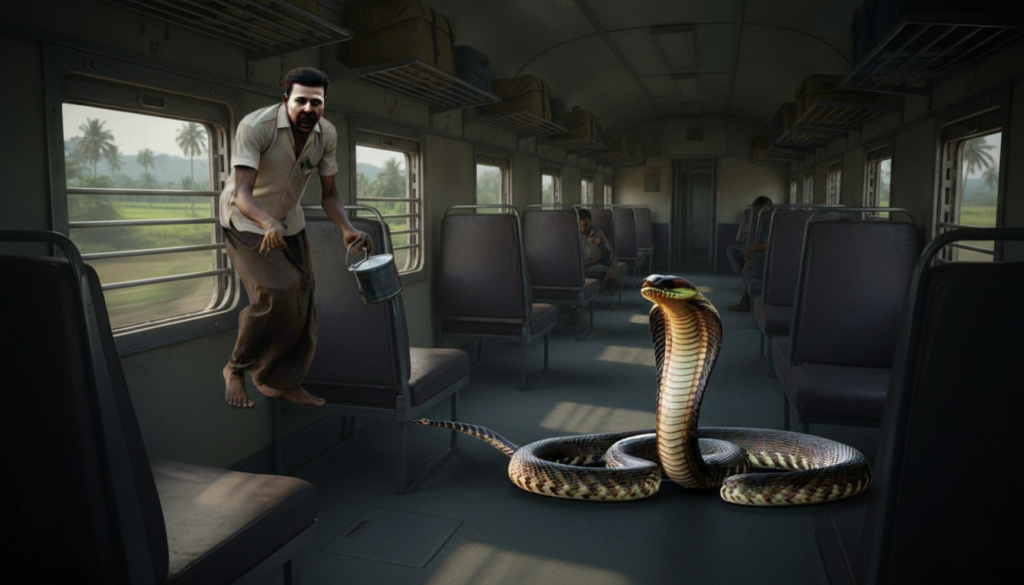
Passengers who don’t talk on India’s busiest tracks
King cobras live in the forests of the Western Ghats, the Northeast, and small areas of jungle that are still there in Odisha and Karnataka. In real life, they seem to be showing up in the most unlikely places, and the story keeps bringing up railway lines. Snake rescuers in several Indian states have begun to see a strange pattern. They are taking king cobras out of station yards, under parked cars, and even from small depots that are miles away from the nearest known habitat.
The snakes didn’t move through space.
They got a ride.
At least twice a year, a rescuer from Kerala tells the same story. From the Ghats comes a goods train full of scrap metal or wood. Staff see a “big black snake” slithering out from between the waggons. Someone calls the snake catchers in the area. People are screaming, the platform is half empty, and the animal has wedged itself between stacked cargo and the wall of the station by the time they get there.
Later, photos reveal the same thing: massive head, characteristic scales, the unmistakable profile of a king cobra.
The train came from hills with trees on them. The station is in a semi-urban area.

Herpetologists say this is exactly what happens when fast transportation cuts through habitats that are getting smaller. Rodents swarm around grain sacks, goods yards and poultry feed. That’s a buffet for little snakes. King cobras, which are known for eating other snakes, eat those smaller snakes. When a rail corridor becomes a moving food chain, the big predator comes after it.
A king cobra slides into a waggon at night, hides behind crates or tarps, and then wakes up hours later in a whole new world.
At 70 km/h, a whole ecosystem changed by accident.
How the rails become highways for reptiles
Long-time track maintenance workers will tell you that they have always seen snakes along the lines. What is changing is which snakes and where they are. The rough “method” of this unwanted migration starts with cargo: timber from the edges of forests, building materials, sacks of grain, and piles of scrap that sit in siding yards for days. Everything is stored outside, moved around, and then parked again. The best place for prey to hide.
You don’t need to send a formal invitation to king cobras.
The smell of another snake is all.
We’ve all been in that situation where a small mistake turns into a big problem. For people who work for Railways, that ‘oversight’ could be a ripped cover on a goods waggon that lets animals get in. Workers stack metal sheets and logs before moving on to the next job. No one thinks a 4-meter predator might curl up between them and go on a trip across the state. A widely shared video from Assam shows a king cobra coming out from under a luggage coach while passengers clapped and yelled from a safe distance.
The train went through many villages that had never seen this kind of animal before.
From a biological point of view, this is almost a perfect example of how things can spread without meaning to. A species that follows food, a thick network of human transportation, and a lot of dark corners where no one looks twice. If you cut down trees around the tracks, you get a strange mix: on one side, there are pieces of forest, and on the other side, there are fields of crops and houses. The railway connects them all.*The snake doesn’t know it’s crossing state lines or going into a new ecological zone.*
It just follows smell and shelter, and wakes up in a place that might or might not be good for it or the people who live there.
Living with a king cobra that travels without getting scared
The first step for villagers and commuters is very simple: stay away from any big, hooded-looking snake near a track because it could be dangerous. King cobras don’t like people and try to stay away from them. They rarely bite unless they feel threatened. The real danger starts when people get scared and try to chase, hit, or “block” the animal. In some places, rail workers now keep a list of local snake rescuers taped to the walls of station cabins. That is the calm, smart thing to do: call, block off the area, and wait.
One calm phone call is better than ten people with sticks.

Let’s be honest: no one really walks the whole length of a goods train to look for animals before it leaves a yard. Even simple repairs seem rushed on busy days. There are still some small things you can do to help, like keeping grain and food waste away from waggons, fixing torn tarps, and getting rid of junk piles where rodents live. People who live near the tracks should know that garbage fires at night, kitchen waste scattered around and backyard chickens right next to the queue are all things that attract animals.
Not everyone can afford fancy fences, but basic things like raised coops and closed grain bins keep both rats and their predators away.
A herpetologist in Bengaluru who has moved dozens of king cobras from semi-urban areas says, “King cobras don’t ‘invade.'” “We set up a buffet in front of them and act surprised when the top predator comes. The trains are the quickest part of that queue of food.
For people who work on the railway
Before moving stacked materials, look for shady gaps, and if you see a big snake, don’t try to handle it; just call the police.
For people who live near tracks
Keep your yard clean, store food properly, and teach kids to back off and call an adult if they see a big snake.
For local governments
Don’t just put up posters after an incident; support trained snake rescuers and hold basic awareness sessions at stations.
For people who travel
Stay curious but keep your distance. Take pictures from a few meters away and don’t try to corner or “pose” with wild snakes.
For everyone who is online
Don’t share videos that scare people by turning every snake sighting into a “deadly cobra attack.”
Whose land is it when the jungle rides the rails?
The picture of a king cobra sliding off a slow-moving goods train in the middle of a busy town really gets to me. It seems like both the snake and we have crossed a line. Rail lines pushed into what used to be a forest that went on forever, cargo depots were built out of old wetlands, and stations shone all night on land that used to be dark and full of bugs. Wildlife is now showing up in places we think of as “civilised,” like platforms, backyards, and the edges of cities.
And the question changes from “Why is this snake here?” to “What did we move to bring it here?”
Important pointDetail: What the reader gets out of it
Wildlife corridors made by trainsRodents and small snakes are drawn to goods waggons and yards, which also draw king cobras along the same paths.Helps explain why sightings happen in places that aren’t known to have forests
People’s habits are important.Food waste, trash, and open grain around tracks make the prey base bigger.Shows how small changes can make dangerous situations less likely to happen.
Don’t be a hero, just stay calm.It is safer for both people and snakes to call trained rescuers and stay away from them.A useful safety tip for people who live and work in the area
Questions and Answers:
Are king cobras really moving across India by train?They don’t get on coaches like people do, but freight routes and station yards do help them move around by accident, especially when they follow prey that is hiding in cargo.
How risky is it to be near a king cobra at a train station?Its venom is strong, but it rarely bites people because it doesn’t like them. The biggest threat comes from scared groups of people trying to attack or corner it.
Can one snake that is moved to a new place start a new population?That probably won’t happen on its own because it would need a mate and a good place to live. However, if it keeps moving along the same corridor by accident, it could slowly change where it shows up.
What should I do if I see a big snake close to the tracks?Instead of trying to handle it yourself, step back, calmly warn others, keep pets and kids away, and call local wildlife or snake rescue teams.
Are trains moving other wild animals in the same way?Yes, rodents, small reptiles, insects, and even frogs sometimes travel hidden in cargo and plants. They quietly change the map of who lives where along the rails.