When Emma first saw her landlord in the garden, he wasn’t doing any repairs. He stood under the apple tree, calmly twisting a red Bramley off the branch and dropping it into a canvas bag, like a shopper at a Sunday market. She stood in the kitchen with toast in hand and watched him do it again. And again. There was no knock on the door. No “Do you mind?” He heard only the soft thud of fruit and the creak of the gate as he left.
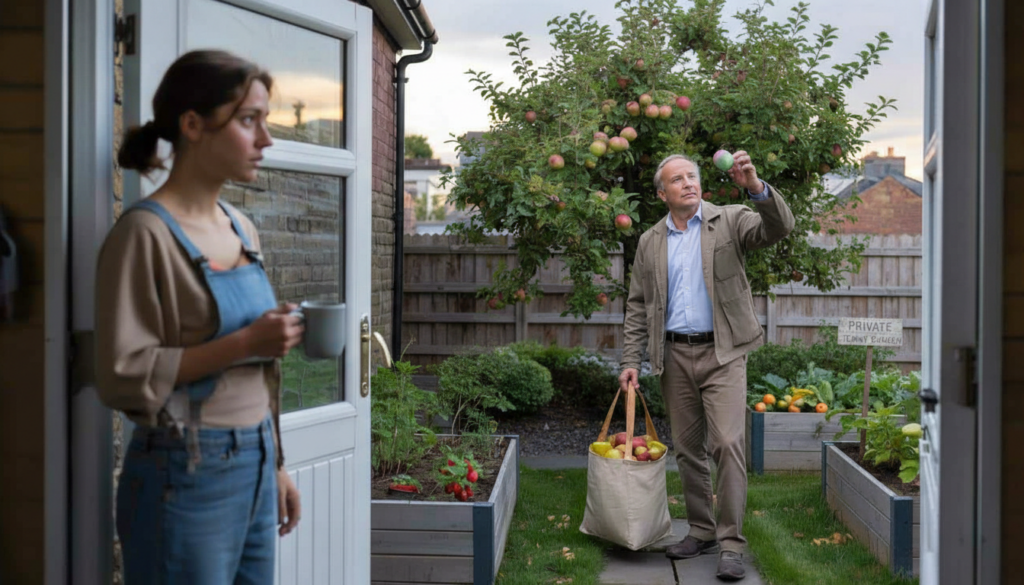
He shrugged when she asked him about it later. “It’s mine,” he said. “You’re just renting it.”
That one sentence hurt more than any door slamming.

Where do your rights stop and his “property” start?
When your landlord thinks your garden is a free buffet
These stories are everywhere once you start looking for them. Tenants saw landlords walking through backyards “to check the fence” and leaving with a handful of berries. Landlords taking figs, pears, lemons, and even herbs with a casual “Oh, they would just go to waste.” The house is theirs on paper. You water, prune, and pay rent every day, and when your cherry crop disappears overnight, you get angry without saying anything.
The fight is almost never about the cost of a few apples. It’s about limits. About who really “lives” somewhere and who just owns the deeds.
One very popular thread on a UK tenants‘ forum started with almost the same story: a landlord taking strawberries from a small raised bed. A lot of comments had come in by the end of the week. Some people said it was “stealing” and “creepy.” Some people told him to “calm down, it’s his land.” One person said they had started picking fruit early, not because it was ripe, but because they were racing their landlord to it.
Another tenant put up pictures of a landlord coming with crates and stripping a plum tree bare in less than an hour. “Those plums were my summer,” she wrote. There was a mix of anger and shame in the lines.
Things are not as clear-cut legally as that casual “It’s my property” makes it sound. When you sign a lease in most countries, you get full control of the house and any garden or yard that comes with it. That means the landlord can’t just walk in whenever they want, even if they own every brick and root. They usually need notice, a good reason, and your permission, except in real emergencies.
The question about fruit is right in the middle of the messy area where owning land and being able to enjoy it peacefully come together. In a technical sense, the tree could be his. But that quiet space under its branches is yours every day.
What to do if your landlord takes “your” fruit
The best way to handle this is to start long before anyone shakes a pear tree. Check your tenancy agreement to see what it really says about the garden. You have a strong case if it says clearly that the outdoor space is yours to use only. If it’s not clear, that’s the first sign that this gray area could become a problem.
The next step is to have a simple, human conversation. “I saw you come into the garden to pick fruit.” Can we agree that you’ll ask first? It’s not a big deal. It just says what happened and draws a line in the sand.
It’s easy to see why many tenants go straight to anger. Someone coming into your space without warning touches a very old nerve. But going nuclear right away can ruin the relationship over something that could be fixed with one honest but uncomfortable conversation. Talk about how it felt. That you take care of the garden for a while. That you want to be asked.
Let’s be honest: no one really reads every part of a rental agreement or writes down every raspberry they pick. But just a little bit of written follow-up, like a short email after the talk, can stop months of “I never said that” later on.

Sometimes, the feelings in the situation are stronger than the fruit itself. You might feel like a guest in a house you pay for every month. Your landlord might feel like a stranger in a place they own. That’s a recipe for problems.
“Being a resident is about more than just paying rent or having the title deed. A housing adviser from a London renters’ charity says, “It’s about feeling like the space around you respects you back.” “When a landlord comes in without warning, even just to pick apples, it sends the message to the tenant that ‘This will never fully be yours.'”
Put it in writing that the garden is part of the space you rent.
Say that visits, even “just for fruit,” need to be planned ahead of time.
If you want, you can offer a compromise, like a shared harvest, certain days, or a box left by the door.
Make a note of any unannounced entries, the dates, and what was taken.
If it keeps happening, talk to a lawyer or a tenants’ association before you get too upset.
When the law isn’t clear, social rules get loud.
The more you dig, the more you see that this isn’t just about apples on a tree. It’s about who gets to feel “at home.” A landlord might really think they’re not doing anything wrong. It’s still “their” soil, “their” tree, and “their” harvest for them. The tenant who sits on the back step after work and watches that same tree catch the sunset doesn’t see it as an asset; it’s just a part of their daily life.
We’ve all been there: a small act suddenly shows how unfair a situation really is. It’s hard to pretend everything is fine again once you’ve felt that change.
The law often doesn’t keep up with how people feel. It talks about access rights, notice periods, and clauses, not about how humiliating it is to see someone walk through your garden without knocking. That’s why social norms are important. More and more, tenants are making their expectations clear from the start: no surprise visits, no “quick looks” through the yard, and no touching what grows there without asking.
*It seems like a small request on the surface, but it means a lot of respect.* A simple “Is it okay if I pick a few?” can change the whole mood.
The truth in the middle is uncomfortable for both sides: **a landlord’s legal ownership doesn’t take away a tenant’s right to feel safe and in charge at home**. And a tenant’s emotional claim to a space doesn’t change the legal rules that the landlord has to follow. There is a lot of room for grace—or for conflict—between those two truths.
This is where choices you make start to matter. Some landlords put a basket by the door and ask their tenants to put things they don’t use in it. Some renters ask their landlords to come to a “harvest day” every year to keep things friendly and clear. Some people, who have been hurt by past experiences, lock their gates and only plant in pots that they can take with them.
The law may still be catching up, but the rules about who picks what and when are already changing in kitchens, stairwells, and backyards all over the place.
Main point: Detail: Value for the reader:
Not everyone can go into the gardenEven if the landlord owns the land, tenants usually have the right to use the space exclusively while they are there.You should know that surprise visits or picking fruit can violate your right to quiet enjoyment.
Clarity is better than guessworkSpelling out garden use and visit rules in writing reduces later conflict. Gives you a calm script and proof if the situation escalates.
Small gestures change the mood Asking permission, sharing surplus, agreeing simple rules around harvests. Transforms a power struggle into a respectful, workable relationship.
FAQ:
Can my landlord legally pick fruit from the garden?In many places, the landlord owns the tree, but your tenancy gives you exclusive use of the garden, so they usually need your permission to enter and take anything, unless your contract clearly says otherwise.
Is it trespass if my landlord comes into the garden unannounced?It can be an unlawful entry or a breach of “quiet enjoyment” rights rather than classic trespass, but repeated unannounced visits are often challengeable through complaint routes or tenancy tribunals.
What should I say the first time this happens?Stay calm and direct: explain you were uncomfortable seeing someone in the garden without notice, and ask that they request permission before entering or taking any fruit.
Can I stop them by locking the gate?You can usually secure your home and garden, but check your lease: some contracts require access for maintenance. You can still insist on notice and arrange times that suit you.
Should I involve a lawyer or tenants’ union?If conversations and written requests don’t change the behaviour — or you feel intimidated — talking to a tenants’ advice service or lawyer gives you tailored guidance for your local laws and your specific lease.