The cul-de-sac sounds like a small airport at 7:12 a.m. on a gray February morning. Sparrows fight on the cold fence, wings flick, and beaks tap plastic. A woman in a faded hoodie leans out over the balcony on the third floor and pours a cheap mix of broken corn and sunflower seeds into a shallow tray. The birds know the schedule better than the bus schedule.
People next door pull their curtains. Some people smile at the sudden burst of life. Others sigh as they watch the flocks fly over parked cars and clean windows. Every morning, the same woman, the same birds, and the same low-level tension make the street feel tight.
By 7:30, the concrete is covered in husks and poop. The WhatsApp group is already buzzing with messages like “Anyone else sick of the bird chaos?” by 8:00.
A small daily habit has slowly turned into a neighborhood fault line.
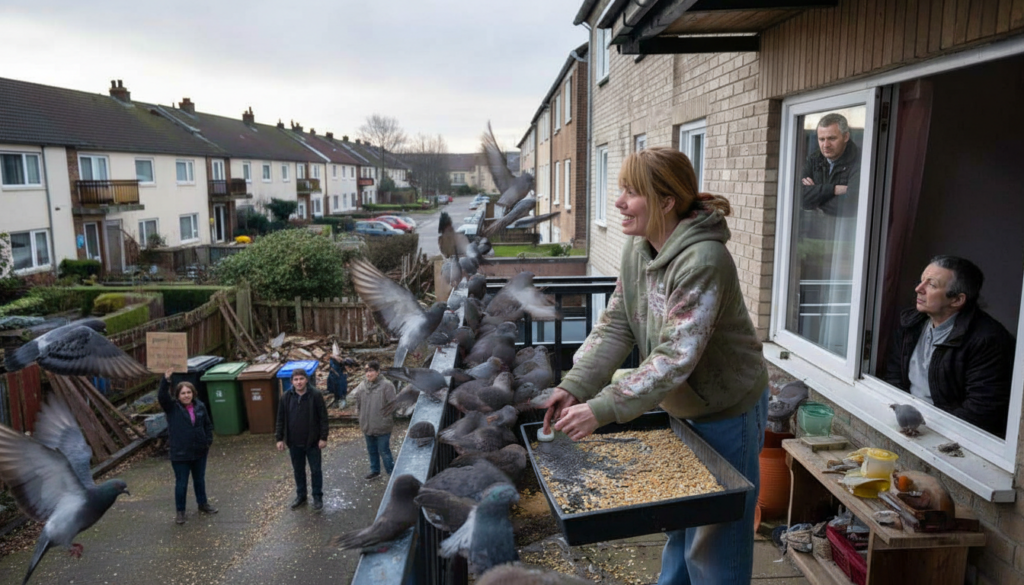
When a cheap bird buffet turns into a storm every day
February is the best time of year for giving in the backyard. There isn’t much food, the gardens look tired, and the birds seem thinner, more frantic, and in need of human kindness. That’s when the “cheap bird feeding trick” really works: you buy big bags of cheap seed from discount stores and spread them out on balconies, windowsills, or even the ground. The cost is low, but the effect is big.
It looks nice from a distance. Dozens of birds come by like clockwork, making a dull winter street sound like a country road. The picture changes when you get close. There are a lot of shells. Droppings fall down the sides of buildings. The flocks get bigger and louder.
A nice gesture starts to feel like a private wildlife park that the whole neighborhood pays for, not just the person shaking the bag.
People who live on one semi-detached row in Leeds say that every morning, 80 to 100 pigeons gather at just one feeder’s house. The woman at number 14 buys the cheapest “mixed bird feed” she can find. It’s the kind that has wheat, barley, and crushed maize in it. She pours it right onto the edge of the sidewalk “so that everyone can get to it.” The sparrows are first. Then there are starlings. Then wild pigeons, big and brave, chased the smaller birds away.
A man who washes his car every Sunday across the street says that he’s counting droppings instead of birds. He says, “My driveway is now a target zone.” “I’m basically collateral damage.” A neighbor two doors down is worried that the leftover grains will attract rats. Another person says that her child’s asthma gets worse when the air is dry and full of dust and feathers.
One person’s happiness is slowly becoming everyone else’s bill.
Ecologists aren’t shocked. Cheap mixes are better for the most opportunistic species, which are like urban foxes in birds. These birds are quick to adapt, eat in groups, and push out shyer, weaker species that have a hard time in winter. Over time, a street that used to have a mix of finches, tits, robins, and wrens can start to have more pigeons, jackdaws, and gulls that steal things.
Flocks learn to rely on food when it is always available. That daily 7 a.m. scoop doesn’t just “help” them; it changes the way they do things. Some of them stop going so far. Some nest closer to the buffet, squeezing into gutters and under tiles. After that, local councils get complaints about noisy neighbors, broken roofs, and blocked drains.
What started as a friendly gesture turns into a quiet change in the local ecosystem.
The kind way to feed birds without bothering the neighbors
You can still feed birds in February without turning your street into a bird city. It doesn’t matter how much you feed; what matters is how well you do it. Instead of the bottom-shelf bulk mix, use smaller bags with better ingredients like black sunflower seeds, sunflower hearts, nyjer seeds for finches, and small amounts of suet during the coldest weather. You won’t get as many birds, but the mix will be more balanced and natural.
Don’t use open trays or balcony floors as feeders. Hanging silo feeders keep food off the ground, which makes it harder for rats and pigeons to get to and easier for small songbirds to use. Use hot water to clean them once a week. Move them around every now and then so that their droppings don’t pile up in one place on the ground or pavement.
*Try to have a lot of different things, not a lot of them.*
Timing is the other important part. Instead of filling up the feeder to the top every day, give birds smaller amounts that they can eat in an hour or two. That way, you can help them through hard times without giving them an endless buffet that changes how they act. If the weather is nice, don’t feed them at all or just a little bit. Let natural food sources do the hard work again.
Let’s be honest: no one really does this every day. We get tired, leave for the weekend, and forget to stock up. It’s hard on you and the birds that start to depend on it when a routine falls apart easily. A steady, small pattern is better for everyone.
If you live in an apartment, be extra careful when feeding from the balcony. What doesn’t get eaten doesn’t go away; it falls onto neighbors’ railings, laundry, prams, and garden chairs.
People who have been through a “bird war” say that one thing made the biggest difference: talking about it early, before it gets too bad. Not a Facebook rant or a passive-aggressive note, but a real conversation with a person at the door.
 This stylist claims most individuals cleanse their hair incorrectly and offers professional guidance
“I really liked seeing the birds,” says Marta, whose ground-floor patio in Lyon became a bird landing strip after the neighbor upstairs started feeding them. “But when I showed her how bad my parasol and cushions were, she got it. We didn’t argue. We just changed the routine together.
- A simple list helps keep things calm:
- Feed from the ground in the right feeders.
- Instead of cheap bulk dumps, use smaller, better portions.
- Have one or two “quiet days” a week when you don’t feed them at all.
- If big flocks start to form, talk to your neighbors right away.
- If you see signs of rats or sick birds, stop feeding them for a while.
Sometimes the trick isn’t to stop feeding, but to make the gesture smaller until it blends in with the surroundings.
A little winter habit that leads to big, awkward questions
The argument over the February feeder isn’t really about birds. It’s about who gets to change the space between your front door and the sky. One neighbor thinks that the area is a safe place for animals. Someone else thinks of it as an extension of their home, car, and laundry line, safe from unwanted experiments.
There is always a hidden power dynamic when you feed animals. We decide who we want to help, when, and on what terms, even if nature never asked us for help. When help is cheap and easy, like pouring discount seed from a plastic bag, we often don’t think about the consequences for long. The pleasure comes right away, but the effect comes quietly, two streets over, three months later.
We’ve all been there: that time when a small habit of yours suddenly seems huge to someone else.
Maybe the trick isn’t the cheap feed at all. It’s learning to accept two things at once: that a lot of birds on a cold morning can be both a comforting sight and a disturbance that lasts long after the seeds are gone.
| Key point | Detail | Value for the reader |
|---|---|---|
| Choose quality over quantity | Smaller amounts of good seed in proper feeders limit pests and favor diverse songbirds | Enjoy birds without creating noisy flocks or rat problems |
| Set clear limits | Short feeding windows, “quiet days” and seasonal pauses avoid long-term dependence | Help birds in harsh spells without disrupting natural behavior |
| Talk before tension builds | Show, don’t just tell: invite neighbors to see droppings, noise, or damage | Defuse conflicts and adapt routines before they become battles |
Frequently Asked Questions:
Is it really bad for nature to feed birds cheap seed?Cheap mixes tend to favor larger birds like pigeons and starlings, which can push out smaller, shyer birds and change the balance of the area. Feeding in one place every day is a bigger problem than feeding occasionally and in small amounts.
Question 2: Is it against the law to feed birds from my balcony?Some places have rules that make it illegal or limit feeding pigeons or wild birds if it bothers people or brings in pests. Look up the rules for your council and any building or HOA rules.
Question 3: What is the safest way to help birds in the winter?Use hanging feeders, good seeds, and clean tools on a regular basis. Add plants that are good for birds, water sources, and some “messy” corners in your garden where insects can live and hide.
Question 4: How do I talk to a neighbor whose bird feeding is making things worse?Choose a calm time, talk about the specific effects you’re seeing, and suggest compromises like smaller portions, different locations, or fewer feeding days. Start by thanking them for their love of animals.
Question 5: Should I stop giving birds food completely when spring starts?As natural food comes back, many experts say to slowly stop. You don’t have to stop right away, but cutting back on how much and how often you feed them will help them adjust to eating more wild foods.