Three women walk into the salon on a Saturday afternoon, one after the other, holding the same picture: a blurry Pinterest “bronde” from 2021. The colorist smiles politely, but you can tell by the look in her eyes. Beige is getting old for her. The street is cold gray and glass on the outside, and on the inside, every head that turns around in the mirrors has something in common: depth. Gloss. Rich brown hair gives you a kind of softness that looks expensive.
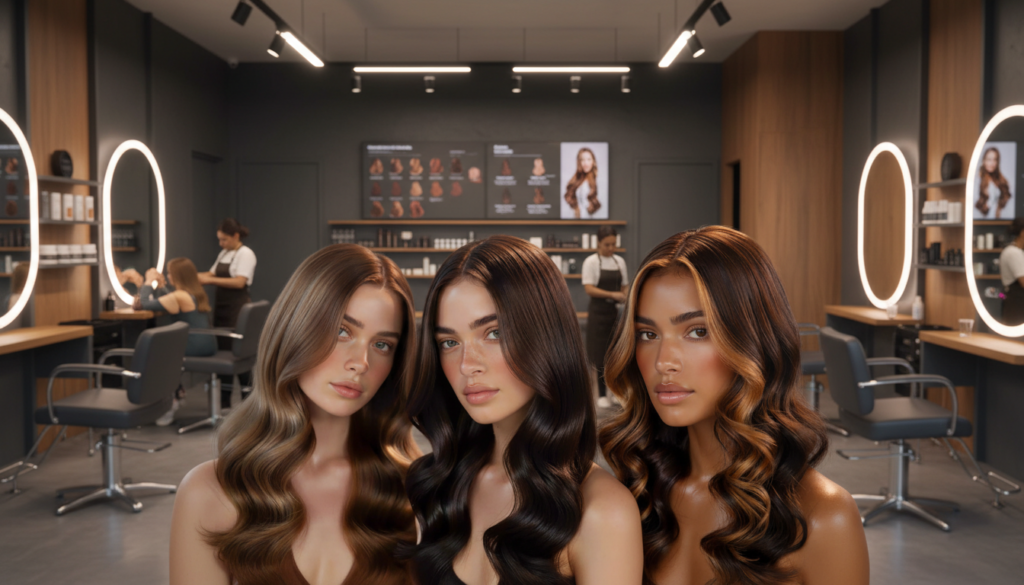
Bronde now feels like skinny jeans: still there, but not the main character anymore. Colorists talk about “molten chocolate” and “cocoa shine” on TikTok and behind the scenes at fashion shows like they’re sharing a secret recipe.
The new hair crush is brown, but not the flat kind you find at the store. Think of chocolate in all its colors.
Why chocolate hair is taking the place of bronde in 2026
If you go to a trendy salon right now, you’ll see that the blonde foils are losing ground to bowls of shiny, syrupy brown. It’s not as loud as a platinum transformation, but the change is just as big. People’s faces get softer. The skin looks smoother. Eyes suddenly pop like someone turned up the brightness.
Bronde had its time in the sun, when it glowed softly. Today, chocolate hair color gives us something we want more: comfort, richness, and low-drama regrowth. More Paris café at 5 p.m. and less California beach filter. You can see it in your feed: actresses trading in their cool balayage for “truffle brunette,” influencers announcing their “chocolate era,” and even people who used to be addicted to bleach going back to brown. Colorists say that most of their winter transformation bookings were for rich brunettes. One colorist in Paris told me that four out of five big makeovers she does right now are some kind of chocolate.
We’ve all been there: that time when your blonde money-piece starts to look more like a dry straw curtain than a glow-up. Chocolate feels like the opposite of that: it forgives, shines, and almost feeds the ego.
This wave makes sense. People want hair color that looks expensive but doesn’t require a second job to keep up with after years of high-maintenance hair and constant toning appointments. Brown pigments reflect light in a way that makes them look “healthy” even through phone cameras. They bounce back a softer, glossier shine.
Bronde can sometimes wash out some skin tones, but chocolate shades can be made to fit perfectly. For warmer skin tones, add a little gold; for cooler skin tones, add a little espresso; and for olive skin, add a little red. Bronde was a mood. **Chocolate is a closet.**
The prettiest colors of chocolate to ask for in 2026
In 2026, the key is not to walk in and say, “Just brown, please.” Don’t use technical words when you get here. Say to your colorist, “I want my hair to look like iced mocha in the light,” or “I want something that is 70% dark chocolate and 30% milk.” That kind of language opens doors right away.
Ask for “glossy milk chocolate” with very soft, almost invisible highlights around the face for a look that looks good on everyone. It keeps the depth at the roots and catches light on the lengths, like natural sunlight but more polished.
If you have dark hair and are afraid of going “too dark,” try “chocolate syrup balayage.” The roots stay close to your natural color, and liquid ribbons of mid-chocolate are painted through the middle and ends. It still looks like a brunette, but it has movement and depth.
A client I met at a salon in London had been platinum for eight years. She got a “hazelnut chocolate melt,” which meant that her roots stayed a soft beige color and then slowly melted into a darker cocoa color at the ends. A week later, she texted her colorist. People were asking her what skin care products she used, but nothing had changed except her hair.
“Black cocoa” is the new “almost-black” for people who like bold colors. It has more depth than store-bought black, with hints of warmth or coolness that keep it from looking flat. There are a lot of “cinnamon brownie” colors out there. The base is a deep brown with cinnamon and caramel lights that only show up when the sun hits them.
A lot of people are also falling in love with “mousse au chocolat,” a light, fluffy brown that has a clear glaze and no heavy lines. If you want a “tint of chocolate” without a big change, this is the best way to go. These names may sound like a dessert menu, but there’s a reason: they tell your stylist right away about **texture, depth, and shine** in a way that shade numbers never do.
How to talk to your stylist so you don’t get a flat, sad brown
Bring three to five reference photos, not twenty, to start. Pick women whose natural base and skin tone are similar to yours. That’s where you can really play. Then, talk about how you usually style your hair. Do you always wear it up? Do you always straighten it? Do you let it air dry most days? The best chocolate shades are based on how hair moves in real life, not just when it’s blow-dried.
Use words like “dimensional,” “translucent,” “shimmery,” “espresso,” “mocha,” and “praline.” Colorists think about light and undertone, and those words give them something to work with.
The worst thing about brown is waking up the next day feeling heavy. Too dark, too boring, and too blocky. That usually happens when you skip the talk about undertone. Ultra-warm chocolate can make your skin redder if it tends to do so. If you have very cool skin, ultra-ashy brown can look greenish in some lights.
Tell the truth about how often you can sit in that chair. Let’s be honest: no one really does this every day. Say it if “every 10 weeks” is your limit. That makes your colorist keep your natural base, stretch the root, and put the chocolate in a place where it will grow out gently.

Berlin colorist Jana K. says, “My favorite chocolate in 2026 isn’t one exact color.” “It’s the one that looks like your hair could have grown that way, but it has a built-in highlighter filter.”
To avoid a harsh line as it grows, ask for a “shadow root.”
Talk about the light where you live: a lot of sun, office neon, and clouds most of the year.
At the end, ask for a gloss or glaze to keep the shine and detail.
Instead of getting a full color every time, plan a quick tonal refresh every 6 to 8 weeks.
If you’re afraid of going completely dark, keep one or two very fine, light pieces around your face.
How to keep your chocolate rich, not rusty
What no one tells you is that brown can fade just as badly as blonde, but in a different way. Depending on your water and how you style your hair, it can turn brassy, flat, or oddly reddish. The key is to treat your chocolate like a favorite leather purse. Soft cleanser, no scrubbing too hard, and polishing every so often.
Change your regular shampoo to one that is sulfate-free and color-safe, and turn down the heat. Hot showers feel great, but they wash away tone and gloss faster than you might think.
Another silent thief is heat styling. Always use a thermal protectant, preferably one with some shine, if you straighten or curl your hair often. You can think of it as a topcoat for your color. If you can, space out wash days by one or two more. Instead of another round of shampoo, try sleek buns or loose braids on “in-between” days.
Some brunettes swear by once-a-week chocolate or espresso-colored masks that deposit color. When used sparingly, they make your hair richer without having to go to the salon every month.
Colorists also like to do a clear or tinted gloss service every few weeks. It’s quick, not as harsh as a full dye, and it makes the hair’s reflective surface look new again. That’s what makes chocolate hair look “expensive” instead of like a cheap box color from six months ago.
Before you go to the pool, ask about shower filters or protective oils if you swim a lot or live in an area with very hard water. By the end of summer, small changes like that can make the cocoa go from bright to dull and rusty brown.
What this trend really means: chocolate hair as a mood
The rise of chocolate hair in 2026 seems like more than just a seasonal trend. After years of chasing cold blondes and filters, there is a quiet need for warmth and softness. People want hair that doesn’t scream for attention but still makes them feel put together when they look in the bathroom mirror on a Tuesday morning.
Chocolate colors are just right: they stand out enough to get compliments but not so much that you feel like “you.”
Colorists don’t tell me the most interesting stories about big changes before and after. They are about customers who say they feel “more grounded,” “less fragile,” and “more like an adult” after going back to brunette. Not everyone, of course, but a lot of people do. While hair color isn’t therapy, it does change the way we look every day.
That could be why these subtle browns are so popular right now. They don’t get rid of your past bleach and bronde seasons; they just add a new, richer, and calmer chapter on top of them.
The next time you look at hair inspiration or walk by a salon window, pay attention to how long your eye stays there. On the complicated, beige balayage or on that head of smooth, shiny chocolate that looks like it belongs in a perfume ad. As always, trends will change again. For now, though, 2026 is all about brown, in all its subtle, tasty shades. The question isn’t “Will I go chocolate?” but “Which chocolate am I, really?”
Main pointDetailValue for the reader
Pick chocolate with a lot of flavorInstead of just “brown,” choose specific colors like milk chocolate, black cocoa, or cinnamon brownie.Increases the chances of getting a flattering, three-dimensional color at the salon
Talk to your stylist in their languageUse words that describe your mood and “flavor,” and include pictures that are close to your natural base.Helps the colorist see what you want and make it fit with what you have.
Keep the richness safeCare without sulfates, cooler water, glosses, and color masks every now and thenKeeps chocolate hair looking shiny and expensive for longer between appointments.
Questions and Answers:
What color of chocolate looks best on light skin?Soft, cool light “milk chocolate” or “mousse au chocolat” works well, especially with a few subtle highlights around the face to keep things light.
Will having chocolate hair make me look older?Not if the shade has depth and the undertone matches your skin. Dark browns that are harsh and flat can make features look harder, but chocolate with more than one tone can have the opposite effect, making them look softer.
Can I go from bleached blonde to chocolate in one visit?You can get close, but very light hair often needs filling (re-pigmenting) and sometimes a second visit so the brown doesn’t fade in patches or khaki.
Does chocolate hair need a lot of care?Usually less than blonde: the root lines are softer, and you can often make visits last longer by adding glosses and color masks instead of having to completely re-color.
What should I say to my stylist if I’m worried it will be too dark?Request a “soft chocolate melt” with a clear glaze and visible dimension. Also, ask that your natural root and a few lighter pieces not be touched.