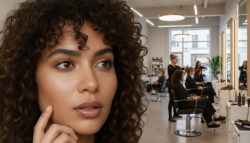
Seeing extra hairs on your pillow or around the shower drain can make you worry without you even realizing it. You might wonder when your hair started to feel thinner than before as you run your fingers through it. It’s a small worry that you don’t often talk about but can’t seem to shake. Stressful days, changes in the seasons, trying out new hair products, or wearing tight hairstyles are some of the first things that come to mind. These reasons make me feel better than thinking about the possibility that bigger changes are happening under the scalp.
Understanding What Your Hair Says
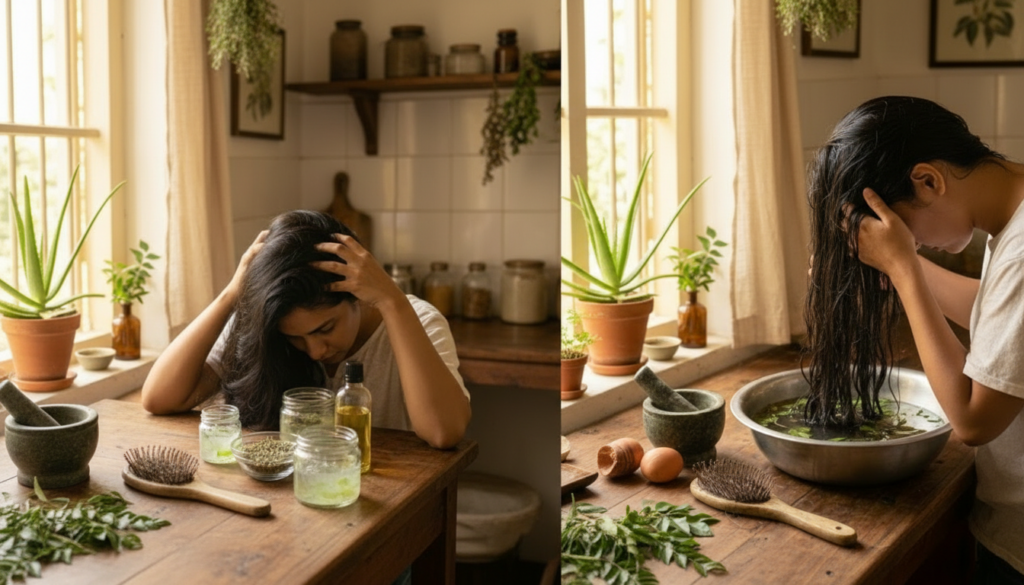
Hair often reflects the rhythm of everyday life. Long nights, missed meals, rushed schedules, tight hairstyles, strong chemicals, and constant stress all have an effect. Changes in hormones, the weather, and time passing all have an effect too. Before hair loss becomes excessive, the body provides subtle reminders—signals indicating the need for improved nutrition, rest, and attentive care. It’s easy to miss these signs when life moves quickly. When hair loss becomes noticeable, the desire for quick fixes increases. However, there is a slower, more supportive path through simple home remedies that work with the body instead of against it.
Oil Treatments That Help Hair from the Roots to the Tips
Putting oil on your hair is a traditional practice that requires consistency and patience. Warm oil massaged into the scalp does more than just soften hair; it also helps blood flow and makes you feel calm. A lot of people use coconut oil to protect dry or brittle hair and keep protein from being lost. Castor oil is thicker and is usually used in small amounts to keep the scalp moist. Each type of oil—almond, sesame, and olive—has its own benefits. No one oil is right for everyone, so blends are often the best choice. Oiling the scalp and roots of the hair regularly and lightly can help keep them healthy and strong.

Why It’s Important to Massage Your Scalp
Massaging the scalp is just as important as the oil itself. Applying light pressure with your fingertips in slow, circular motions can help blood flow, which will help hair follicles get more oxygen and nutrients. Gently waking up the scalp by starting at the front hairline and moving toward the back. Even just five to ten minutes a few times a week can make a big difference. Scalp massage has physical benefits, but it also helps you relax, which lowers the tension and stress that can lead to hair loss over time.
 Lip Liner Placement Trick: The Exact Method That Makes Lips Look Fuller Without Heavy Overlining
Making herbal oils and simple infusions at home
Making herb-infused oils at home adds meaning to hair care for people who like to have a more structured routine. Rosemary, curry leaves, hibiscus, and fenugreek are some of the most common ingredients. Slowly heating these herbs in oil and letting them soak helps bring out their natural flavors. People often say that rosemary helps with circulation, and hibiscus and fenugreek are known for their ability to condition and strengthen. The process takes time, but the end result is a custom-made oil that feels good, grounding, and deeply nourishing.