When you first see a new line on your face, it usually happens without much fuss. It appears quietly in the bathroom mirror as a small crease near your mouth or a faint line by your eye. You get closer and press your finger against the skin. For a moment, the wrinkle disappears under the pressure and hope. Then you let go of your finger, and it comes back. It doesn’t look bad or like something you don’t want, but it feels new. It gently reminds you that your face is more than what other people see. It’s where time leaves its mark.
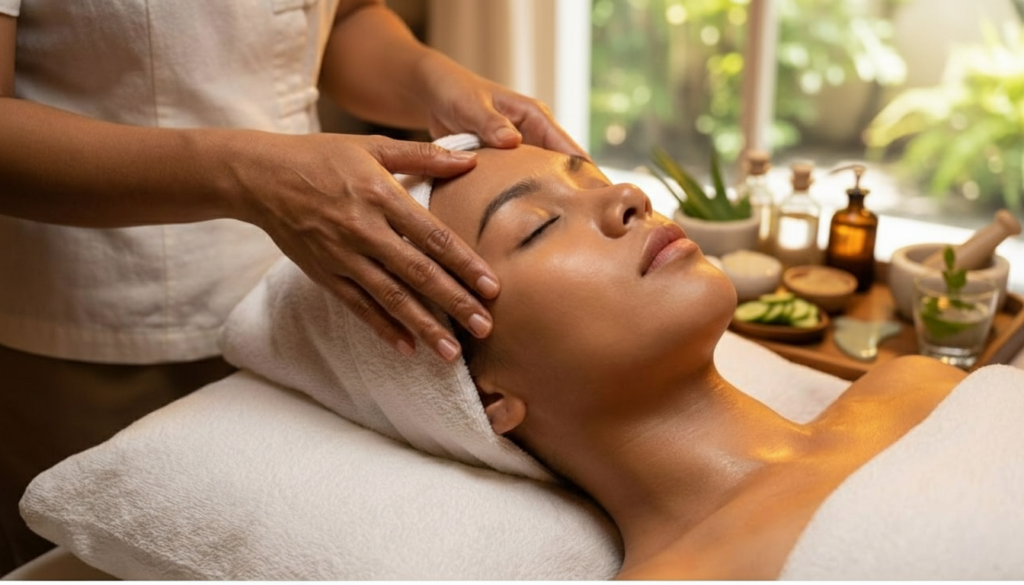
The Quiet Ritual of Touch
Think of a night when the noise of the day has finally turned into a soft hum. You are standing by the sink, with warm water running over your hands and a clean towel close by. You reach for your favorite oil or cream, something you know and feel good about. Before you even touch your face, something changes inside. Your breathing gets slower. Your body gets ready. This is where facial massage starts, not with technique, but with being aware and present.
There is a small but important difference between putting on skin care quickly and touching your face on purpose. One is a habit, and the other is a ritual. Your nervous system reacts when you touch your skin with your fingertips. The small muscles in the face, which have been working hard all day to show emotions and make expressions, finally get to relax.

Getting to Know the Shape of Your Face
Your face is more than just skin and bone. It is a living, layered landscape of muscles, connective tissue, and expression. Fine muscle fibers under the skin lift your brows, soften your smiles, and help you speak, chew, and react. As time goes on, repeated movement, gravity, and natural collagen loss leave their marks in the form of lines, folds, and changes in firmness. This isn’t damage; it’s just the way life is.
Facial massage works by gently changing this area. It helps blood flow, lymphatic flow, and muscle tension, and it also helps skin work better. Skin can look brighter, puffiness may go down, and lines can become less sharp and more blended into the natural structure of the face with regular practice.
Getting Ready for a Facial Massage
Getting ready is a quiet but important step. Start by washing your hands and face. Pick a facial oil, serum, or nourishing cream that gives you slip so your fingers can move without pulling on the skin. You only need enough to make you feel smooth and at ease.
Your posture is important. Sit or stand up straight, let your shoulders drop, relax your jaw, and let your tongue rest on the roof of your mouth. Breathe in slowly through your nose and out through your mouth. This means that this moment is not rushed, but planned.
| Step | What to Use | Purpose & Benefit |
|---|---|---|
| Cleanse Skin | Mild face wash, lukewarm water | Clears away dirt, oil, and makeup to avoid friction and irritation during massage. |
| Add Slip | Face oil, hydrating serum, or moisturizer | Creates smooth movement, protects the skin barrier, and reduces pulling. |
| Relax Body | Slow breathing, relaxed shoulders and jaw | Helps release tension so facial muscles respond more effectively to massage. |
| Start Softly | Light to moderate fingertip pressure | Keeps sensitive facial areas safe, especially under the eyes and around the mouth. |
You don’t need any tools for a facial massage; just your hands and careful pressure. Your touch should feel comforting, not harsh. If your skin hurts or is too red, ease up on the pressure. Comfort is what makes something work.
Lift and shape your jawline
Put your middle and index fingers right below your jawbone, in the middle of your chin. Use slow, upward strokes to glide outward toward the ears. Do it five to ten times on each side. This movement helps relax the jaw and over time makes the lower face look more defined.
Cheek Lift for Soft Fullness
Starting at the corners of the mouth, move your fingers up the cheekbones and toward the temples. With both hands, move slowly and evenly. Do it ten times. This helps blood flow, keeps the natural volume of the face, and makes the cheeks look a little brighter.

Smoothing the Forehead for Lines of Expression
Put both hands in the middle of your forehead and move them out toward your temples in long, slow strokes. Don’t put too much pressure on. Do it again ten to fifteen times. Over time, this helps to relax tight muscles and make horizontal lines look less harsh.
On Purpose, Softening Wrinkles
Wrinkles are a normal part of life and expression. Facial massage doesn’t get rid of them, but it does help them become softer and blend in with your features. Being aware and repeating things gently is much better than using force.
De-Puff and Brighten the Eye Area
With your ring fingers, lightly trace the bone under your eyes from the inner corner to the outer corner, then up across your brow bone, making a slow circle. Do this eight to ten times. This helps the lymphatic system drain and lowers swelling while keeping your skin comfortable.
Smile Lines: Softening Gently
Put your fingertips next to your nostrils and move them diagonally up and out toward your cheeks. Then move your fingers in small, light circles along the smile lines. Stay here for about a minute. This keeps the area soft and smooth and makes deep folds less noticeable over time.
Making a Daily Massage Routine
Duration doesn’t matter as much as consistency. Changes that can be seen over time can happen with just three to seven minutes a day. Combine facial massage with something you already do, like your morning skincare or evening cleansing, to make it easy and long-lasting.
A 7-Minute Evening Routine
Minute one to two: wash your face and put on oil or cream. Third minute: strokes along the jawline. Minute four: Moving your cheeks up. Fifth minute: Smoothing out the forehead. Minute six: Circles around the eyes. Minute seven: Massage the smile line and do the last outward strokes. Finish by putting your hands on your cheeks and taking one slow breath.
Paying attention to your skin and knowing your limits
When you give yourself a facial massage, you should always take care of your skin. Unless your doctor tells you otherwise, don’t get a massage or put pressure on your skin when you have active breakouts, irritation, sunburn, or after cosmetic procedures. Signs of good health are warmth and a soft glow, not pain or broken capillaries.
Facial massage works best when you also do things that support it, like drinking enough water, eating well, protecting your skin from the sun, and getting enough sleep. The real benefit is that it changes how you think about your face. There is presence instead of judgment. There is touch instead of distance. During those few quiet minutes, you become an active, caring part of your own care.