The fish stall is already surrounded at 11 a.m. in a small street market in Recife. The ice is melting, and people are fanning themselves with plastic bags. The seller yells over the sound of buses and motorcycles, “Sardinha fresca, meu povo!” “Chegou agora do mar!” A few years ago, that noise would hardly get anyone’s attention. People thought of sardines as the last fish you could buy when you were out of money.
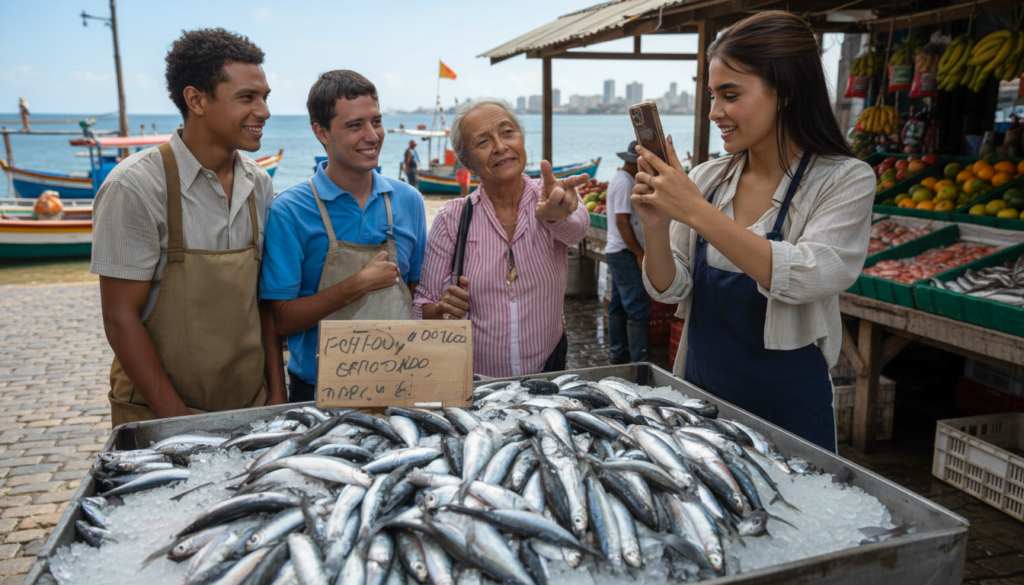
Now, the same stall has a different view. A young couple with reusable bags wants to know how to cook sardines in the oven. A woman in her 60s says she only wants “the fat ones; they’re better for the heart.” A student of nutrition takes pictures for her Instagram and talks about omega-3s to her followers.
The fish that used to make people feel bad at the checkout is now a little star again.

From “poor people’s fish” to a smart choice on the Brazilian table
This year, if you go to any neighbourhood market in Salvador or Rio, you’ll hear it: people asking for sardinha, not just “any cheap fish.” Some people still say “peixe de pobre,” but now they often follow it up with a laugh, a shrug, and a quick, proud aside: “Poor, but healthy, viu?” People are quietly getting back at each other. The fish that used to mean money problems is now defended as a smart, conscious choice.
Rows of silver bodies shine on the stalls under crushed ice. Prices per kilo are written in shaky marker and are lower than most “noble” species. But the queue isn’t any shorter. People ask questions, compare, and weigh things. There is still a stigma, but it is slowly going away.
Dona Irene, who is 62 years old, fries sardines in a sputtering pan during a family lunch in a suburb of Belo Horizonte. The smell brings back memories. Her grandchildren would have wrinkled their noses and asked for nuggets ten years ago. Today, her oldest granddaughter posts a video that says, “Eating like vovó taught us: cheap, tasty, and very good for you.” The video gets a lot of likes.
The numbers tell a similar story. Brazilian nutritionists say that more and more people are asking about small, oily fish instead of farmed fillets. Supermarkets in working-class areas say that sales of sardines stay steady even when beef prices drop during sales. It’s easy to understand: people are paying attention to prices, but they’re also paying attention to what they eat.
Fancy restaurants aren’t the first to rediscover it. It’s happening in small kitchens at home with aluminium pans and walls that have been stained by years of oil.
What is this quiet revolution? Fear, plain and simple, is part of the answer. Stories about mercury in big predatory fish, antibiotic traces in some farmed species, and questionable frozen imports stuck in ports have gone from TV news to WhatsApp groups. Parents don’t just see protein when they look at a fillet now. They see all three: risk, price, and trust.
Sardines, which are small and low on the food chain, fall into a different group. They take in a lot less heavy metal than big fish like tuna. People who live near the coast of Brazil often catch them because they can picture and understand them. That picture in your head is important. It makes you feel closer to and in control of a food system that seems more and more distant and unclear.
How Brazilians are getting sardines back: from frying pan to air fryer
The question that comes up quickly is what to do with all this cheap fish. You don’t want a chef-level recipe on a Tuesday night in São Paulo when you have bills on the fridge and are tired. You want something that works. That is the basis for the new sardine wave. Easy methods, little work, big rewards.
The classic way is to clean the fish, add salt, lemon juice, and a light coat of flour, and then put it in hot oil. The skin is crunchy, the meat is soft, and there are rice and beans on the side, maybe with some vinaigrette. But new tools are becoming part of the routine. Air fryers work their magic in small kitchens with just a little bit of oil, garlic, and lemon slices. Ten to fifteen minutes. No smoke on the curtains. No complaints from neighbours.

A lot of people still wait at the counter. “But what about the bones?” “Will the house smell for a week?” “Is canned sardine just as good?” These questions aren’t dumb. They are the real doubts that get in the way of intention and plate. The best home cooks answer them by lowering their standards of excellence. They put sardines, tomatoes, and onions in foil and bake them so the smell doesn’t get out. They eat the bones when they’re small and soft, or they just pull out the main spine in one motion and move on.
To be honest, no one does this every single day. Some weeks, all we eat for dinner is instant noodles, bread, and coffee. Getting more sardines isn’t about becoming a health saint; it’s more about adding one or two new, realistic options to your diet.
The talk about this fish is changing so much that health professionals are speaking up.
Rio-based nutritionist Juliana Costa says, “From a nutritional point of view, sardine is a treasure that Brazil ignored for too long.” “It has a lot of protein, omega-3s, calcium from the tiny bones, and vitamin D. Plus, it costs a lot less than salmon or fancy cuts of beef.” Families aren’t “settling” when they rediscover sardines. “They’re making smart upgrades.”
In Brazilian kitchens, a few ideas keep coming up for how to turn that “treasure” into something you can actually cook:
When you can, buy fresh. It should have clear eyes, shiny skin, and no strong ammonia smell.
Lemon, vinegar, cilantro, or parsley are all acidic herbs that can tone down the flavour without hiding it.
Lean on canned sardines: when you mash them with tomato, onion, and olive oil, they make a quick spread or pasta sauce.
On busy days, keep it simple: sardines, rice, and salad are better than not eating at all.
Tell kids the story: telling them why this “poor people’s fish” is actually strong helps them stop feeling ashamed.
A simple fish raises a bigger question about what “good food” really is.
There is a deeper, more uncomfortable question behind this quiet sardine comeback: who decided what “fine” food is in the first place? For years, Brazilian dreams on a plate included imported salmon, huge prawns, and thick beef steaks, all of which were proudly shared on social media. Sardines lived in the shadows, where they were linked to last-minute meals at the end of the month and sandwiches for people with hangovers on Sundays.
Now that prices are going up, people are worried about the weather, and there are always new food scandals, more families are changing their minds about those symbols. A fish that is cheap, less likely to be contaminated, full of nutrients, and caught by local workers suddenly seems less like a shame and more like “an act of quiet resistance.” Not ideological, not loud—just lived, bite after bite, in a small kitchen far from the cameras.
We’ve all been in that situation where we open the fridge and wonder how to feed everyone without going over budget or feeling bad about it. Sardines won’t fix every problem, and they aren’t a magic bullet for public health. *But their return to Brazilian tables tells a story about respect, memory, and the strength of changing how we feel about what we were taught to hate. A cheap fish turns into something else between the hot pan and the shared plate: a reminder that the most expensive food isn’t always the best.
Main point: Detail: Value for the reader:
Cheap foodSardines are cheaper than “noble” fish and still give you protein, omega-3, calcium, and vitamin D.Eat better without spending more on food each month.
Safety as it seemsSmall fish don’t pick up as many heavy metals and are often caught close to Brazil’s shores.Stop worrying about long supply chains and harmful substances.
Simple to makeEasy ways to cook, like frying, baking, air frying, or using canned recipes, work well with busy schedules.Make quick, tasty meals out of “poor people’s fish” that you won’t be embarrassed to serve.
Question 1: Are fresh sardines really safer than bigger fish like tuna?
Question 2: Are canned sardines as healthy as fresh ones?
Question 3: How many times a week can I eat sardines without going overboard?
Question 4: What is the best way to get rid of the strong smell of sardines when you cook them at home?
Question 5: Is it safe for kids and older people to eat the tiny bones in sardines?