This one-of-a-kind Maine Coon kitten, which people are calling the “blue cheese” cat, has a marbled face and misty blue-grey fur that looks like it was painted by hand. Her rise to fame on the internet has also brought attention to some of the rarest coat colors in one of the most popular cat breeds in the world.
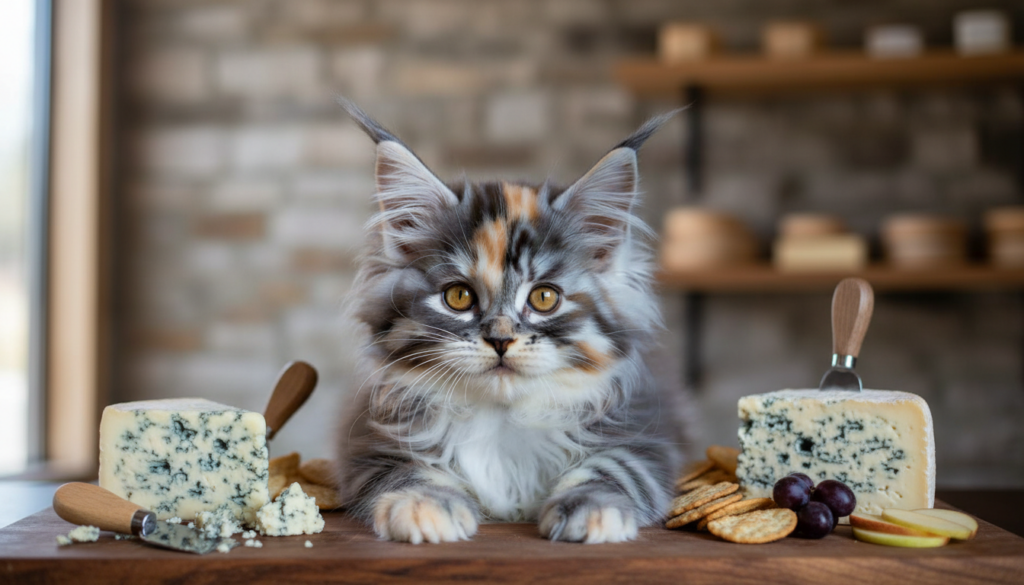
A kitten that looks like a wedge of fancy blue cheese
The cat in question is Miss Lilac, a young European Maine Coon that Nova’s Royal Pets bred. She isn’t just a big, fluffy Maine Coon. People are stopping the video and zooming in because of her color.
The mottled pattern on her coat of soft blue-grey, cream, and white looks like the veins and crumbles of artisan blue cheese.
 How bananas stay fresh and yellow for up to two weeks when stored with one simple household item
Nova calls her a “Blue Tri Maine Coon,” which is also known as a blue tortoiseshell or blue tortie. That means her fur has:
Most of her body is covered in blue-grey fur.
A small, clean white spot on her chest
A tortie-patterned face with colors that mix together
The “blue cheese” nickname seems to fit her well on camera because her pale chest and smoky, speckled face are so different. Her coat will keep growing and getting longer as she gets older because she still has the rounded features and slightly too big paws of a kitten.
What makes blue tortie Maine Coons so rare?
There aren’t many Tortie Maine Coons around, and blue torties are even harder to find. The pattern is determined by how a number of genes that control both color and distribution work together.
Most of the rarest Maine Coon coats are made up of complicated color combinations instead of just one solid color.
Instead of just “black” or “white,” breeders and fans often look for patterns that are different. Maine Coons are known for their beautiful looks, which include:
Tortie (tortoiseshell) is a pattern of two or more colors that looks like marbled patches, often with a patchwork face.
Calico has a white base with big patches of other colors on top. Sometimes the patches are very uneven.
Smoke: The tips of each hair are dark, and the roots are pale near the skin. When the coat moves, it looks like a ghost.
Around the ruff and face, smoke Maine Coons are especially beautiful. When they turn or shake, the lighter undercoat shows through, making the whole cat look like it’s lit from behind.
The name “Lilac” is causing a lot of confusion.
One thing has caused some confusion online. Genetically speaking, Lilac the kitten is not a “lilac” Maine Coon. The name Lavender comes from a flower theme used for her litter, which also has a sister named Lavender.
| Type | Main colours | How it usually looks |
|---|---|---|
| Blue tortie (like Lilac) | Blue-grey, cream, sometimes white | Smoky, mottled pattern with mixed patches on face and body |
| Lilac Maine Coon | Light brown-grey with pinkish cast | Soft, almost pastel coat that can appear slightly purple in some light |
| Smoke Maine Coon | Dark tips, pale roots | Shimmering effect when the fur parts or moves |
A real lilac Maine Coon has a coat that is very different. The fur looks like a soft, dusty mix of brown, gray, and pink tones that can look mauve in some lights. This color is very rare in the breed and is genetically different from blue tortie.
Type of colorWhat it usually looks like
Blue tortie (like Lilac)Blue-gray, cream, and sometimes whiteFace and body have a smoky, mottled pattern with mixed patches.
Lilac Maine Coon: Light brown-grey with a pinkish tint. The coat is soft and almost pastel, and it can look a little purple in some light.
Smoke Maine Coon: Dark tips and pale roots. The fur shimmers when it moves or parts.
Why European Maine Coons are so popular
Lilac is a European Maine Coon, which is a type of cat that has some features that are different from most American Maine Coons. Fans often say:
More pronounced, “wild” face shape
Thicker ruffs and heavier, squarer muzzles
Big, tufted ears and long, bushy tails
Lilac and other cats with that look and an unusual pattern like blue tortie look like they belong in a fantasy world. People on the internet love things that seem a little out of the ordinary, so cats like this tend to go viral quickly.
 A Bowl of Saltwater by the Window in Winter : this easy method rivals aluminum foil in summer
Why rare coat colors make demand skyrocket
When a certain cat goes viral, people want more cats that look like it. When a coat or face shape is especially eye-catching, breeders say that waiting lists get longer.
People might be more interested in how something looks than how healthy or ethical it is if it has unusual colors.
With Maine Coons, rarity is often found in:
Tortie, calico, and smoke are examples of complex patterns.
Gold, blue, or lilac are examples of solid coats that are less common.
Blue smoke or shaded silver are examples of strange color and pattern combinations.
It can take a long time to breed for these traits, and good breeders only have a few litters for health reasons. That lack of availability makes things more desirable and raises prices, especially when a certain cat goes viral on social media.
What people who want to own a “blue cheese” cat should know
People who want to get a rare-colored Maine Coon should look beyond the coat. This breed is big, active, and lives a long time. It needs space, grooming, and money.
Here are some things to ask any breeder:
Testing for common health problems in Maine Coons, like hypertrophic cardiomyopathy (HCM) and hip dysplasia
Proof of vaccinations and early care by a vet
The kittens’ living conditions, such as how they are socialized and how safe they are indoors
People sometimes give up Maine Coons or Maine Coon mixes at rescue centers because they don’t realize how big, shedding, or active they are. A cat that looks like Lilac may be hard to resist, but you still have to brush it, trim its claws, and give it big bags of food every day.
Knowing a few important cat color words
A lot of viral posts talk about colors without explaining them. Here are a few definitions that will help you understand what you see on the screen:
Blue: Not really blue. In cat genetics, “blue” means a black that has been watered down to make a cool gray color.
Tortie (tortoiseshell): A mix of at least two colors that doesn’t have a clear pattern, like a marbled look.
Calico: Tortie coloring with white spots that are usually more clearly separated.
Smoke: Hair shafts that are light at the base and dark at the ends, giving them a shaded look.
When you look at it this way, Lilac’s so-called “blue cheese” face is just a very bold tortie pattern on a blue-grey base, with a little bit of white to make the contrast stronger.
How social media makes the next “must-have” cat
When a cat like Lilac gets a lot of views, it affects more than just one breeder. Algorithms spread those clips to millions of people, many of whom had never heard of blue tortie Maine Coons before. Some people start saving, while others start looking into things.
Instead of shopping lists, it’s better to think of these viral animals as inspiration. One helpful thing to do is write down what you like about the cat, such as its size, personality, pattern, or even just a certain look. Then, talk to breeders and rescues about realistic options that will work for you.
The “blue cheese” Maine Coon may be the only one of its kind, but the trend has brought attention to coat genetics, responsible breeding, and long-term care that can help a lot more cats than just that one kitten.