A strange bathroom trend is spreading from cleaning forums to homes in Europe and the US. People are using plain coffee grounds to scrub, deodorize, and even “park” in the toilet bowl before a holiday. The trick sounds strange, a little off, and just like the kind of hack that gets a lot of attention on social media.
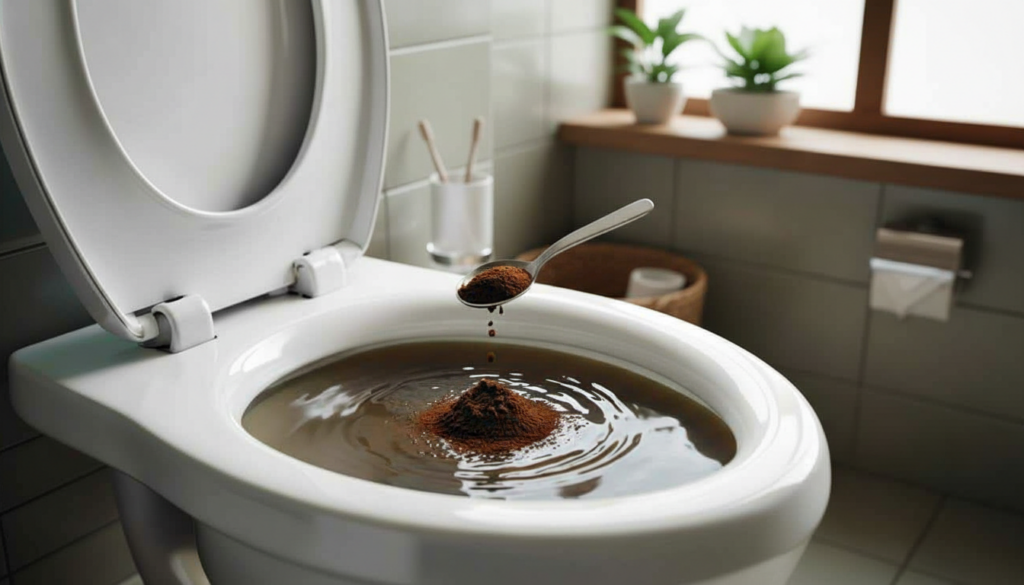
How a spoonful of coffee grounds gets into the toilet
The main idea is very easy to understand. Some people don’t go straight for the bleach; instead, they put a spoonful of used coffee grounds in the toilet and grab the brush.
The grounds are fine and a little gritty, so they act like a soft scrubbing powder. Many people suggest using a silicone brush to clean the bowl because it doesn’t hold onto dirt. This can help get rid of light stains and new marks.

Used coffee grounds are a gentle abrasive that can help get rid of new deposits in the toilet without using strong chemical cleaners.
The second claim is about how it smells. Coffee grounds are naturally full of holes and have a lot of organic compounds that hold onto smell molecules. That means less of the usual “bathroom whiff” coming back up in drains and pipes.
Some people who like the method go even further. They put a spoonful of damp grounds right into the water in the bowl and close the lid before they leave for a weekend or a longer trip. The water stays still, but the grounds can help trap smells that rise until the next flush.
The appeal of eco-cleaning
The toilet trick is part of a bigger trend: people are looking for ways to clean that don’t waste resources and use up leftovers instead of buying more plastic bottles.
It makes use of a common kitchen waste.
It cuts down on the number of chemical cleaners in the house.
It can help get rid of strong synthetic scents in small bathrooms.
It feels almost free because the coffee is already gone.
For people who like minimalism, the idea of one material doing two things—making espresso now and cleaning the toilet later—is very appealing. It fits perfectly next to vinegar, citric acid, and bicarbonate of soda in the “cupboard cleaning kit” that a lot of people swear by.
A trend that plumbers don’t like very much
Not everyone is happy with this bathroom hack. Plumbing experts and some farming magazines in Germany and other countries have made it clear that they are worried about flushing coffee grounds down the toilet.
Water does not dissolve coffee grounds. They can make the sludge that slowly narrows a pipe worse if they are in the wrong plumbing system.
Old homes often have rough pipes with joints, bends, and limescale deposits that catch almost anything that goes through them. If you mix soap scum, limescale, and toilet paper with wet coffee grounds, you can make a sludge that is thicker and heavier than before.
When this mix gets stuck in a U-bend or a hard-to-reach elbow in the pipe, the water flow slows down and the next blockage happens faster. Plumbers already see problems like this caused by hair, wipes, and fat. Coffee grounds don’t make as big of a difference, but they do add bulk.
Who should stay away from the toilet hack
People who live in certain kinds of homes are more likely to have problems:
Type of home: Risk of problems from coffee groundsReason
Houses that are older and have cast-iron pipesHighRough interiors, limescale and rust that are already there catch debris
Properties that often get blockedUnderlying narrowing of pipes that are already there is high.
Medium septic tank systemsExtra solids make the tank’s load heavier.
Modern PVC pipes that are in good shapeLess (but not none)Fewer deposits for grounds to stick to on smoother surfaces
Water experts usually say that coffee grounds should not go down the drain, even in newer buildings. Instead, they should go in the trash or compost. So what does that mean for the eco-friendly cleaner who likes the smell and scrubbing power?
How to use coffee grounds around the house in a safer way
The good news is that coffee grounds are useful. They just look brighter in other places.
In the kitchen
Many people who cook at home use a little bit of damp grounds to get rid of smells that stick to their hands after chopping garlic, onion, or fish. The soft grit gets rid of any leftover bits, and the coffee smell covers up what’s left.
A small spoonful of washing-up liquid rubbed on a chopping board or wooden spoon can get rid of stains and smells without being as harsh as a chemical paste.
As a natural cleaner
Coffee grounds can help lift food that has baked on to metal surfaces without scratching them too deeply because the particles are small and round.

Coffee grounds can be a gentler alternative to steel wool on pans, grills, and oven trays.
People usually mix the grounds with a little warm water or detergent and then gently rub them over:
Burnt-on spots in frying pans (stay away from non-stick coatings).
Grill grates and oven racks.
Old baking sheets with dark spots.
The most important thing is to test a small area first and avoid coatings that are fragile, like Teflon or polished stone, where any abrasive can leave marks.
Shoes or cupboards in the fridge
Used coffee grounds can also be used as a low-tech deodorizer because they soak up smells. Put them in a small open jar at the back of the fridge or in a shoe cupboard after they have dried. Replace every week or two as the smell-blocking effect wears off.
What gardeners love about it
When you use coffee grounds outside, there are fewer problems. They break down and feed microbes when they are mixed into soil or added to compost. They have small amounts of nitrogen, potassium, and phosphorus, which are good for many plants.
Gardeners often put thin layers around the base of crops like tomatoes, courgettes, and cucumbers, or mix them into compost heaps where they count as a “green” material along with grass clippings and vegetable scraps.
Some people also say that coffee grounds in rings keep slugs, snails, and even curious cats away from beds and pots, but the results are very different from garden to garden and species to species.
When coffee grounds can hurt plants
Not all plants like a little caffeine. Used coffee grounds are much less acidic than fresh coffee, but if you use a lot of them, they can still change the structure of the soil and make it a little more acidic.
Seedlings, especially delicate ornamentals, may have a hard time if their tiny roots hit a thick, wet layer of ground with poor airflow. Some indoor plants from dry areas also don’t like soil that is always wet and compacted.
When gardeners do the following, they usually get the best results:
Instead of putting down a thick carpet, mix the grounds into the soil that is already there.
Don’t use them as the main ingredient in compost; use them as a small part.
Do not stack them right up against stems or trunks.
If you still want to try the trick with the toilet,
Plumbing experts say that people who are still tempted by the bathroom hack should only use it as a tool now and then, not every day.
It is safer to use a single spoonful every now and then, followed by a strong flush and a lot of clear water, than to dump the whole contents of a filter into a pot of coffee every time. This method works best on light surface marks, not serious limescale or stains that have been there for a long time. For those, you need special descalers.
If your home has already had drainage problems, like sinks that take a long time to empty, gurgling noises, or past blockages, it’s best to skip the toilet and put your coffee grounds in the compost heap instead.
Knowing why coffee grounds act this way
One reason this trend is confusing is because of how normal coffee grounds look in water. They swirl around, make the liquid darker, and then float down, which can make it seem like they are dissolving. No, they are not.
The small, solid bits of roasted plant material that make up coffee grounds are called coffee grounds. They get softer in water, but they never melt into it.
They act more like very fine sand than salt. Sand washes away easily in a river that moves quickly. That sand can quietly add to the buildup in a narrow, old pipe that is already full of old debris.
Knowing this basic difference helps you tell the difference between places where coffee grounds are actually useful, like soil and compost, and places where the risks start to outweigh the benefits of the hack.