More households are quietly swapping harsh chemical sprays for a simple bottle of inexpensive white vinegar to discourage spiders from settling around windows, balconies, and outdoor corners. The idea sounds almost too basic to work, yet many people say they notice a difference. Spiders tend to avoid strong smells and certain surface changes, and vinegar provides both. Instead of killing them, this method gently pushes them to relocate. For families who want fewer chemicals around children and pets, vinegar has become a surprisingly popular alternative.
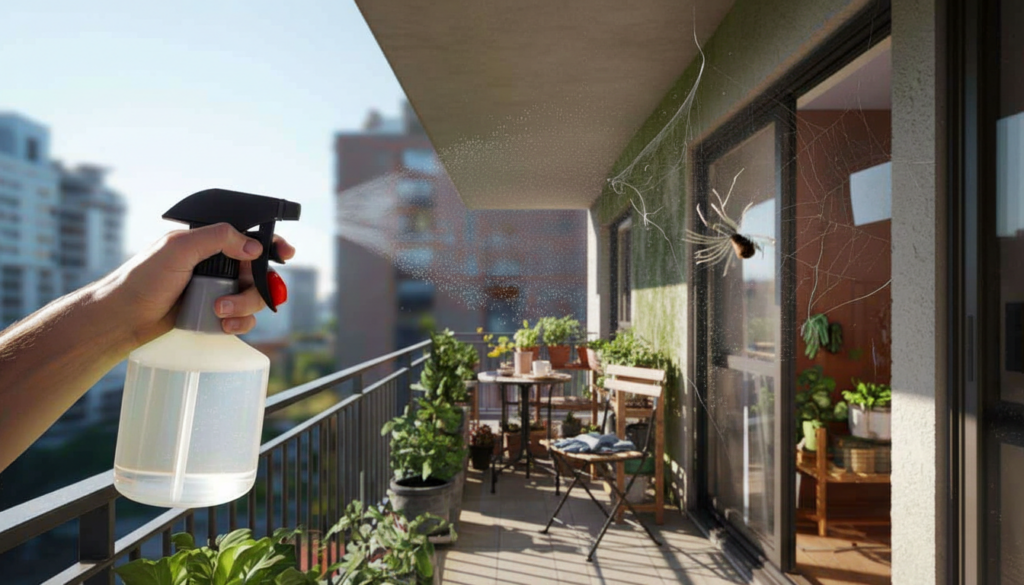
Why People Spray Vinegar on Balconies
Across social media and home forums, the same advice keeps appearing: mix white vinegar with water in a spray bottle and apply it to balcony corners, railings, and door frames. The goal is not extermination but redirection. Vinegar acts more like a natural “keep away” signal than a pesticide.
Its key ingredient, acetic acid, gives vinegar its sharp scent and mild acidity. When sprayed on surfaces, it slightly alters the environment where spiders move and spin webs. While scientific studies are limited, many pest control professionals agree that strong odors can interfere with how spiders choose hiding spots. As a result, treated areas often become less attractive for web-building.

What Vinegar Actually Does to Spiders
Spiders do not smell the way humans do, but they detect chemicals through tiny sensory hairs on their legs and bodies. When vinegar saturates a surface, both the texture and the surrounding air change. This discomfort may encourage spiders to retreat to quieter, untreated spaces.
The important distinction is that vinegar does not destroy the ecosystem around your home. It simply makes specific spots—like balconies, laundry areas, or play spaces—less inviting. Many families prefer this approach because it reduces spider activity without introducing toxic residues into their living environment.
Which Type of Vinegar Works Best
Not all vinegars are equal when used outdoors. Most people choose plain white distilled vinegar for a few key reasons. It is clear and unlikely to stain light-colored walls, tiles, or stone. It is inexpensive and widely available in large bottles. Most importantly, it has a strong, sharp smell that seems to enhance its repelling effect.
Colored varieties like red wine or balsamic vinegar can leave marks on grout, cushions, and certain flooring materials. On balconies exposed to sunlight and moisture, those stains may become permanent. For that reason, white distilled vinegar mixed with water remains the safest and most practical option.
How to Make and Apply a Vinegar Spray
Creating a simple balcony barrier is easy, but consistency matters more than strength. Follow these basic steps:
1. Use a clean spray bottle dedicated to this mixture.
2. Fill half the bottle with white distilled vinegar.
3. Add an equal amount of water.
4. Shake gently to combine.
5. Spray corners, railings, door frames, window tracks, and areas behind outdoor furniture.
Because wind and sunlight quickly reduce the smell outdoors, reapplication every day or two is often necessary during warm months. Light, frequent spraying tends to work better than heavy, occasional soaking.
Where to Focus Your Spraying
Spiders prefer undisturbed, sheltered spots. On balconies, that often includes upper wall corners, behind plant pots, beneath rarely moved furniture, along sliding door tracks, and inside cracks in brickwork.
Spraying directly onto visible webs before wiping them away can enhance the effect. The cleaning action removes the web while the vinegar discourages rebuilding in the same location.
Making Vinegar More Effective
Vinegar alone will not solve a spider problem if the environment continues to attract insects. Spiders follow food and shelter. Experts suggest combining vinegar use with simple maintenance habits.

Regular cleaning, removing clutter like cardboard or stacked wood, reducing bright outdoor lighting at night, clearing balcony drains, and installing mesh screens can all reduce insect presence. When fewer flying insects gather, spider activity naturally declines. Vinegar works best as part of this broader routine.
Surface Safety and Precautions
Although vinegar is common in kitchens, it is still mildly acidic. Repeated use may damage certain materials over time. Be cautious around natural stone such as marble or limestone, sealed wooden decking, decorative metals prone to rust, and delicate fabrics like outdoor cushions.
Testing a small hidden patch first is wise. If discoloration or dullness appears after drying, dilute the mixture further or avoid that surface. Always keep spray bottles out of reach of children, avoid contact with eyes, and apply when pets are not nearby, as the smell may bother them.
How Vinegar Compares to Other Natural Remedies
Many people pair vinegar with aromatic plants such as mint, lavender, or citronella placed near doors and windows. These plants may help discourage insects, indirectly reducing spider visits.
Essential oils are another popular suggestion, but they must be used carefully. Oils like tea tree or eucalyptus can irritate skin and may be harmful to pets if misused. Compared to these options, vinegar remains affordable, widely available, and relatively low risk when diluted properly.
When Vinegar Is Not Enough
In cases of frequent indoor sightings, unusually large spiders, or species known to be venomous in your region, relying solely on vinegar may not be wise. Professional pest control advice may be necessary, especially in homes with small children or curious pets.
Vinegar can still serve as a daily deterrent around entry points, but serious infestations require proper identification and sometimes specialized treatment.
Using Vinegar Realistically
Consider a small city apartment balcony with hanging laundry, decorative lights, and a few potted plants. Warm evenings attract moths, which in turn attract spiders. In such a setting, reducing light usage, cleaning webs weekly, placing aromatic plants near doors, and spraying vinegar in upper corners every couple of days can gradually shift spider activity elsewhere.
In contrast, a ground-floor balcony facing dense shrubs or stacked firewood will experience constant spider traffic from outside. Here, garden maintenance and storage changes will have a bigger long-term impact than vinegar alone.
When viewed as a practical tool rather than a miracle cure, white vinegar can meaningfully reduce unwanted spider visits and make outdoor spaces more comfortable with minimal cost or chemical exposure.