One of the best ways to change how we age is to do resistance training. It helps keep bones strong, supports heart health, and slows down muscle loss that happens with age. Muscle loss can make it harder to move, be independent, and enjoy life in general. Squats are one of the best strength exercises because they give you such a high return. This simple move works several areas at once and helps with long-term function, so it’s a great addition to any routine that focuses on healthy aging.
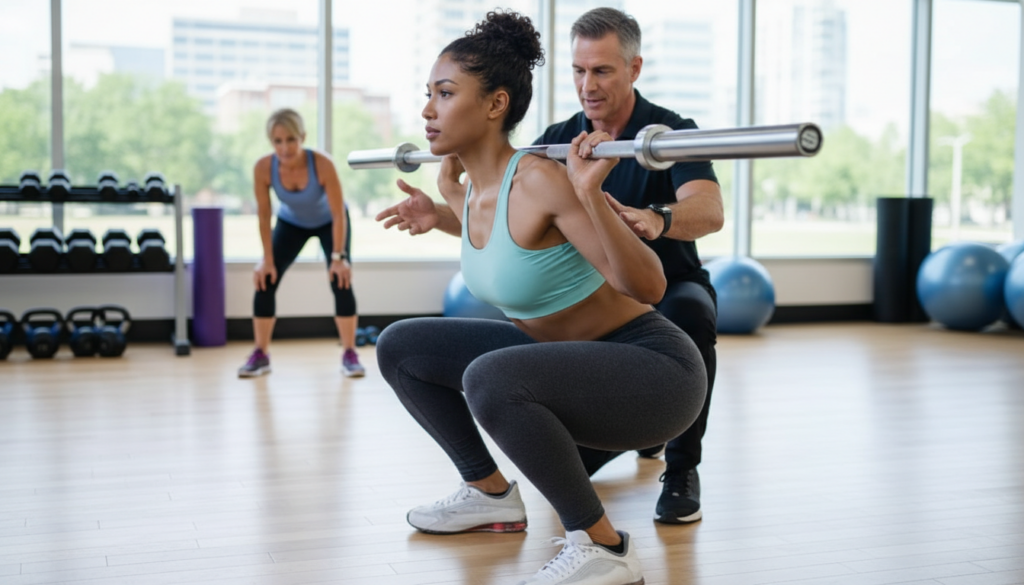
There is a good reason why squats are thought to be a basic exercise. They work out a lot of different muscle groups at once and are similar to things we do every day, like sitting, standing, bending, and lifting. Squats help make everyday tasks feel easier and more controlled as the body gets older because they carry over.
Third Space master trainer Will Pate says, “As we get older, we become less able to handle everyday tasks like stairs, lifting, or getting off the floor unless we train it.” He says that muscle mass can start to go down around age 40, and for sedentary adults over 50, it goes down by 1–2% each year.
 The Sheer Stockings Nail Trend Is Back Creating a Polished Look Inspired by Classic Hosiery
Pate says that many people could lose 30–50% of their muscle mass by age 80 if nothing is done about it. The good news is that squats and other strength exercises can help people of all ages. Even in older adults, resistance training has been shown to make muscles bigger and stronger. This helps counteract a lot of the decline that comes with getting older and keeps the body strong long after the gym.
Also check out 2026 Short Hair Trends: Three Cropped Styles That Make Your Face Look Slimmer and Give You a New Look
You’re on the right track if you’re starting to lift weights in your 40s or changing your routine for this stage of life. The basic mechanics of a squat don’t change with age, but other things like past injuries and hormonal changes can affect how quickly you recover. By knowing these things, you can make sure that squats are still safe and useful.
The main reasons to add squats to your routine
Pate says, “Squats aren’t necessary, but they work really well.” When they are well tolerated, they give a big reward for a movement that is not too hard. He says that squats have many important benefits that help with strength and function over the long term.
They make a basic movement stronger.
Every day, people get up from a chair or lower themselves down, but it gets harder as they get older. Squats make this pattern stronger, which makes daily activities feel easier and less tiring.
They help keep joints healthy.
Squats help you move your hips, knees, and ankles in a coordinated way when you do them right. This lets the joints share the load evenly instead of putting stress on one spot.
They are good at building strength in the lower body.
Squats are a compound exercise, which means they work several muscles at once. This makes them a good choice for beginners or anyone who doesn’t have a lot of time to train.
They help keep bones strong.
Bones change when they are under stress. Squats put healthy stress on the hips, thighs, and spine, which are important areas for keeping bones strong in middle age.
They help people feel confident and free.
Being able to lower yourself down and stand back up with control is empowering, especially for people who are just starting to work out. Getting better at this in your 40s will help you stay independent as you get older.
The squat worked out the muscles.
Squats work out a lot of different muscle groups at once.
Glutes, quadriceps, and hamstrings
They also need other muscles to help them stay stable and in control.

Read Japanese Hair-Washing Method for Healthy, Shiny Hair Without Spending a Lot of Money on Treatments
Core Back Calves
How to do a bodyweight squat the right way
To begin, stand with your feet about hip-width apart and let your toes point slightly outward if that feels good. Put your ribcage on top of your pelvis and send your hips back. Then, bend your knees as if you were sitting in a chair behind you. As you lower to a depth that doesn’t hurt, keep your chest relaxed and straight. To stand up, push the floor away with your whole foot and then come back to standing.
How to tell if your squat form is working for you
The way people squat depends on how their bodies are built and how flexible they are. Instead of trying to make the shape look perfect, pay attention to how the movement feels. A good squat should feel smooth and controlled, let you breathe normally, not hurt too much during or after, be able to be done again the next day without joint pain, and be felt mostly in the thighs and hips rather than the lower back.
Things to avoid when doing squats
A common mistake is to move too quickly. When you lower with control, your ankles, knees, and hips can bend together naturally. Other problems can happen when the exercise doesn’t fit the person, like going deeper than their mobility allows, forcing knee alignment, holding their breath, or pushing through pain. Pate says that pain is feedback and should not be ignored.
When it’s okay to add weight
Being able to do multiple bodyweight repetitions with good control is a big sign that you’re ready to move on. If you can easily do 10 to 20 reps and feel like you can do the set again, the resistance might not be enough to help you get better. Other signs are feeling stable, recovering well between sessions, and keeping the quality of your movements throughout each set.
When adding weight, start slowly. It can be enough with just 2 to 5 kg. The goal is to finish feeling worked but not tired, and to still be able to move as well as you did without the extra weight.
The best squat variations for women over 40
These variations are meant to be easy on your joints, flexible, and good for building confidence, whether you work out at home or at the gym.
Squat with a chair or a box
Stand in front of a chair, slowly lower yourself down, and then use your legs to get back up. Only use your arms if you need help.
Squat with a goblet
Keep a light dumbbell or kettlebell close to your chest. Squat down comfortably while keeping the weight close to your body. Then, push through your feet to get back up.
Squat with support
Hold on to something stable, like a rail or a door frame. Squat down to a depth that feels good, and only use the support when you need it.
Also check out this easy 4-week workout plan to lose fat and build lean muscle.
Leg press
The leg press works the same main muscles as a squat, but it gives you more stability from the outside and makes it easier to keep your balance. Sit with your hips fully supported, put your feet on the platform about hip- to shoulder-width apart, and move through the exercise slowly, making sure your knees don’t lock at the top.