The first thing you notice is how dull it is. The morning light comes in through the living room window and makes the floor look flat and tired, with tiny scuffs and matte patches breaking up the soft glow. You remember how those boards used to look like a magazine spread, with their shiny, deep colour? Somewhere between kids, pets, winter boots, and that one party with red wine, the shine just… went away. Then, one day, a neighbour tells you about a trick that is so easy that you almost laugh. No vinegar. No wax. No costly kit. All you have to do is change how you treat what’s already there.
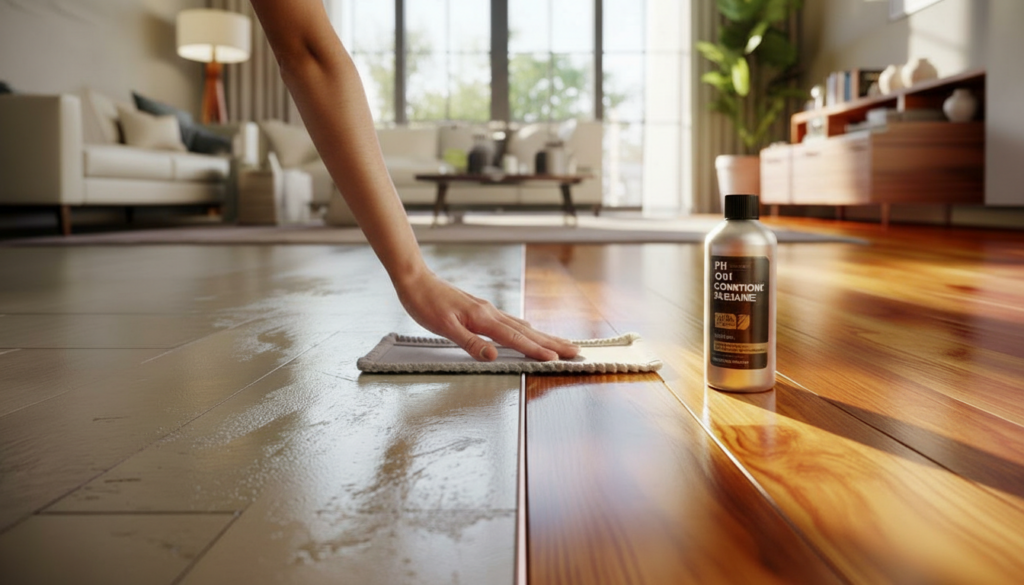
The secret to clean, hydrated wood is no vinegar and no wax.
A lot of people are unhappy after cleaning their hardwood floors for a reason. They hit the surface with harsh products that smell “clean” but feel like sandpaper in slow motion. The shine goes away not because the wood is old, but because the finish is worn out. The truth is that most floors look dull because they are covered in dirt, not because they are broken. Layers of soap, homemade potions, and oily sprays build up, trapping dust and making every footstep stand out. So the real trick isn’t putting more “stuff” on the floor. It gently removes things that shouldn’t be there and then gives the wood the closest thing to a drink. Imagine a typical suburban hallway on a Sunday afternoon.
The sun shines on the boards, and you can see every mop stroke from the last five years: cloudy streaks, darker edges where the bucket water dried, and a shiny spot by the door where someone tried to polish it and gave up halfway. Emma, a friend of mine, was sure she had to sand everything down. She had to swallow hard when she read the quote from the contractor. Before signing, she took a different route: she cleaned the floor deeply with a pH-neutral cleaner and plain hot water, then put a little bit of wood-safe conditioning oil on a microfibre pad. The wood was more than just reflective two hours later. It had depth, like someone turned up the colour on its natural grain.

No vinegar. No wax. Just a clean slate and some water. It’s easy to see why this makes sense. Vinegar is acidic, and while it can cut through some films, using it over and over can slowly etch and dull polyurethane finishes. Wax, on the other hand, tends to sit on top and build up layers that trap dirt and make you have to buff or strip it over and over again. Most floors need to be balanced, which means using a cleaner that matches the pH of the finish and a light conditioner that doesn’t leave a glossy plastic coat. The shine you’re looking for isn’t “on” the wood; it’s coming from how light bounces off a smooth, clear finish. When you stop using kitchen tricks to fight the floor and treat it like a living surface, the results start to look almost unfair.
The simple trick for home: reset and then feed the finish
This is the method that people swear by after they try it. Begin with a thorough but gentle reset: hoover or sweep slowly to catch dirt, then use a microfibre mop that is only slightly damp and a pH-neutral hardwood cleaner to clean the floor. The most important word is “barely.” The pad should feel cool and wet, not soggy. Work in small parts, and rinse or switch out the pad so you are always picking up dirt, not spreading it around. Let it dry all the way through when the surface looks clean and evenly matte. That’s the start over.
The shine is next. Use a clean, dry microfibre pad to apply a tiny bit of wood-safe conditioning oil or restorer that is made just for finished hardwood (not raw wood or furniture). Follow the wood grain and glide it with long, even strokes. Stop as soon as you see a soft, even glow. More product won’t make it shine more. This is where most of us get stuck. We think, “If a little looks good, a lot will look amazing,” and all of a sudden the floor feels greasy, every footprint shows, and the dog leaves a dance pattern all over the room.

To be honest, no one really does this every day. The goal isn’t to make the finish look so good that you want to ban shoes. The goal is to make the floor look alive and forgiving. Be careful not to fall for the usual traps, like mopping with too much water, mixing homemade drinks straight from TikTok or putting products from different brands on top of each other until the floor looks confused.
Living with a floor that finally shines again
When you see that first real glow, your relationship with your floor changes. You stop seeing it as a delicate museum piece or a never-ending chore and start seeing it as a part of your daily life that can handle some chaos. The long-term trick is to be quiet: do that gentle reset often, and only do the conditioning step when the wood starts to look thirsty again, not on a set schedule. Some people do a light reset once a week, while others do it every other week. A spare room can wait months, but a room with a lot of traffic may need a touch-up sooner. You learn to look at the surface: dullness, drag under your feet, or that grey film in the grain means it’s time. This process also has a strange way of bringing you back down to earth. It takes you out of the never-ending search for products and into a simple routine
clean the dust, polish the finish, and add a little moisture. You can see the grain, knots, and colour changes that make your floor unique and not just a copy from a showroom. We’ve all had that moment when you look around and wonder, “Did everything just get older while I was answering emails?” A new floor can give you that feeling back without having to remodel. It’s one of those little things that makes the whole room feel better. Like my neighbour did, you might want to tell other people a low-key secret instead of sending them another product link. You can make your own changes, like choosing a favourite cleaner, setting aside a specific time on the weekends, or only wearing socks after a fresh conditioning. The important thing is that you stop fighting the floor and start listening to it. You know that the shine was never about vinegar or wax when the boards catch the light just right and you see that calm, even shimmer. It was about letting the wood be what it is and giving it just the right amount of help to show up fully.
| Key point | Detail | Value for the reader |
|---|---|---|
| Gentle reset instead of harsh scrubbing | Use pH-neutral cleaner, minimal water, microfiber tools | Restores clarity of the finish without damaging it |
| Light conditioning, not heavy waxing | Apply small amounts of wood-safe oil/restorer, follow the grain | Brings back natural shine and depth without sticky buildup |
| Listen to the floor, not the label | Adjust frequency based on visible dullness and traffic | Less work, better results, and longer life for the hardwood |