People often sleep with wet hair, especially after taking a shower late at night, but this can be bad for your hair. It’s important to know what really happens when you go to bed with wet hair in India, where the weather is humid and hair types change. Dermatologists and hair experts say that even though wet hair may seem fine, it acts very differently than dry hair. You can protect your scalp, keep your hair from breaking, and keep it healthier without making big changes to your routine if you know the risks, benefits, and smart alternatives.
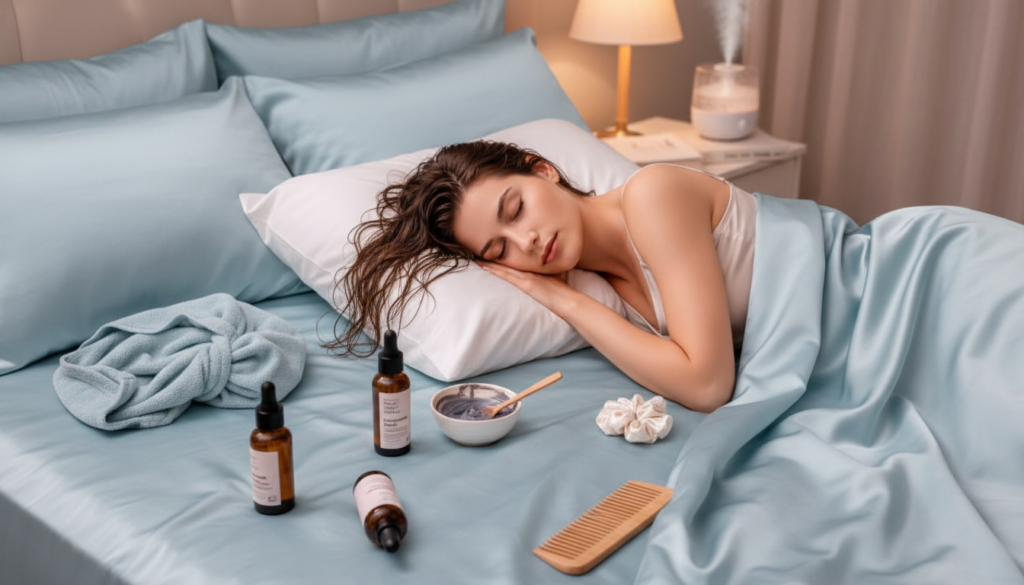
Risks of Sleeping with Wet Hair and Damage to Hair
When hair is wet, it gets weaker and more stretchy, which makes it easier to break while you sleep. Experts say that rubbing your hair against your pillow can make it more likely to stretch, which can damage the cuticle layer over time. Moving around a lot at night can also break your hair, especially if it is long or has been chemically treated. In humid Indian climates, sleeping with wet hair can keep moisture against the scalp, which can make it more likely to become irritated. One night may not do any visible damage, but doing the same thing over and over can slowly make hair weaker and change its texture.
Wet Hair at Night and Worries About Scalp Health
When hair specialists work on hair, they often focus on the scalp as well. If you go to bed with wet hair, it can make the room warm and humid, which is good for fungi to grow. For some people, this might make dandruff or itchiness worse. Dermatologists also say that too much moisture can throw off the natural balance of the scalp, especially if the pillows aren’t clean. This habit may make you sweat more at night in tropical areas, which can block hair follicles and make you uncomfortable. Keeping your scalp dry before bed helps your follicles work properly and keeps unwanted scalp problems from happening.
Also read “Modern Skincare Culture Feels Overwhelming From Soap Choices to Stress.”
How to Sleep Safely with Wet Hair: Expert Tips
Experts say that if you have to wash your hair at night, you should make some changes to make it easier. Let your hair air-dry a little before bed to keep it from holding too much moisture. A microfiber towel can help you soak up water without rubbing it. Hair professionals recommend loose braids or buns to limit tangle formation overnight. Changing to silk or satin pillowcases may lower the amount of friction on your hair, which will protect it. These small changes can help you sleep better with slightly damp hair and still fit into your busy schedule.
Read Choosing the Right Blush Highlighter for Balanced Natural Makeup Results as well.
Summary and what the experts say
Experts agree that sleeping with wet hair is not immediately harmful, but it does have risks that can be avoided if done often. The effects are usually gradual, not immediate, and can include weak strands and scalp pain. Taking care of your hair at night can make a big difference in how it looks over time. Simple things like drying your hair partway and choosing better pillows can help your hair look better. In the long run, making hair care a priority and knowing how moisture affects hair structure can help keep hair strong without having to make big changes to your life.
Habit: Effect on Hair; Expert Advice
Going to bed with wet hairMore likely to breakLet it dry a little
Pillowcase made of cottonMore frictionUse satin or silk
Hairstyles that are too tightStress on the strandDon’t tie your hair back
Scalp irritation: Make sure roots are dry.
Questions and Answers (FAQs)
1. Is it bad to sleep with wet hair every night?
Yes, doing it often can lead to more breakage and problems with your scalp over time.
Read “At 71 I Won My Fourth Hyrox Competition” and “These 5 Habits Keep Me Strong” as well.
2. Does having wet hair make you have dandruff?
It can make dandruff worse by making the scalp more irritated by making it wet.
3. Is it okay to sleep with hair that is a little wet?
It’s safer to have slightly damp hair if you take most of the moisture out before bed.
Check out “Everyone Is Switching to Tinted Lip Oils in 2026: These 11 Are Editor Favorites.”
4. Which pillowcase is best for hair that is wet or damp?
Silk or satin pillowcases help protect hair by reducing friction.