The doctor’s office was too bright, the kind of white light that makes you feel small. A woman in her late sixties sat across from me, holding her purse and nodding politely while her neurologist talked about “normal ageing” and “expected cognitive decline.” She didn’t say anything, but inside she wanted to scream, “You’re wrong about me.” She could still picture the day the Berlin Wall fell, the exact news anchor on TV, the colour of the sofa, and the smell of the stew burning in the pot, even though she sometimes forgot why she had gone into the kitchen.
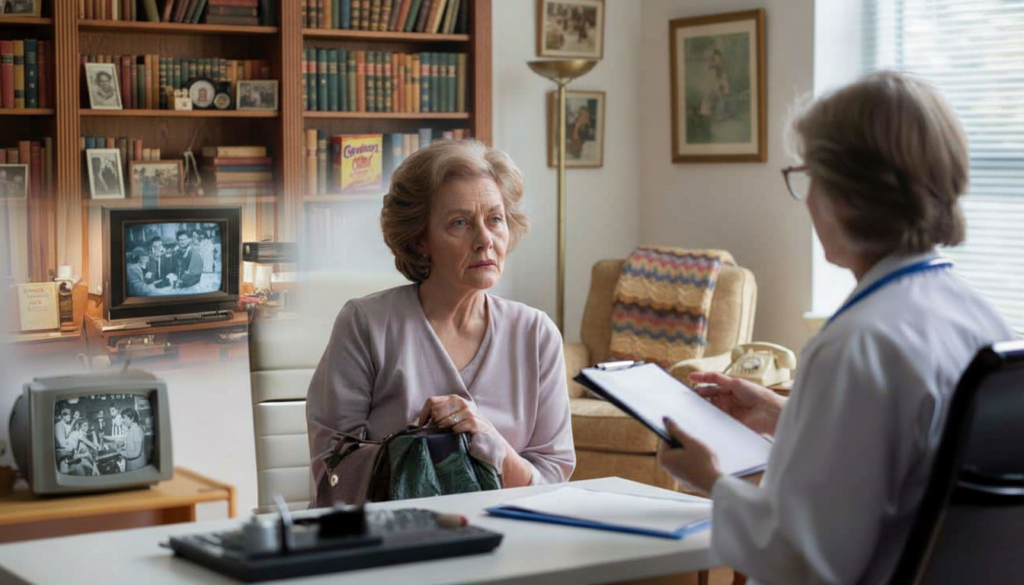
She could sing the jingle from a cereal ad from the 1980s perfectly.
She could tell you who killed J.R. without even thinking about it.

Something didn’t make sense.
If you can remember these moments from decades ago, your brain might be doing something that doctors don’t think it can do.
People at memory clinics say the same thing over and over: “I’m getting so forgetful.” People say they lose their keys, miss appointments, and walk into a room and forget what they were going to do. Those little mistakes that happen every day sound scary, and they are. I keep hearing a quiet contradiction in the same breath, though. Those who are being told they are “slipping” can easily remember clear memories from 30, 40, or 50 years ago.
Not just dates and headlines, but also smells, textures, and songs that go with those days.
That kind of remembering isn’t just nostalgia. It could mean that the brain is working a lot harder and better than the paperwork says it is.
For example, Peter, who is 73 years old and used to work for the post office. His daughter took him to a memory test because he forgot to turn off the hose two days in a row. Before anyone said it out loud, he was half-ready to accept the word “dementia.” The psychologist then asked about memories from a long time ago.
Peter’s eyes lit up. In a matter of seconds, he was back in July 1969, talking about how his neighbours crowded into his parents’ living room to watch the moon landing. He remembered which neighbour cried and which one said it was all done in a studio, even the way the curtains looked. He said the name of the TV brand and the commercial’s slogan that played right after Armstrong took his first step.
His short-term memory score looked “borderline” on paper. What about his long-term memory? Not on the charts. No one had told him that could also be important.
In cases like his, what’s going on isn’t magic; it’s brain architecture. Memory isn’t just one big bucket; it’s more like a messy house with lots of rooms. Short-term and working memory are at the front, where they take the stress, lack of sleep, medications, and fast-paced modern life. Deep episodic memories from decades past are preserved in more distributed networks, frequently exhibiting greater resilience and emotional intensity.
When diagnostic tests rely excessively on rapid tasks, vocabulary lists, and clock illustrations, they may present an incomplete representation. A person who is tired and anxious can fail a five-minute recall test but still have a very good autobiographical memory. In that space, there are both quiet misdiagnoses and overdiagnoses. It’s also where a lot of people lose faith in themselves without saying anything, even when some of their best brain systems are still working.
Ten cultural flashpoints that your brain might remember better than the test thinks.
Instead of freaking out about the name you forgot yesterday, try walking your mind back through the big, important times in your life. Just see what’s there when you push those doors open. Don’t force it. Can you still picture yourself sitting on the floor with your legs crossed and watching the Challenger shuttle launch? How the adults in the room went from laughing to shocked silence when it blew up?
The fall of the Berlin Wall, Princess Diana’s funeral, or the night of Y2K when everyone secretly wondered if the lights would go out at midnight are all good examples. These aren’t just random facts. They are things your brain has stored away as “never forget,” full of emotion, context, and sensory information. If those come back to you in colour and texture, that means something specific about how your deep memory systems are working right now.
I talked to a nurse who runs a small memory group at a community center. She said that the official test isn’t the most revealing exercise for her. It’s when she asks, “Where were you when the first Gulf War started?” in a casual way. or “Do you remember the first time you got a cell phone?”
People get excited. One woman, sure she was ‘losing it’, told a five-minute story about waiting in queue to buy her kids the first Harry Potter book, the smell of the bookshop and the crumpled receipt she kept for years. A man who had trouble remembering three words after a delay could accurately describe the sound of dial-up internet and the exact feeling of waiting for a page to load in 1998.
These aren’t just nice stories. They are points of data. They show that networks for time, place, sequence, and emotional tagging are still working, even when quick recall under pressure fails.
That being said, this is important for more than just comfort. There are more and more diagnoses of dementia, and one reason is that we’re finally paying attention. It’s also because our tools focus too much on small tasks and quick performance reviews. Doctors have to make decisions based on the tests they have and the time they have.
But when someone has strong, consistent access to detailed memories from decades ago, it makes the simple story of “the brain is failing” more complicated. It could mean mild cognitive problems, depression, anxiety, trouble sleeping, or the effects of medication, rather than dementia that gets worse over time. It might also show that one memory “room” in the house is messy while the others are still very well organised. Ignoring that complexity doesn’t just change numbers; it also takes away people’s sense of self sooner than it needs to.
How to use your long-term memories as a quiet second opinion
You shouldn’t try to diagnose yourself. You can go to the doctor’s office with more than just fear and a list of things you forgot. Before your next appointment, take some time to sit down with a notebook or a family member and go over your life decade by decade.
Make a list of specific public events, such as the first time you heard about AIDS, Live Aid on TV, Chernobyl, the end of apartheid, how you felt about 9/11, and the first time you saw Facebook on a computer screen. Then add things that are important to you, like your first car, your first big concert, or the smell of your first flat. Write down everything you remember in detail. Don’t worry if some years seem less clear than others.

Take that with you. It’s not just “nice to have.” It’s a record of how strong your autobiographical timeline is now.
One common mistake is to go to the consultation and only talk about the bad things that have happened to you. The time you told a story three times. The name you forgot at the party. The birthday you forgot. You don’t mention the times you told your grandkids exactly what your city looked like before the new bridge was built or how you can hum the opening riff of a hit song from the 1970s without missing a beat.
To be honest, no one really does this every day. No one sits down and says, “This is a fair picture of my mind.” We go in scared and unprepared, and the system, which is already busy, often meets us at that level. You can change the conversation from doom to nuance by gently pushing back and showing both the problems and the good things. That doesn’t make real problems go away. That just means they are seen in context.
A geriatrician in Manchester told me that families come in and say, “Mum can’t remember what she had for breakfast; it must be dementia.” “Then Mum goes on to tell me a lot of details about her childhood during the Blitz. That difference is important. We need to talk about it instead of skipping over it.
Pay attention to which memories are clear: big news events, cultural moments, and first times. They are often encoded very deeply.
Tell someone you trust to “time travel” with you. Their prompts often bring back memories of scenes you thought you had forgotten.
Bring a short written timeline with you to your appointment. It tells your doctor that long-term memory is a real, useful strength.
Question all-or-nothing tags: Having trouble remembering names and dates is not the same as having a global memory collapse.
If your diagnosis was based on a very short test and you still have a lot of memories from your life, you might want to get a second opinion.
The quiet problem: when fear makes it hard to think clearly
In waiting rooms, there is a sad story going on. People stop trusting their minds years before they really fail them. Dementia can make a person’s sense of who they are into one story: decline. But a lot of those same people can still connect their own lives to world events in a way that younger generations have a hard time doing.
That doesn’t magically make the hard-to-handle symptoms go away. It does suggest that we need a more human and broad definition of what “good memory” means as we get older. You might not be able to keep track of phone numbers like you could when you were 30. Names might be easier to forget. But if your brain can still easily take you back to the sound of the Live Aid crowd through a small TV speaker or the eerily quiet streets after 9/11, something important is still working.
That kind of remembering should be a part of the diagnostic conversation, not just a sentimental aside. It might be the best reason for you not to be reduced to a test score, and it might also be a quiet reminder that your story isn’t over yet.
Important point Detail: What it means to the reader
Long-term memories can last a long time.Strong brain networks hold on to events and cultural moments from decades ago.Reframes “forgetfulness” so that readers can see both the good and the bad.
Tests are just one pictureMost dementia tests focus on short-term and working memory.Encourages readers to add more details to medical conversations
Your life story is useful information.Remembering events in great detail can help tell dementia apart from other problems.gives readers the tools they need to make timelines and ask for more detailed evaluations
Questions and Answers:
Question 1: If I can remember things from the past, does that mean I don’t have dementia?
Not always. Some forms of dementia don’t affect long-term memories until later stages. It’s good to have a strong memory of events from decades ago, but it should be looked at along with other tests and how well you do things every day.
Question 2What types of memories are the most comforting?
When you remember things in a detailed and consistent way, like who was there, how you felt, and what happened first, like when you heard about a big news story or got your first big job, it shows that your deep memory networks are working well.
Question 3: Should Should I tell my doctor about these strong memories?
Yes. Tell me what you remember well and what you forget. Bringing notes or a short life timeline can help your doctor see the whole picture, not just the quick test scores.
Question 4: Does stress or not getting enough sleep make my memory seem worse than it is?
Yes, very much. Stress, anxiety, depression, and not getting enough sleep can all have a big impact on short-term and working memory, even though long-term memories stay strong. This can make things look different.
Question 5: When should you get a second opinion?
If you got a serious diagnosis after a very short test and you or your family notice that your long-term memory and daily life are better than that label suggests, it’s fair to ask for a more thorough evaluation.