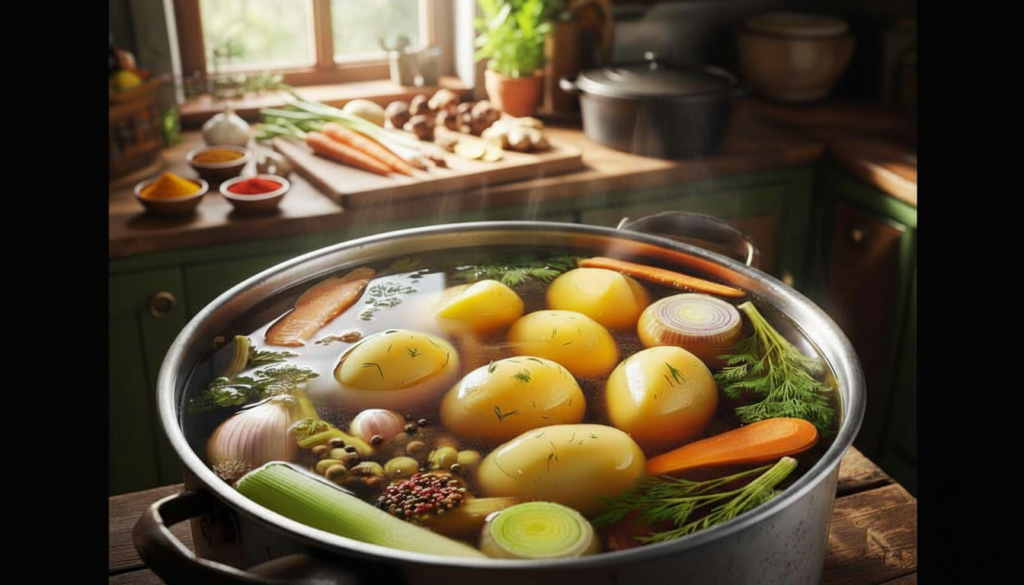
Across many European kitchens, home cooks are making one simple change that completely transforms the humble potato: they’re boiling it in fragrant vegetable broth instead of plain water. The technique is affordable, easy to master, and requires no special equipment. Yet the difference in aroma and depth of flavor is noticeable from the first bite. What was once a basic side dish suddenly tastes layered, savory, and thoughtfully prepared — without adding complicated steps.
Why Plain Water Is Losing Its Appeal
For years, the routine barely changed: peel the potatoes, chop them, salt the water, boil, drain, and serve. It’s reliable and quick — but also predictable. When potatoes cook in plain water, part of their natural taste seeps out into the liquid, which is usually discarded. In the end, seasoning depends heavily on salt, butter, or rich sauces added afterward.
Replacing water with vegetable broth flips that logic. Instead of losing flavor, the potatoes absorb it as they cook. On German-speaking cooking blogs and social media, many home cooks now recommend simmering potatoes directly in stock. The result is fuller flavor from the inside, meaning you need less butter and fewer heavy toppings to make them satisfying.

Why Vegetable Broth Enhances Flavor So Well
Vegetable broth is essentially water infused with vegetables, herbs, and spices. When potatoes simmer in it, they soften while absorbing these subtle layers of taste. Instead of just salt, they take in:
– Gentle sweetness from carrots and onions
– Earthy tones from celery, leeks, or celeriac
– Fresh herbal notes from parsley, dill, or bay leaves
– Mild warmth from garlic, peppercorns, or allspice
Because potatoes have a porous texture once heated, they soak up these flavors gradually. The seasoning develops throughout the potato rather than sitting only on the surface. This method often allows cooks to reduce added salt and fat, which can be helpful for lighter, everyday meals.
How to Prepare a Simple Vegetable Broth
While store-bought stock works fine, many people prefer making a quick homemade broth to control salt and ingredients.
Basic ingredients for about 1.5 liters:
– 2 medium carrots, sliced
– 1 large onion, halved (skin washed and left on for color)
– 2 celery stalks or a slice of celeriac
– 1 small piece of leek, well rinsed
– 2 lightly crushed garlic cloves
– A handful of fresh herbs such as parsley or thyme
– 5–8 peppercorns and 1–2 bay leaves
– Salt added gradually to taste
Place everything in a pot with cold water. Bring it gently to a boil, then lower the heat and simmer for 30 to 40 minutes. Skim off any foam that forms and taste occasionally to adjust seasoning. The broth should smell fragrant before adding potatoes.
If using store-bought stock or cubes, check sodium levels and artificial additives. Diluting concentrated stock with water and adding fresh herbs can improve the flavor balance.
How to Cook Potatoes in Broth
The process stays nearly identical to traditional boiling — only the liquid changes.
– Peel and rinse the potatoes.
– Leave them whole for a classic presentation or cut into chunks for faster cooking.
– Bring the prepared broth to a gentle boil.
– Add potatoes so they are just covered with liquid.
– Reduce to a simmer and cook until tender.

Cooking times:
– Whole medium potatoes: about 25–30 minutes
– Cubes or chunks: 15–20 minutes
Test doneness with a knife; it should slide in easily. Serve directly with a little butter and fresh herbs, or drain carefully and reserve some broth for soup or gravy.
Serving Ideas for Broth-Cooked Potatoes
Because they are already seasoned, these potatoes pair well with many dishes. They complement meat options like schnitzel, steak, or meatballs, as well as baked fish or plant-based cutlets. For vegetarian meals, they match beautifully with roasted vegetables and legumes.
Cooled broth-cooked potatoes also make an excellent base for potato salad, as they retain flavor even after dressing is added. When mashed, they produce a richer purée since flavor is already built into the potato before milk or cream is mixed in.
They can even be parboiled in broth before roasting, adding depth beneath a crispy oven-browned surface. Leftovers reheat well in a pan, creating flavorful hash-style potatoes the next day.
Health and Practical Considerations
Using broth can reduce the need for heavy sauces or excess salt. Herbs and spices add complexity without relying solely on sodium. Saving leftover broth for soup or gravy also helps minimize waste.
However, packaged stocks can contain high salt levels, so tasting before adding more seasoning is important. Those on low-sodium diets may prefer homemade or diluted broth. Recipes can also be adjusted for dietary restrictions by omitting ingredients like celery.
For meal planners, preparing a large batch of lightly salted broth at the start of the week makes this method practical. The same potatoes can be served simply with herbs one day, turned into salad the next, and pan-fried later.
By making just one subtle swap — replacing water with vegetable broth — an everyday ingredient gains depth and character. The technique remains simple, but the finished dish feels far more intentional and satisfying.