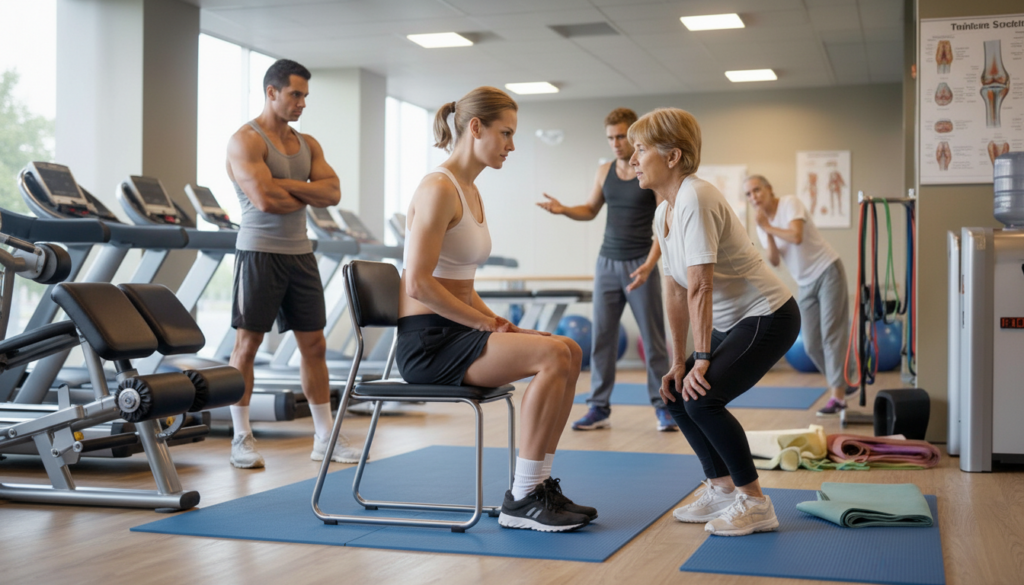
The first sigh usually comes from near the treadmills. As the coach wheels a stack of cold metal chairs into the center of the gym, someone mutters, “Please not that.” A few members suddenly become very committed to stretching. Others remember they urgently need water. No one says it out loud, but “sit-to-stand squats” instantly drains the room’s energy.
You know the move by another name: standing up from a chair and sitting back down. The so-called “grandma exercise” people love to mock. Too basic. Too boring. Too embarrassing.
The ‘Boring’ Move Physios Keep Prescribing
Ask almost any physiotherapist what they assign to patients with aching knees and the answer is predictable: sit-to-stands. Often paired with wall sits. Repeated consistently. No drama.

While social media celebrates deep barbell squats and flashy resistance bands, knee rehab often circles back to something far simpler: your body, a chair, and gravity.
It looks easy on paper. It rarely feels that way in reality.
At one suburban gym, a coach asked a mixed class to complete three sets of 15 chair squats. A young man laughed and called it a warm-up. A woman in her fifties quietly adjusted her stance and focused.
By the second set, the young man was shaking. The woman found her rhythm — sit, stand, breathe. Afterward she looked surprised. “My knees actually feel better,” she said.
The coach later admitted that calling it “functional strength” gets more respect than calling it knee rehab.
The reason it works is straightforward. Standing up, sitting down, and climbing stairs all load the knee joint. Your quadriceps and glutes must coordinate smoothly to control that load. Sit-to-stands rehearse that exact pattern in a safe range. Wall sits build thigh strength without repeated joint movement, reducing the shearing forces people fear.
How To Do Sit-to-Stand Without Angering Your Knees
Start seated on a stable chair. Feet flat. Knees roughly above ankles. Slide slightly toward the edge. Lean your torso forward a bit — like you’re about to greet someone.
Press through your feet and stand without using your hands. Then lower yourself slowly, as if the chair might vanish at the last second. Aim for 8–10 controlled repetitions. Rest. Repeat.
If pain is sharp, adjust the setup. Raise the seat height with cushions or choose a taller chair to reduce knee bend. Depth is not the goal. Smooth, controlled movement is.
Many people sabotage progress here. They rush. They drop too low. They push through pain to prove toughness. The result? Stiffness and frustration.
Instead, think of it as rebuilding trust with your knees. Smaller range. Slower tempo. Honest feedback from your body. Progress is often subtle — until one day stairs feel less intimidating.
Sports physiotherapists often repeat the same message: consistency beats intensity. Those who improve usually do this exercise quietly, most days of the week, without fanfare.
Helpful adjustments:
– Start higher than you think you need.
– Keep discomfort mild (around 3/10).
– Lightly touch a wall for balance if needed.
– Breathe out as you stand, inhale as you sit.
– Attach a set to daily routines like brushing teeth or making coffee.
Why Opinions Are Divided — And Why That’s Okay
Browse any fitness forum and you’ll see strong opinions. Some swear chair squats transformed their knees. Others claim they caused flare-ups and prefer swimming or Pilates.

Pain is highly individual. Two people with similar scans may react differently to the same load. For one person, strengthening feels empowering. For another, it triggers fear and muscle guarding.
The middle ground is gradual, targeted loading at a level your knee tolerates. Not avoidance. Not aggression. Just measured exposure.
What You Actually Gain From This Simple Practice
First, practical strength. Sit-to-stands train the same muscles used when climbing stairs, rising from a sofa, or getting out of a car.
Second, adaptable progression. You can modify seat height, tempo, frequency, and eventually add light resistance. The exercise adjusts to you — not the other way around.
Third, confidence. Regular, controlled practice reduces fear around movement. Over time, your brain interprets knee loading as safe rather than threatening. That shift alone can reduce pain sensitivity.
Frequently Asked Questions
Do chair squats work better than swimming or Pilates?
They are not superior — they are more specific. Sit-to-stands directly train the motion that often hurts. Swimming and Pilates are excellent low-impact options, but targeted strength can influence daily knee comfort more directly.
What if standing up hurts?
Start with a higher surface and reduce the range. Mild discomfort that fades quickly is usually acceptable. Sharp, catching, or lingering pain means scale back or consult a physiotherapist.
How often should I do them?
A practical target is 2–3 sets of 8–12 reps, three to four times weekly. The last few reps should feel challenging but controlled. Progress gradually over weeks.
Are wall sits safer?
For some people, yes. Because there is no movement, they can feel more stable initially. Many rehab programs combine both.
When will I notice improvement?
Small functional changes often appear within 4–6 weeks — easier stairs, less discomfort standing, smoother transitions from sitting. Structural adaptation takes longer, but early wins are common.
It may be the least glamorous exercise in the room. But sometimes the move everyone avoids is the one your knees have been waiting for.