The radiator made its usual metallic ticking sound, which usually meant that heat was on the way. Outside, the wind blew through bare branches and shook the window frames, which was a quiet sign that colder weather was on the way. The air inside was warm enough, but it felt thin and dry. Your throat was scratchy, your skin was tight on your hands, and your nose felt like it was going to sneeze at any moment. You remembered hearing from an older family member or online that putting a glass of water near the radiator could make the room feel warmer. You look at the kitchen and wonder how a simple glass of water could really help warm up a room. It sounds like an old myth or superstition. As the night goes on and the air gets even drier, you fill a glass all the way up and take it back to put it next to the radiator. As the water slowly warms up, something small starts to happen. Winter always shows its secrets like this, in a quiet way that you might not notice at first.
The Science Behind a Simple Glass of Water
It seems almost too good to be true that a glass of water can make a room feel warmer without raising your energy bill. After all, water doesn’t make heat. It isn’t a small heater that works quietly on your windowsill. The real reason is much more complicated. It’s not about making more heat; it’s about helping your body feel the heat that is already there more fully.
When a radiator is on, it does two things: it heats the air and removes moisture from it. At first, you might not notice how dry it is. You might feel it as a scratchy throat, tight skin, static in your clothes, or those little shocks you get when you touch metal. It’s not as clear how dry air changes how your body senses temperature.

Why Dry Air Makes Warm Rooms Feel Cooler
Your body is always giving off heat to the air around it. When it’s very dry, moisture leaves your skin and every breath you take more quickly. Even when the thermometer says the room is warm, this process pulls heat away from your body, making you feel a little cooler. The radiator is working perfectly, but the reading on the wall doesn’t match what your body feels.
This is where the water glass comes in. It slowly absorbs heat and releases moisture into the air through gentle evaporation when it is near a heat source. Even though the humidity change is small, it can be enough to keep your skin and lungs from losing moisture. The temperature hasn’t changed, but your body feels softer, warmer, and more comfortable in the room.
Aloe Vera: The Soft Tamer
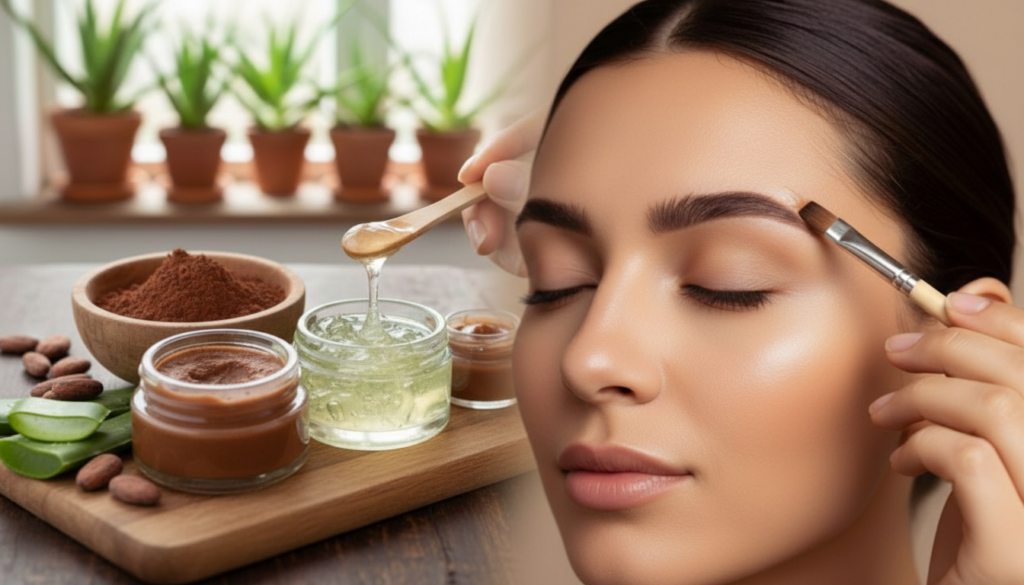
Aloe vera has been calming skin for hundreds of years, long before it was sold in neat bottles. Pure aloe gel is never stiff or sticky; it feels cool, light, and a little slippery. It acts like a quiet, understanding styling agent on eyebrows, giving them hold without being harsh.
Aloe is the main ingredient in a homemade brow gel. It has a natural texture that gives light to medium control, keeping brow hairs in place while still letting them move. A high-quality gel with few additives will also give you gentle hydration every time you use it, which makes the routine feel more like care than correction.
Cocoa Powder: A Brown Colour from the Kitchen
Cocoa powder adds warmth, depth, and colour that comes from nature. The deep brown colour works surprisingly well as a brow tint, especially for light to medium-dark shades. When mixed with aloe, cocoa makes a soft, stain-like colour instead of a strong, painted look.
The beauty is in being in charge. A small pinch gives a hint of shape, while a little more makes the look more defined. The result blends in perfectly with natural brows, leaving no harsh lines. Using the same ingredient that gives hot chocolate its flavour to gently frame your face is very satisfying. Beauty and nourishment come from the same place.
Getting together your little alchemy kit
Making your own brow gel is more like a small ritual than a beauty project. Each item has its own job: clean jars, a simple spoon, and a spoolie brush. The process is calm, hands-on, and not rushed.

The recipe only needs aloe vera gel and cocoa powder as its main ingredients. You can add things like a drop of jojoba oil for slip or a pinch of coffee or charcoal for deeper tones later if you want. The best thing about this recipe is how simple it is: it only uses two simple ingredients that are carefully combined.
| Item | Role & Use |
|---|---|
| 2 teaspoons pure aloe vera gel (clear, unscented) | Acts as the main base, providing natural hold, smooth application, and moisture |
| ¼–½ teaspoon unsweetened cocoa powder | Adds a soft, natural tint to enhance brow color |
| Small clean glass jar or lidded container | Used to safely store the prepared mixture |
| Clean spoolie or angled eyebrow brush | Helps apply and shape the product evenly on brows |
| Mini spoon or mixing stick | Used to combine and blend all ingredients smoothly |
Mixing the gel is slow, easy, and satisfying.
Put two teaspoons of aloe vera gel in a clean jar. Add about a quarter teaspoon of cocoa powder and stir slowly, breaking up any lumps. The clear gel slowly turns into a smooth, brown colour that looks like dirt.
Put some colour on the back of your hand and let it dry for a short time. Change things up as needed: add more cocoa for depth or more aloe for softness. It should be creamy, not too thick or too thin, so that it can be easily spread and stick to a brush. After mixing, close the jar and let it sit for an hour so that everything settles evenly.
Using the Gel with Care and Purpose
This homemade gel makes you want to take your time. Begin with brows that are clean and dry. Lightly dip a spoolie into the jar and wipe off any extra. Use short, feathered strokes to brush through the brows in the direction that the hair grows.
Start at the inner brow and work your way out, shaping instead of drawing. Let the first layer dry, then add another one, focusing on areas that are thin. If you need to, an angled brush can help make individual hairs look like they are real. The finish stays soft and flexible; it never gets hard or heavy.
Nature, Skin, and the Decision to Make Things Simple
Making a simple product at home has a lot of meaning. It cuts down on waste, keeps out unnecessary ingredients, and brings you back to the act of making. A small jar can hold enough for several refills, which means you won’t have to throw away a tube every time. Every time you use it, it reminds you that beauty doesn’t have to be hard to get to or far away.
Not all natural solutions work for everyone, so pay attention to your skin. Patch testing is very important, and making changes is part of the process. Still, taking your time, stirring something by hand, and shaping your brows with purpose instead of haste can be powerful.
In that brief moment, with the brush in your hand and the cocoa-scented gel in the jar, you remember that beauty can be soft, useful, and very personal. It can start with the most basic things.