The old wooden gate creaks as Gérard nudges it open. Beyond it, a neat row of beehives hums gently in the corner of his small field. He strolls past them with a quiet sense of satisfaction. When he allowed a young beekeeper from the neighboring village to place the hives there, he felt he was doing something worthwhile. There was no formal lease, no rent to collect—just a friendly handshake, a few jars of honey each summer, and the comfort of knowing the land was not sitting idle.
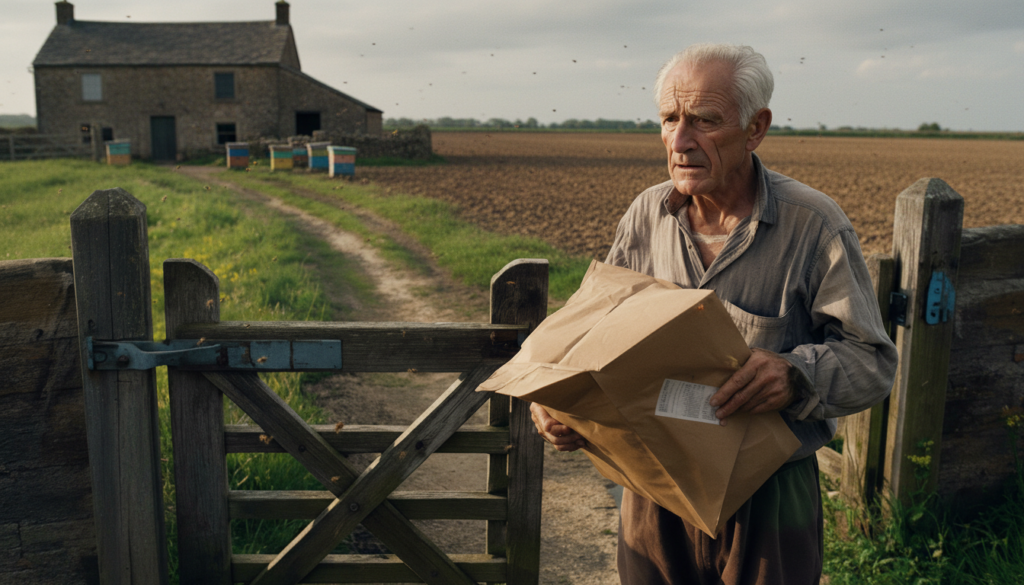
Then one chilly morning, a brown envelope arrived. Agricultural tax—addressed to him. Not to the beekeeper. To Gérard, a retired man living on a modest pension who hasn’t sold a single product from that land in years.
He keeps repeating the same line, half in disbelief: “I’m not earning anything from this.”

On paper, his situation seems innocent enough. A retired landowner with a small unused plot. A young apiarist seeking a peaceful place for hives. No contract. No profits. Just rural goodwill. But the tax authority does not see generosity or buzzing bees. It sees property records, land classification, agricultural activity, and taxable obligations.
To the administration, Gérard remains the legal owner. And therefore, the taxpayer.
When he visited the local office to clarify what he believed was a mistake, the explanation was blunt. The land is still registered as agricultural. Beekeeping qualifies as an agricultural activity. That alone is sufficient to maintain its taxable status.
It doesn’t matter that Gérard hasn’t farmed for years. It doesn’t matter that the beekeeper markets the honey independently. The ownership hasn’t changed, so the tax responsibility hasn’t either. He walked out carrying his paperwork—and a sense of quiet injustice.
What hurts most is the impression of being penalized for a kind act. He thought he was supporting a young entrepreneur and contributing to environmental protection. Instead, he is facing a financial burden he never anticipated.
Legally, the logic is straightforward: if agricultural activity occurs on your land and no formal arrangement shifts liability, the tax remains yours. Emotionally, however, it feels like generosity being turned against you.
Some observers shrug and say, “Those are simply the rules.” Others argue that such rigidity discourages goodwill in rural communities.
When a Friendly Favor Becomes a Financial Liability
In many rural areas, informal agreements are common. A neighbor grazes a few sheep. Someone plants vegetables. Another sets up a handful of hives. These arrangements often rely on trust rather than paperwork. But trust does not override tax codes.
The simplest safeguard—one that many overlook—is putting even a brief agreement in writing. It doesn’t need to be complex. A short document clarifying land use, symbolic compensation, and responsibility for taxes could have protected Gérard. A couple of signed pages tucked away in a drawer might have prevented months of frustration.
Instead, like many small landowners, he relied on a verbal understanding. The assumption was that minor, low-impact activity would not trigger administrative consequences. Yet land classification rarely changes automatically, and authorities focus on usage, not intention.
For retirees on limited pensions, an unexpected agricultural levy is not trivial. It affects monthly budgeting and creates stress that far outweighs the honey received in return.
The deeper issue lies in the gap between everyday rural customs and regulatory frameworks. Most people do not consult tax legislation before agreeing to a neighborly favor. That disconnect is where stories like Gérard’s emerge.
Some argue that if land generates activity, it should generate tax revenue. Others counter that small-scale, community-based arrangements should not be treated the same as commercial farms. The debate reflects a broader tension between administrative consistency and common-sense fairness.

Helping Without Risking the Same Outcome
Gérard’s experience doesn’t mean landowners must stop helping others. It means they should approach such arrangements with clarity.
Before allowing any agricultural activity, two essential questions should be addressed: Who is officially recognized as the land user? And who bears the tax obligation? These discussions may feel awkward, but they protect both sides.
A conversation with the beekeeper about their legal status and existing operations can provide insight. A short visit to the town hall, a notary, or a local agricultural adviser can clarify whether exemptions or reclassifications are possible. Often, a brief consultation prevents long-term complications.
Many people hesitate to formalize agreements because they fear it will “ruin the friendly atmosphere.” In reality, written clarity strengthens trust. It ensures that expectations are aligned and responsibilities are defined.
If you are lending land, it is reasonable to say: “I’m glad to help, but I need to understand the tax implications.” That statement does not undermine generosity—it preserves it.
Similarly, anyone using borrowed land should avoid casual reassurances like, “Don’t worry, it will be fine,” without verifying the facts. Assumptions offer comfort in conversation, but they carry little weight in administrative processes.
A simple checklist can serve as protection:
– Who legally owns and how is the land classified?
– What precise activity will take place?
– Is there a written agreement specifying tax responsibility?
– Has anyone confirmed the tax treatment with authorities?
– What happens if the land use evolves?
A Broader Reflection on Rural Life and Regulation
Gérard’s situation quickly became a topic of conversation in his village café. Some saw it as another example of bureaucracy disconnected from rural realities. Others defended the necessity of uniform rules to prevent confusion or undeclared farming.
Beneath the surface lies a deeper unease. Rural communities often function through informal cooperation, shared trust, and mutual support. Meanwhile, modern governance relies on classification systems, documentation, and standardized procedures.
When these two worlds intersect, friction appears.
Encouraging environmental initiatives—like supporting pollinators—while maintaining coherent taxation policies is a delicate balance. Too much flexibility risks abuse; too much rigidity discourages goodwill.
Somewhere between those extremes stand individuals like Gérard. He did not seek profit. He wanted to hear bees humming at the edge of his field. Instead, he found himself navigating tax procedures he never anticipated.
His story is less about honey and more about how small acts of generosity can collide with systems designed for clarity and control. It invites a broader conversation: how can regulations respect both fairness and the everyday spirit of rural solidarity?
| Key point | Detail | Value for the reader |
|---|---|---|
| Know your land’s status | Check the official classification and how it’s taxed before lending it | Avoid surprise bills and understand how the tax office sees your plot |
| Put agreements in writing | Short, clear contracts on use, duration, and who pays which charges | Protects relationships and limits legal and financial risk |
| Get local advice early | Speak to town hall, notary, or farming bodies before hosting activity | Spot exemptions, smart options, and pitfalls specific to your area |