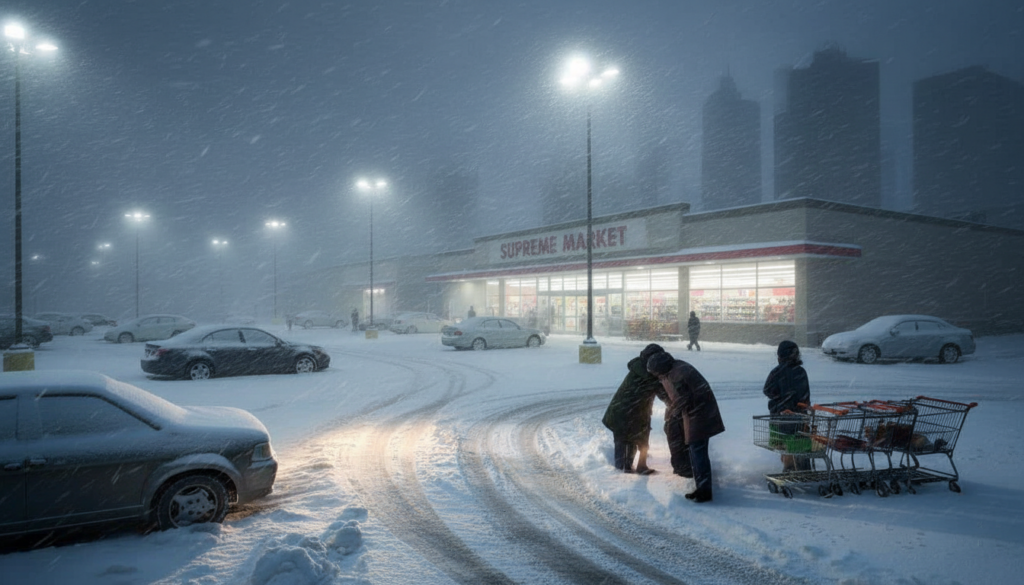
The first flakes fell long before anyone’s phone got a warning. A few lazy spirals drifted by the streetlights, the kind you don’t even notice on your way home. Then all the alerts came at once: buzzing pockets, glowing screens, and that sharp “uh-oh” that ran through group chats. Warning of a winter storm. The system is getting stronger. It might not be possible to travel. The people who walked the dogs hurried. Grocery store parking lots started to fill up, and carts rattled toward the entrance like a quiet migration.
People clicked between radar loops and streaming shows in their living rooms, acting like they weren’t counting the hours until the worst of it hit. When you open the curtains, the snow is thicker and the wind is a little louder against the glass. The map still shows the storm as being far away.
It suddenly seems closer than it should.
A storm that was not supposed to be this big
The forecast all week used words like “nuisance snow” and “light accumulation.” Nothing that would change lives or close down roads. The tone changed almost overnight after that. The same model that showed a little bit of dust on Tuesday was suddenly painting a thick, swirling band of snow over the whole area. Local weather experts, who had been calm and almost casual, switched gears.
Before dawn, the winter storm warning went away, and with it came a new word that no one wanted to hear: intensifying. People woke up to that red banner on their weather apps and the feeling that the ground had just shifted under their plans.
By mid-morning, the change was clear on the streets. There were a lot of cars at petrol stations that were only half-full the night before. Each driver was quietly thinking, “How bad is this going to get?” Supermarkets put out more pallets of bread and bottled water. A manager in a small town outside of the city said they made three days’ worth of sales in nine hours.
There was a “get it done before the snow” energy on the highway, with cars packed tightly together and everyone rushing but trying not to show it. We’ve all been there, when you decide to run one more errand even though the sky is starting to look like static.
The last-minute rush is just a simple story of changing expectations. Early predictions are often on the safe side, especially when it comes to winter systems that change quickly. Meteorologists keep an eye out for signs of deepening low pressure, sharper temperature differences, and moisture coming in from faraway oceans or lakes as new data comes in every few hours.
This storm started pulling in warmer, wetter air from farther south than expected. That “fuel” ran into bitter air that was already stuck over the area. The result was more lift in the air, stronger bands of snow, and a storm that suddenly looked much more organised and dangerous. *What began as background weather had quietly turned into a major event.
What to do to get ready when the warning goes off
The first thing to do when a winter storm starts to get worse is to stop and think. What do you really need to have at home for 48 hours? Food that you will eat. Drugs that won’t run out. Batteries if the power goes out. Not the fantasy stash in the woods, just the things you need that would annoy you if you didn’t have them.
It’s important to take a quick look around your place. Clean out the drain on the balcony. Park the car in a place where the plough won’t cover it. Charge all of your devices until the cords look like vines in the living room. Small, boring tasks that add up to real peace of mind without you even knowing it.
Let’s be honest: no one really does this every day. That’s why the day before a storm often feels like a test you didn’t study for. A lot of people get stuck with an empty petrol tank, no ice scraper and a fridge full of condiments and nothing else. That doesn’t mean you’re irresponsible; it just means you’re human.

The key is not to shop in a panic. When the power goes out, getting three frozen turkeys and a lifetime supply of chips doesn’t help. Find meals that are easy to cook and can be stored on a shelf. Think about your kids, pets, and older relatives who live nearby who might need a visit. When the radar colours turn purple, a quick text saying “Do you need anything?” means a lot more.
- Before you drive, make sure your windscreen, lights and roof are all clear.
- Put a bag with gloves, a hat, a torch and a backup charger by the door.
- Take a picture of important papers and put them in a safe cloud folder.
- If you can do it safely, check your storm drains and gutters to stop flooding later.
- If the power goes out at night, talk to your family about a simple plan.
- Those small, almost silent steps don’t look heroic on social media, but they are what make a dangerous storm into a couple of days that are hard but manageable.
What this storm really means for the winters to come
When a system like this gets stronger so quickly, it does more than change weekend plans. It changes how you think winter should feel. Older neighbours talk about “storms we used to have,” while younger ones deal with working from home, school closures, and the strange glow of radar maps that seem to change every hour.
There is a quiet question behind all of this: are these wild swings from bare ground to whiteout becoming the new normal? People may not say “climate signal” while they shovel, but they can feel it in the whiplash from record warmth one week to dangerous cold the next. That’s where the real fear is.
It’s also changing how we talk about these storms. What used to be a simple “nor’easter” or “winter front” is now a countdown event, with models shared online like sports predictions. The drama can make it hard to remember the basics: snow is heavy, ice is harsh, and the wind doesn’t care about your plans.
But in the midst of all the noise, there is a growing culture of caring for one another. People who live next to each other sharing snow blowers. Teenagers cleaning off the steps for older people down the street. People who don’t know each other post about road conditions in local groups, not to scare people, but to warn them. When the official warnings go away and the long cleanup starts, those small things are what keep communities going.
People will remember this storm for how the trees bent under the weight, how creepy it was when the power went out, and how boring it was to be stuck in a cabin. Others will remember it as just another entry in a new kind of winter, where the weather changes quickly and the best thing to do is to stay flexible.
What stays with you after the cold isn’t always the weather, but the conversations: Who looked in on whom. Who came with a thermos full of hot coffee? Who had a place to talk when the lights went out in the neighbourhood. These are the stories that change what “prepared” means without making a big deal out of it.
You might still feel a little rush of adrenaline the next time you see that red winter storm warning bar flash across your phone. You could still run to the store. But deep down, we all know that we’re not just getting used to one storm; we’re getting used to a season and a climate that change faster than we were taught to expect.
| Key point | Detail | Value for the reader |
|---|---|---|
| Storms can intensify quickly | New data and shifting air masses can turn a “nuisance” event into a dangerous system overnight | Encourages readers to stay updated and flexible, even when early forecasts sound mild |
| Preparation is mostly small actions | Simple steps like charging devices, checking neighbors, and stocking practical food matter most | Makes readiness feel achievable without panic or overbuying |
| Community is a form of protection | Shared tools, local updates, and quick check-ins soften the impact of severe weather | Shows readers how human connections can be as useful as any emergency kit |
FAQ:
Question 1: What does a winter storm warning mean for my area?
Question 2: Why do weather forecasts change so quickly right before a storm?
Question 3: How much food and water do I really need for a storm like this?
Question 4:Is it safe to drive after the snow has started?
Question 5: What should I do first if the power goes out during the storm?