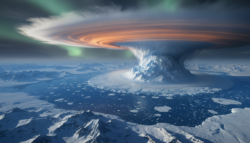
The first flakes started falling just after lunch, fat and lazy, almost pretty against the gray sky. By mid-afternoon, the wind was punching them sideways, slamming into store windows, turning the main street into a white tunnel. People rushed out of the supermarket, carts loaded with bottled water, bread, batteries, that guilty extra tub of ice cream. Inside, the TVs over the checkout lines screamed red banners: “SEVERE BLIZZARD WARNING – LIFE-THREATENING CONDITIONS.”
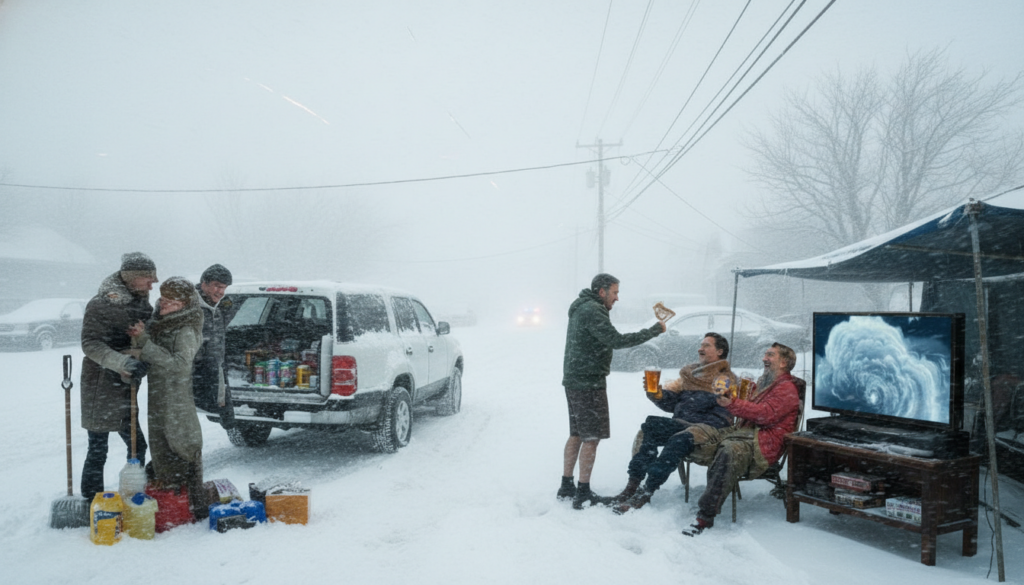
Yet if you stepped outside and walked two blocks down, you’d hear something completely different. At the corner bar, a small crowd laughed at the screen, clinking beers under a TV showing the same swirling radar map. “Media hysteria,” one regular snorted. “They say this every year.”
The snow kept getting thicker.
The divide kept getting sharper.
When the forecast becomes a battleground
By early evening, the town was split into two camps: the people hauling shovels and generators out of garages, and the people posting memes about “Snowmageddon 2026” and “fake weather panic.” One neighbor carefully taped her windows, lined up candles, and checked on the elderly couple next door. Across the street, a guy in shorts and flip-flops filmed a TikTok, grinning into the blizzard wind: “Still waiting for the end of the world, folks.”
On local radio, meteorologists used words they don’t pull out lightly: “crippling,” “historic,” “life-threatening cold.” On social media, the comment sections filled with eye-rolls and sarcasm. “We survived ’93, we’ll survive this,” wrote one commenter. Another simply posted a GIF: a man calmly drinking coffee while chaos raged behind him.
The storm hadn’t fully arrived, but the argument already had.
Then came the numbers. Forecasters talked about 18 to 30 inches of snow, 60 mph gusts, wind chills freezing exposed skin in under 10 minutes. Power companies quietly pushed out warnings about “extended outages” and “limited crews.” Airlines started canceling flights before a single runway was fully covered. Amtrak cut services. A hospital spokesperson explained they’d called in extra staff, knowing some wouldn’t be able to get home for days.
On the ground, though, reality stayed slippery. The first hours always feel like any other snowstorm. Plows pass, kids cheer, parents take photos from the porch. It’s easy to say, “See? Overblown.” The trouble is, by the time it feels truly dangerous, many people are already stuck where they are.
Storms don’t just test infrastructure. They test patience, trust and ego.
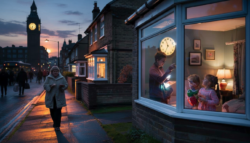
Meteorologists know this pattern by heart. Their models aren’t perfect, but they’re good enough to say, with a fair level of confidence, when a region is about to get slammed. The science behind a blizzard warning isn’t a hunch; it’s decades of data, satellite imagery, and brutal lessons from storms that killed people who didn’t or couldn’t get out of the way. Still, there’s a strange fatigue that sets in when red warnings flash too often.
People remember the busts more than the hits. The times schools closed and the storm “underperformed.” The empty bread shelves when only a few inches showed up. So when a truly dangerous system spins toward them, some residents fold their arms and decide this one is just more noise. Let’s be honest: nobody really scrolls through a full forecast discussion every single day.
And that’s how a wall of snow meets a wall of skepticism.
Getting ready when you’re tired of hearing “storm of the century”
There’s a small, quiet group in every town who treat these warnings less like drama and more like a checklist. They aren’t panic-buying; they’re calmly topping off. A couple of jugs of water per person. Enough non-perishable food for three days. Flashlights that actually have working batteries. A power bank that’s not already at 2%. They know that when trees crash onto lines and transformers pop in the distance, the difference between “annoying” and “dangerous” is how you spent the 24 hours before.
One nurse told me she runs a simple ritual: charge everything, fill every thermos with hot water, and move blankets to one central room. That’s her “if the lights go out” base camp. Not glamorous. Just smart.
It’s boring prep, which is why it saves lives.
The big trap is thinking preparedness has to look like those extreme survival shows. It doesn’t. Most people don’t need a bunker; they just need a plan. A flashlight in the same drawer every time. Medication refilled before the storm hits. A quick text chain with relatives: “If the power goes, I’ll check in at 10 a.m. and 6 p.m.” We’ve all been there, that moment when the sky turns white and you realize you meant to buy batteries… last year.
What often hurts most is pride. Nobody wants to feel like they got “played” by dramatic coverage. So they underreact to prove a point. They keep their car parked under that big old tree. They roll their eyes at the neighbor loading up firewood. *Then the first branch snaps in the dark, and the argument about media hysteria suddenly feels very far away.*
The storm doesn’t care if you were right on Facebook.
The people who work these events—line crews, EMTs, meteorologists—sound almost pleading when they talk about this split. One utility worker, wrapping up a 16-hour shift during a similar blizzard a few years back, told me:
“I don’t care if people think the TV is too dramatic. I care if I find them frozen in a car they never should’ve driven. Call the warnings hype if you want, but please, just use them to buy yourself some time.”
They tend to repeat the same basic advice:
- Stay home once the blizzard really sets in – getting stuck blocks plows and puts responders at risk.
- Keep a small “go pile” by the door – boots, gloves, a warm hat, a shovel – so you’re not searching in the dark.
- Never run a generator indoors or in a closed garage – carbon monoxide builds silently and fast.
- Check on neighbors who might not speak up – older adults, new parents, people with mobility issues.
- Treat early warnings as a window, not an accusation – they’re not saying panic, they’re saying prepare.
- A lot of this sounds obvious on a calm day. On the eve of a storm, it suddenly matters.
A blizzard is a mirror, not just a weather event
When the snow finally buries the sidewalks and the streetlights turn into faint glowing orbs, what’s left isn’t just a storm. It’s the way we talk to each other, trust each other, ignore each other. In one neighborhood, people pool extension cords, share hot coffee, dig out each other’s cars. In another, everyone sits behind curtains, scrolling, complaining about the outage, insisting someone else is overreacting or underreacting.
A severe blizzard warning exposes more than power lines. It shows who believes in experts, who believes only in their own memories, and who’s quietly scared but pretending not to be. Sometimes the loudest “this is all media nonsense” voice is the one who’s actually most anxious. Denial is easier to post than fear.
The next few days will leave stories behind. The family who lost power but had a neighbor with a wood stove. The driver who went out “just for a quick errand” and spent the night in a snowbank. The kid who remembers this as the storm when the whole building lit candles and played cards in the hallway. Those stories shape whether people listen next time.
A blizzard doesn’t care who wins the argument. It just arrives. What we do with the warning—that part is still up to us.
| Key point | Detail | Value for the reader |
|---|---|---|
| Take early warnings seriously | Blizzard alerts are based on decades of data, not guesswork or ratings grabs | Helps you act before roads, lines and services are overwhelmed |
| Preparation can stay simple | Water, food, light sources, charged devices and a check-in plan with loved ones | Reduces stress, risk and last-minute panic buying |
| Community beats bravado | Checking on neighbors, sharing resources, staying off dangerous roads | Turns a chaotic storm into a manageable shared experience |
FAQ:
Question 1: Is this blizzard really different from a “normal” winter storm?
Question 2: Why do some people say it’s all media hysteria?
Question 3: What do I need to do to get ready?
Question 4: Should I still go to work if my boss is still open?
Question 5: How can I help other people without putting myself in danger?