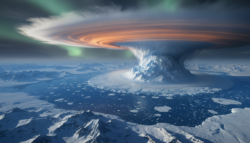
As the moon began to move over the sun, the light on the seafront promenade changed from bright noon to something stranger: a metallic twilight that was both sharp and flat. Seagulls flew in tight circles, not knowing what to do. Cars came to a stop. People put their phones down and just stared, their mouths opening without them knowing it, as if they were tasting the air.
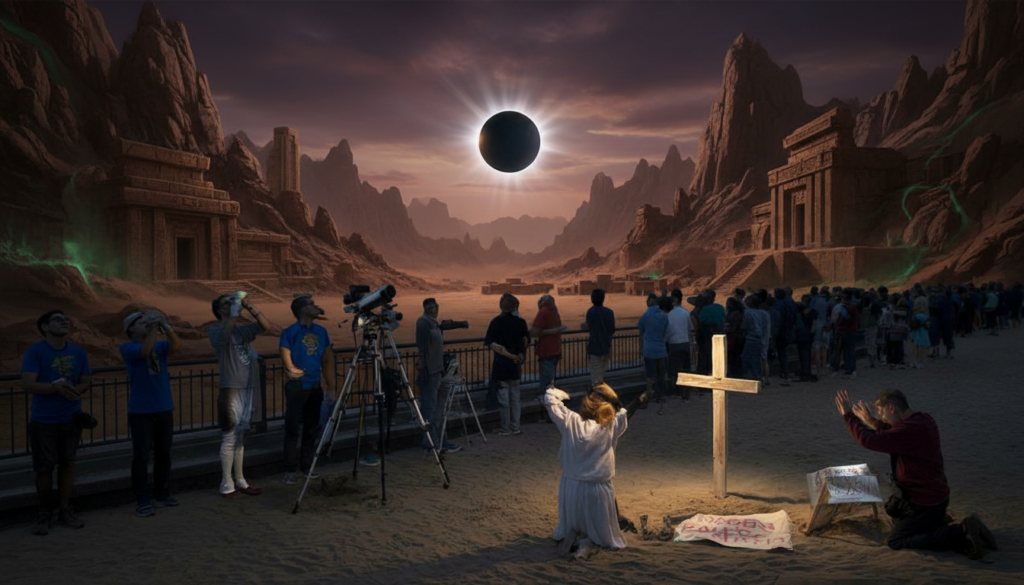
On one side of the crowd, astronomers in matching T-shirts cheered and clapped while they counted down the seconds on their timers. On the other side, a small group of people knelt in the sand and whispered prayers. In front of them was a hand-painted sign that said “THE DAY THE SUN SHOULD NOT BE HIDDEN.”
Something old had just come to life.
The longest shadow of the last hundred years
When the moon finally ate the sun, the world didn’t just go dark.
It got darker, as if a giant hand had brushed dust over reality. Colours faded, and streetlights flickered to life in a confused way. Birds dove into trees. The dogs perked up their ears and whined. For seven full minutes, daylight followed a rhythm that people don’t control and don’t often understand.
Some scientists had been waiting years, even their whole careers, to stand in this exact shadow. This **record-breaking eclipse** was like a cosmic laboratory for them. It was a rare, long break from the sun’s blinding light that let them learn more about it.
For some, it was a sign that something bigger than human plans had just crossed the sky.
A group from a European observatory had brought up almost half a tonne of gear to a rooftop in Mexico. This included telescopes, spectrometers, laptops, and spare batteries with angry red markers on them.
The talk stopped when totality hit. Fingers moved quickly and quietly over the keys. A woman in a worn baseball cap yelled out times as cameras took thousands of pictures of the sun’s ghostly corona, the halo of plasma that only shows up when the rest of the star goes dark.
A few blocks away, on the street, an evangelical pastor streamed himself live to a shaky audience of thousands. He pointed to the darkened sun with one hand and held up a worn Bible with the other. His voice rose as he wove prophecies and blood moons into the moment. Cars honked as they went by, some to show support, some to show annoyance, and some just to show that their engines still worked.
One sky, two worlds.
Astronomers say that this kind of eclipse happens once every 100 years. The geometry has to be exactly right: the Earth, moon, and sun have to be arranged so that the moon’s shadow stays on our planet for just the right amount of time. If it had been a few kilometres shorter, it would have been shorter, more normal, and forgotten in a month.
Instead, the shadow’s path slowly and dramatically crossed continents, causing a global rush for plane tickets, hotel rooms, and quickly ordered eclipse glasses. NASA, ESA, and a dozen universities all worked together on campaigns, knowing that it might take years to fully understand the data from these few minutes.
Warnings about “a day when the sun should not be hidden” filled social media feeds, private groups, and late-night chats at the same time. The brain loves patterns and stories, and noon that is too dark has always brought the heaviest stories.
Science, signs, and how we deal with the dark
When you take away the mystery, a solar eclipse is just simple celestial mechanics.
A rock, our rock, and a star are dancing together, something they’ve been doing long before people learned to name them. But no matter how many diagrams you’ve seen, being under that sudden cold light makes something in you jump. That’s where experts come in with a simple, quiet rule: don’t ignore, explain.
Astrophysicists and science communicators went to classrooms and community centers along the path of the eclipse weeks before it happened. They brought model orbits and cheap pinhole projectors to show kids how to make the ‘apocalypse’ on the ceiling with two spheres and a torch. Some cities held “eclipse rehearsals” the night before totality. They gave out glasses and repeated one simple message: you can be amazed and still be safe.
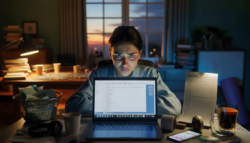
We’ve all been there: when the sky looks strange or the weather is strange, your stomach flips for no reason.
For a lot of people, this eclipse went right into that feeling. A farmer in a small town in the southern United States wouldn’t let his cows out that morning because he thought they would go crazy. His neighbour, a retired nurse, set up lawn chairs and a cooler and jokingly called it her ‘front-row ticket to the universe’.
Some families in India and Africa kept their curtains closed tight, following advice that has been passed down for generations that pregnant women shouldn’t look at an eclipse. Later, teens streamed the event on TikTok, adding EDM music and glitter filters to the shadows on their faces. To be honest, no one really reads the official safety brochure every day.
Fear or wonder tends to spread among the people they trust, which is exactly what they do.
Dr. Lena Ortiz, a solar physicist who has chased eclipses across four continents, says, “Every eclipse writes two stories.” “One in our records and one in people’s hearts.” If we only believe one of those stories, we’re missing half of what happened.
The eclipse became a screen for all the worries that were already bubbling up on the internet: climate chaos, wars, and the collapse of politics. Some pastors and online prophets confidently drew lines from old texts to today, saying that a sun that was covered for seven minutes meant judgement.
Sceptics, on the other hand, rolled their eyes so much that they almost missed the show. They made fun of people who believed, shared rude memes, and thought everyone who was worried was stupid. The truth is that both extremes make a very human reaction to a rare event less interesting. We look for meaning when the sky looks strange.
There is a quieter middle ground between these two extremes where curiosity can grow.
One parent quietly breaks a family rule by watching the eclipse with her child. Then she calls her own mother to talk about why she was told to stay inside.
One pastor changes his sermon after hearing astronomers speak, keeping his faith but getting rid of the doom.
One teen uses a telescope to film the corona, then spends the night watching solar physics videos instead of threads about the end of the world.
A shadow that stays even after the light comes back
When the sun came back, life went back to normal almost right away. Traffic roared back to life, coffee shops switched from “eclipse viewing” playlists to regular pop music, and kids asked for snacks like nothing had happened in the universe. Someone was already putting up a volleyball net on the beach where that little boy had screamed.
But there was something delicate in the air. People kept looking up and blinking at the sky as if they were checking to see if it would really stay. Astronomers packed up their gear in a daze, their eyes red from hours of focus and excitement at the thought of terabytes of new data. People who had been warning about signs for the past week now had to deal with a new problem: explaining what it means when the “sign” passes and the world doesn’t end.
The shadow went on. The questions stayed.
This longest eclipse of the century won’t just be remembered in science papers and YouTube videos. It will stay in people’s minds at dinner tables, in sermon notes, and in school presentations on orbital mechanics that they only half-remember. Some people who watched from rooftops and fields might want to take their first astronomy class. Some people might look more closely at prophecy forums or other timelines.
| Key point | Detail | Value for the reader |
|---|---|---|
| Rare cosmic record | The longest solar eclipse of the century, with over seven minutes of totality | Helps readers grasp why experts call it a once‑in‑a‑lifetime event worth remembering |
| Science vs. omen | Astronomers see a data goldmine, while some religious voices frame it as an apocalyptic sign | Clarifies the clash of interpretations readers are seeing in their feeds |
| Personal meaning | Reactions range from backyard viewing parties to shuttered homes and urgent sermons | Invites readers to reflect on their own response and the stories they choose to believe |